
The rapid ascent of generative AI and large language models (LLMs) fundamentally reshapes the professional landscape. Many envision AI primarily automating existing tasks, yet its true transformative power lies in creating entirely novel career paths. This evolution demands a human touch in areas traditional automation overlooks, driving the emergence of critical future AI roles. Beyond data science and engineering, the next wave of innovation requires specialists who architect ethical AI frameworks, design intuitive human-AI collaboration protocols. curate synthetic data pipelines. These are the unexpected experts who will navigate AI’s complex integration, ensuring responsible and effective technological advancement. 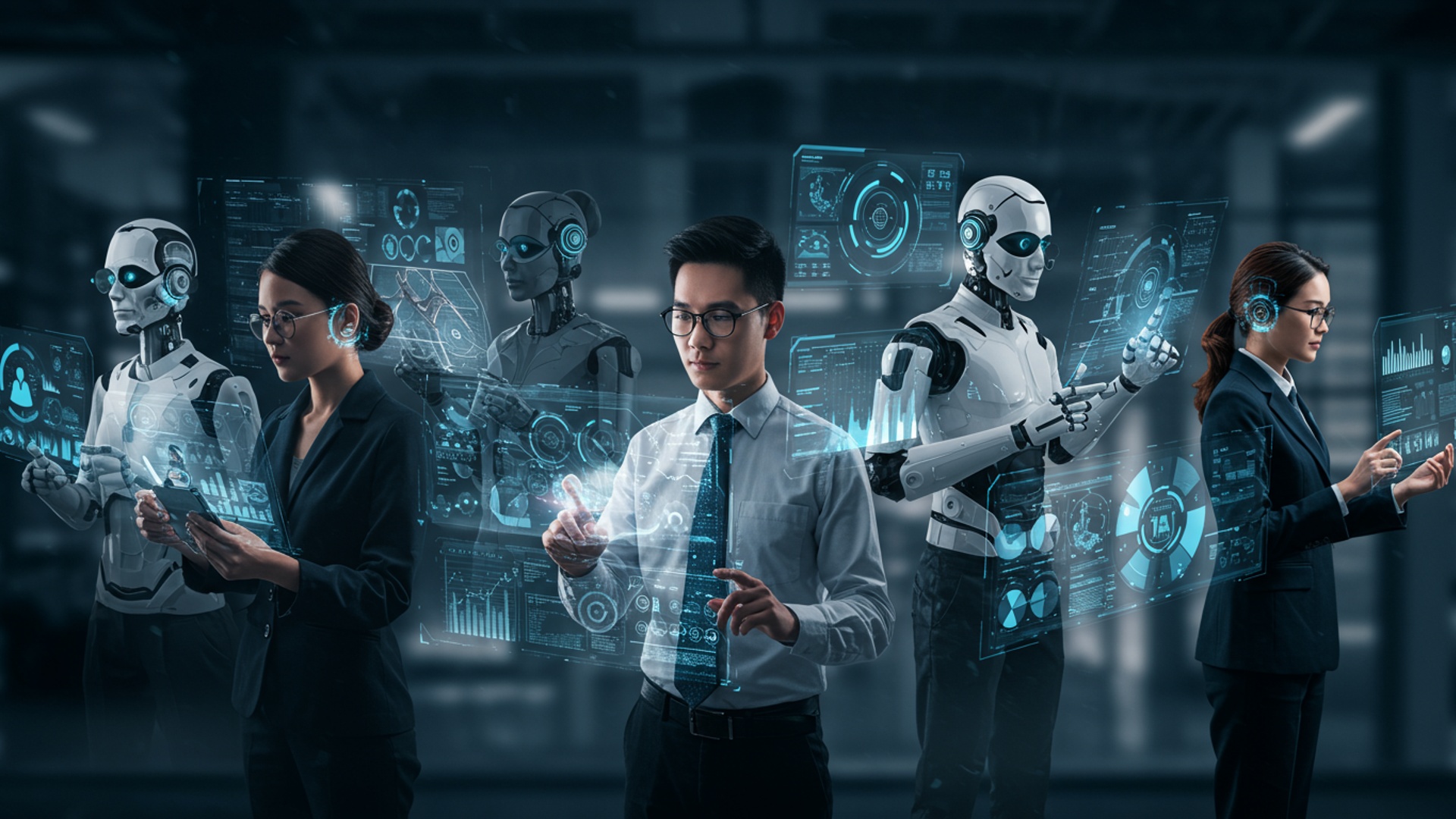
1. AI Ethicist & Policy Maker
As artificial intelligence becomes more integrated into every facet of our lives, from healthcare decisions to legal judgments, the need for ethical guidelines and robust policy frameworks is paramount. This role goes beyond theoretical discussions; it involves actively shaping the moral compass of AI systems and creating the regulatory environment in which they operate. An AI Ethicist & Policy Maker ensures that AI development aligns with human values, promotes fairness, prevents bias. respects privacy. They are the guardians of AI’s societal impact, translating complex technical capabilities into understandable ethical dilemmas and proposing solutions.
Many people associate AI with code and algorithms, not with philosophy or law. Yet, the ethical implications are so profound that dedicated roles focused on governance and policy are emerging as critical Future AI roles. It’s about proactive shaping, not reactive fixing.
- Deep understanding of ethical frameworks (e. g. , utilitarianism, deontology).
- Knowledge of AI technologies and their potential for bias (e. g. , in facial recognition, credit scoring algorithms).
- Legal expertise in data privacy (e. g. , GDPR, CCPA) and intellectual property.
- Excellent communication and negotiation skills to bridge the gap between technologists, legal experts. the public.
- Policy development and advocacy.
Consider a major tech company developing an AI-powered hiring tool. An AI Ethicist & Policy Maker would scrutinize the tool for potential biases against certain demographics, ensuring the training data is representative and the algorithm doesn’t inadvertently discriminate. They would also work with legal teams to draft internal policies on transparency and accountability for the AI’s decisions. engage with external regulatory bodies to contribute to broader industry standards.
- Algorithmic Bias
- AI Governance
- Transparency in AI
Systematic and repeatable errors in a computer system that create unfair outcomes, such as favoring one group over another. This often stems from biased data used to train the AI.
The framework of rules, policies. processes designed to guide the development, deployment. operation of AI systems in an ethical, responsible. transparent manner.
The ability to comprehend how and why an AI system arrives at a particular decision or prediction. This is crucial for building trust and accountability.
If you’re passionate about justice and the societal impact of technology, consider a path that combines ethics, law, or public policy with a foundational understanding of AI. These are essential Future AI roles.
2. Prompt Engineer & AI Whisperer
While generative AI models like ChatGPT and DALL-E have captivated the world, their true potential is unlocked by precise and creative “prompts.” A Prompt Engineer, or “AI Whisperer,” specializes in crafting these instructions to elicit the best, most relevant. most desired outputs from AI. This isn’t just about writing a sentence; it’s an art and a science involving deep understanding of how language models interpret input, what their limitations are. how to guide them towards specific creative, analytical, or functional goals. They optimize queries to achieve nuanced results, often iterating through hundreds of variations to find the perfect phrasing.
It sounds almost magical – talking to an AI to get exactly what you want. Many assumed AI would simply “interpret,” but effective communication with these systems requires a dedicated human skill. It’s a brand new literacy for the digital age, transforming how we interact with intelligent machines.
- Exceptional linguistic and critical thinking skills.
- Understanding of natural language processing (NLP) concepts and AI model behaviors.
- Creativity and problem-solving to iterate and refine prompts.
- Domain-specific knowledge relevant to the AI’s application (e. g. , marketing, coding, content creation).
- Ability to troubleshoot and assess AI outputs.
Imagine a marketing agency needing to generate hundreds of unique ad copy variations for different audience segments. A Prompt Engineer would develop a sophisticated prompt architecture, experimenting with variables for tone, length, keywords. call-to-actions, ensuring the AI consistently produces high-quality, on-brand content. Similarly, a software developer might employ a Prompt Engineer to refine queries for code generation tools, ensuring the AI produces secure, efficient. well-documented code snippets for specific programming tasks.
- Prompt
- Generative AI
- Large Language Models (LLMs)
The input text or instruction given to a generative AI model to guide its output.
A category of AI models capable of producing new content, such as text, images, audio, or code, based on patterns learned from vast datasets.
A type of generative AI that uses deep learning to interpret and generate human-like text, trained on massive amounts of text data.
Practice interacting with generative AI tools like ChatGPT or Midjourney. Experiment with different prompt structures, be specific. observe how slight changes alter the output. This hands-on experience is invaluable for these emerging Future AI roles.
3. AI Empathy Designer/Emotional Intelligence Architect
As AI becomes more prevalent in customer service, healthcare, education. companionship, designing systems that can comprehend, interpret. appropriately respond to human emotions is crucial. An AI Empathy Designer focuses on integrating emotional intelligence into AI. This isn’t about making AI “feel,” but about enabling it to detect emotional cues (from voice, text, facial expressions) and respond in a way that is helpful, comforting, or engaging. These professionals ensure AI interactions are perceived as natural, supportive. effective, particularly in sensitive contexts like mental health support or elderly care.
The idea of AI having “empathy” seems like science fiction. But, the practical application of designing AI to grasp and respond to human emotional states is a tangible and rapidly growing field. It’s about building trust and rapport in human-AI interactions.
- Understanding of human psychology, cognitive science. emotional theory.
- Knowledge of natural language processing (NLP) and computer vision for emotion detection.
- User experience (UX) design principles with a focus on emotional resonance.
- Ethical considerations around emotional manipulation and user well-being.
- Interdisciplinary collaboration with psychologists, data scientists. ethicists.
Consider a companion AI for elderly individuals living alone. An AI Empathy Designer would work on programming the AI to detect signs of loneliness or distress in the user’s voice or conversation patterns. The AI might then gently suggest a video call with a family member, play soothing music, or initiate a comforting conversation. In a customer service context, an AI designed with empathy could detect a frustrated customer and automatically escalate the call to a human agent, or tailor its responses to be more reassuring.
- Affective Computing
- Emotional AI
- Human-Computer Interaction (HCI)
The study and development of systems and devices that can recognize, interpret, process. simulate human affects (emotions).
AI systems designed to detect and respond to human emotional states, often using techniques from affective computing.
A field of study focusing on the design of computer technology and, in particular, the interaction between humans and computers.
Explore courses in psychology, human-centered design, or cognitive science alongside your technical AI studies. The intersection of human understanding and technological capability is where these pivotal Future AI roles will thrive.
4. AI Taster/Quality Assurance for Generative Models
With the explosion of generative AI producing everything from marketing copy and news articles to images, music. even video, there’s a critical need for human oversight to ensure quality, accuracy. safety. An AI Taster, or Generative AI Quality Assurance Specialist, acts like a sommelier for AI output. They evaluate the aesthetic quality, factual accuracy, brand alignment, creativity. ethical implications of AI-generated content. This role involves meticulous review, identifying subtle errors, biases, or “hallucinations” that AI models might produce. providing feedback to refine the underlying models or prompt strategies.
It’s a quintessentially human job in an AI-driven world. While AI creates, humans are still essential for discerning taste, nuance. truth. It highlights that even with advanced AI, human judgment remains indispensable, especially in creative and subjective domains.
- Exceptional critical thinking and attention to detail.
- Domain expertise (e. g. , writing, art, music, specific industry knowledge) to evaluate content.
- Understanding of potential AI biases and “hallucinations.”
- Ability to provide clear, constructive feedback to AI developers and prompt engineers.
- Strong ethical discernment regarding content appropriateness and accuracy.
Imagine a digital media company using AI to generate hundreds of article summaries daily. An AI Taster would review a significant sample, checking for factual errors, awkward phrasing, or instances where the AI misinterprets the original text. They might discover the AI frequently misattributes quotes or struggles with nuanced topics. Their feedback would then inform the prompt engineers on how to refine their instructions or highlight areas where the underlying AI model needs further training. In a creative studio, an AI Taster would evaluate AI-generated concept art, ensuring it meets aesthetic standards and brand guidelines, perhaps even identifying if the AI is inadvertently replicating copyrighted styles.
- Hallucination (in AI)
- Content Moderation
- Human-in-the-Loop (HITL)
When an AI model generates content that is factually incorrect, nonsensical, or made-up, despite being presented as truthful.
The process of monitoring and filtering user-generated content to ensure it complies with community guidelines, legal standards. ethical considerations. AI Tasters often contribute to this.
An AI development approach that relies on human intervention and feedback at various stages to improve the model’s performance and ensure quality.
Cultivate your expertise in a specific creative or informational domain. Whether you’re a writer, artist, musician, or subject matter expert, your nuanced human judgment will be highly valued in these discerning Future AI roles.
5. AI-Human Teaming Manager
As AI tools become ubiquitous in the workplace, the ability to effectively integrate human and artificial intelligence into cohesive, productive teams becomes a critical skill. An AI-Human Teaming Manager (sometimes called an AI Workflow Orchestrator or Collaboration Specialist) designs, implements. optimizes workflows where humans and AI collaborate seamlessly. This role involves understanding the strengths and weaknesses of both human and AI capabilities, assigning tasks appropriately, resolving conflicts between human and AI outputs. ensuring that the combined team achieves superior results. They are the conductors of the augmented workforce.
It’s not just about managing people or managing technology. managing the interface and collaboration between them. This role acknowledges that AI isn’t replacing humans entirely. creating new forms of partnership that require specialized leadership.
- Project management and team leadership.
- Understanding of AI capabilities and limitations across various domains.
- Change management and facilitating adoption of new technologies.
- Conflict resolution and communication skills to manage human-AI interactions.
- Workflow design and process optimization.
Consider a financial analysis firm where AI is used to process vast amounts of market data and generate initial investment recommendations. An AI-Human Teaming Manager would design the workflow: AI identifies potential opportunities, human analysts then review, refine. add strategic insights. AI might then generate presentation materials. The manager would monitor the AI’s accuracy, ensure analysts are effectively using the AI’s output. address any instances where the AI’s recommendations conflict with human intuition, perhaps by triggering further human review or retraining the AI. They might also train human teams on best practices for interacting with the AI, ensuring smooth collaboration.
- Augmented Intelligence
- Human-AI Collaboration
- Workflow Automation
A human-centered approach to AI that focuses on enhancing human capabilities rather than replacing them.
The interaction and joint effort between humans and AI systems to achieve shared goals, leveraging the unique strengths of each.
The use of technology to automate tasks, processes. entire workflows, often involving AI components.
Develop strong leadership and organizational skills, combined with a solid understanding of how AI tools function. Being able to bridge the gap between technical potential and human application is key to these innovative Future AI roles.
6. AI Ecosystem Developer/Integrator
The modern business landscape is becoming a complex web of interconnected AI services, APIs. specialized models. An AI Ecosystem Developer/Integrator is responsible for designing, building. managing these intricate networks. They don’t just develop a single AI model; they orchestrate multiple AI components from different vendors, integrate them with existing enterprise systems. ensure they communicate effectively to deliver holistic solutions. This role is crucial for businesses looking to leverage the full power of diverse AI capabilities without becoming overwhelmed by complexity.
It’s not just about coding AI. about architecting a sprawling digital nervous system where different AI brains work together. This role moves beyond single-point solutions to comprehensive, interconnected intelligence, highlighting the shift from individual AI tools to integrated AI platforms.
- Strong software architecture and system design skills.
- Expertise in API integration and microservices.
- Knowledge of various AI models (e. g. , NLP, computer vision, predictive analytics) and their respective strengths.
- Cloud computing platforms (AWS, Azure, GCP) and their AI services.
- Data management and data pipeline construction.
- Cybersecurity considerations for interconnected systems.
Imagine a smart city initiative that needs to integrate AI for traffic management, public safety, waste optimization. energy consumption. An AI Ecosystem Integrator would design how various AI modules (e. g. , a computer vision AI for traffic, an NLP AI for emergency calls, a predictive analytics AI for energy demand) connect and share data. They would set up the necessary APIs, ensure secure data flow between systems. build dashboards to monitor the entire AI-powered city operation. This role ensures that the city’s various AI initiatives don’t operate in silos but contribute to a unified, intelligent infrastructure.
- API (Application Programming Interface)
- Microservices
- Cloud Computing
A set of rules that allows different software applications to communicate with each other.
An architectural style that structures an application as a collection of loosely coupled services, which can be developed, deployed. maintained independently.
The delivery of on-demand computing services—including servers, storage, databases, networking, software, analytics. intelligence—over the Internet (“the cloud”).
Focus on understanding system architecture, cloud platforms. API development. The ability to connect diverse AI components into a cohesive, functional whole will be a highly sought-after skill for these strategic Future AI roles.
7. AI Deception & Security Analyst
As AI becomes more sophisticated, so do the threats it can pose or be subjected to. An AI Deception & Security Analyst specializes in identifying, preventing. mitigating risks associated with AI-driven deception (e. g. , deepfakes, sophisticated phishing), adversarial attacks on AI models. ensuring the overall security of AI systems. This role is on the front lines of digital warfare, protecting individuals, businesses. democratic processes from malicious AI use. They work to interpret how AI can be fooled, corrupted, or weaponized. then build defenses against these emerging threats.
The focus isn’t just on traditional cybersecurity. on a new frontier of vulnerabilities and attacks specific to AI. It highlights the darker side of AI’s potential and the urgent need for specialists to combat it, making it a critical aspect of Future AI roles.
- Deep knowledge of cybersecurity principles and practices.
- Understanding of machine learning algorithms and their vulnerabilities (e. g. , data poisoning, model inversion attacks).
- Expertise in deep learning, especially generative adversarial networks (GANs).
- Forensic analysis and threat intelligence.
- Ethical hacking and penetration testing specifically for AI systems.
A national security agency might employ an AI Deception & Security Analyst to detect deepfake videos and audio used in disinformation campaigns. This analyst would develop AI-powered tools to identify subtle anomalies in manipulated media, train other AI models to recognize patterns of AI-generated deception. advise policymakers on how to combat the spread of such content. In a financial institution, they might work to protect AI-powered fraud detection systems from adversarial attacks where criminals try to trick the AI into approving fraudulent transactions by subtly altering their behavior or data inputs. They might review how an attacker could inject malicious data into an AI’s training set to make it perform incorrectly (data poisoning).
- Deepfake
- Adversarial Attack
- Data Poisoning
- Generative Adversarial Networks (GANs)
AI-generated or manipulated media (e. g. , video, audio) that convincingly portrays someone saying or doing something they never did.
Malicious input specifically designed to fool an AI model, often by making small, imperceptible changes to data that cause the AI to misclassify or make incorrect decisions.
A type of adversarial attack where an attacker injects malicious data into an AI model’s training set, causing the model to learn incorrect patterns or biases.
A class of AI algorithms that use two neural networks (a generator and a discriminator) competing against each other to create realistic synthetic data.
If you have a strong interest in cybersecurity and a fascination with how AI can be both powerful and vulnerable, delve into specialized courses on AI security, adversarial machine learning. digital forensics. These protective Future AI roles are becoming indispensable.
Conclusion
The surprising AI jobs we’ve explored, from AI Ethicists to Prompt Engineers and AI-powered Storytellers, vividly illustrate that the future of work isn’t about human replacement. rather human augmentation. These roles demand a unique blend of technical acumen and distinctly human attributes like creativity, empathy. critical thinking. As I’ve observed in my own journey, the rapid evolution of tools like generative AI means continuous learning isn’t just an advantage, it’s essential. To thrive in this landscape, my personal tip is to actively engage with AI. Don’t just observe; experiment with tools like ChatGPT, comprehend their limitations. identify how your unique human skills can complement them, much like an AI Integration Specialist would. Consider how your existing expertise can bridge gaps in AI systems, turning challenges into exciting new career paths. The future belongs to those who embrace this collaborative synergy, understanding that AI is a powerful co-pilot. Unlock your potential by exploring Your Ultimate Guide to an AI Career Path. So, dive in, stay curious. shape tomorrow’s defining careers with confidence.
More Articles
Your Ultimate Guide to an AI Career Path Unlocking Future Opportunities
Master AI Content Creation Your Path to a Lucrative Writing Career
7 Secrets to Writing Powerful AI Prompts for Better Results
Spark Brilliant Ideas How AI Supercharges Your Creativity
7 AI Tools That Skyrocket Team Efficiency and Collaboration 
FAQs
What sorts of AI jobs are emerging that we should know about?
We’re seeing a rise in roles like AI Ethicists, AI Trainers, AI-powered Healthcare Navigators. even AI-assisted Creative Directors. These aren’t just tech roles; many focus on the human-AI interface and ethical implications across various sectors.
Why are these specific AI jobs considered ‘surprising’?
They’re surprising because many people assume AI will primarily automate existing tasks. Instead, these roles highlight AI’s capacity to create entirely new categories of work, often requiring uniquely human skills like empathy, creativity. critical judgment, rather than just coding expertise.
Do I need a deep tech background to get into these future AI roles?
Not necessarily! While some roles benefit from technical skills, many of these ‘surprising’ jobs prioritize soft skills. Think critical thinking, ethical reasoning, communication, creativity. understanding human behavior. AI is becoming a tool for many professions, not just a domain for engineers.
How exactly is AI creating new jobs instead of just replacing existing ones?
AI excels at repetitive tasks and data analysis, which frees up humans to focus on higher-level, more complex problems. This shift generates new needs: someone to design AI interactions, ensure its fairness, interpret its outputs, or even develop new creative applications with AI. It’s about augmentation, not just automation.
Are these jobs only for people already in the tech industry?
Definitely not! Many of these roles will emerge at the intersection of AI and other fields like healthcare, education, arts. ethics. People with backgrounds in humanities, social sciences, or creative arts will find unique opportunities to shape how AI integrates into society. It’s about diverse perspectives.
Could you give an example of one of these unexpected roles?
Sure! An ‘AI Ethicist’ is a great example. Their job isn’t to code AI but to ensure AI systems are fair, transparent. don’t cause harm. They need a strong understanding of philosophy, law. social impact, working alongside technical teams to guide AI development responsibly.
When can we expect these types of jobs to become common?
Many are already emerging in forward-thinking companies. we’ll see them become much more mainstream within the next 5-10 years. As AI technology matures and integrates further into daily life and business, the demand for these specialized, human-centric AI roles will accelerate significantly.