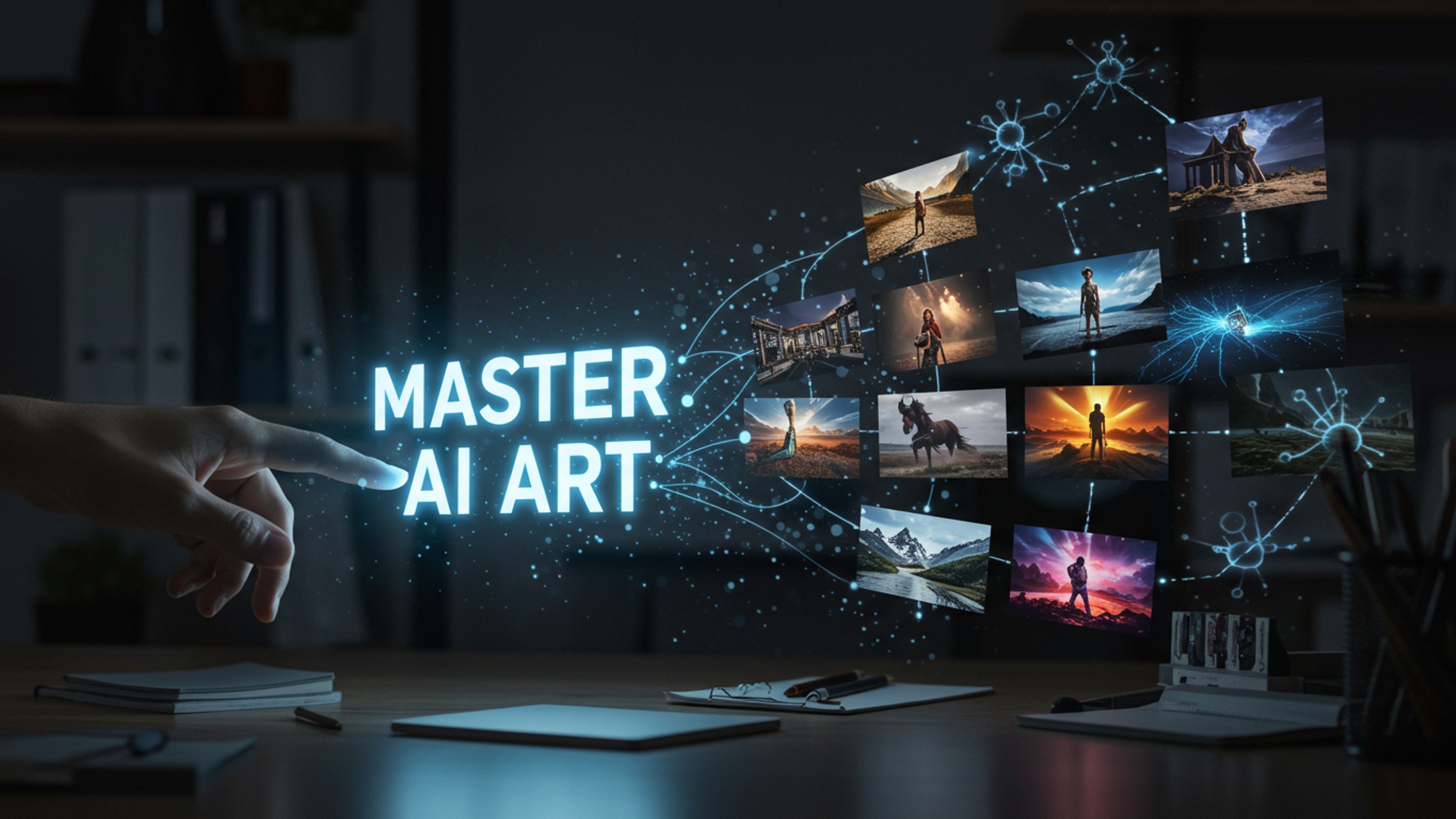
The visual art world is experiencing a profound revolution, spearheaded by rapid advancements in AI image creation. Generating a photorealistic scene or an intricate fantasy landscape no longer demands years of software mastery; instead, sophisticated text-to-image models like Midjourney, DALL-E 3. Stable Diffusion now empower anyone to conjure breathtaking visuals from simple descriptive prompts. This democratizes artistic expression, allowing creators to materialize concepts, from serene natural vistas to dynamic futuristic cityscapes, with unprecedented speed and precision. Harnessing the power of prompt engineering transforms imagination into tangible digital art, opening a new frontier where your words become the brushstrokes for stunning visual masterpieces.
Understanding the Magic Behind AI Art
Imagine typing a few words and watching an entirely new, never-before-seen image spring to life before your eyes. This isn’t science fiction; it’s the incredible reality of AI art, a revolutionary field that’s democratizing creativity. At its core, AI art refers to images, videos, or other creative works generated or significantly assisted by artificial intelligence algorithms. It’s a fascinating blend of human imagination and machine learning, allowing anyone to become an artist without needing a paintbrush or years of training.
So, how does this digital magic happen? The most prevalent technique for generating images from text is through what are known as diffusion models. Think of it like this: an AI is trained on an enormous dataset of images and their corresponding text descriptions. Over time, it learns the intricate relationships between words and visual concepts – what a “cat” looks like, how “fluffy” translates visually, or the aesthetics of a “cyberpunk city.”
When you give it a text prompt, the AI doesn’t just search for existing images. Instead, it starts with a canvas of pure static noise (like TV static). Then, through a process of ‘denoising’ guided by your prompt, it iteratively refines that noise, gradually shaping it into the image you described. It’s like slowly revealing a photograph hidden within a blurry mess, guided by a detailed instruction manual. This incredible ability to synthesize new visuals from descriptive language is the engine driving the current boom in ai image creation.
Key Concepts and Terminology in AI Art
To truly master AI art, you’ll encounter a few essential terms and concepts. Understanding these will significantly enhance your ability to craft stunning visuals:
- Prompt Engineering
- Models/Algorithms
- Stable Diffusion
- Midjourney
- DALL-E 3 (via ChatGPT Plus)
- Parameters
- Seed
- Guidance Scale (or CFG Scale)
- Steps (or Iteration Steps)
- Resolution
- Negative Prompts
This is the art and science of writing effective text prompts to guide the AI. It’s about communicating your vision clearly and precisely to the machine. A good prompt isn’t just a description; it’s a set of instructions that the AI interprets visually.
These are the specific AI programs or architectures used to generate images. Different models have been trained on different datasets and may excel at different styles or subjects. Popular examples include:
An open-source model that allows for extensive customization and local installation, popular for its flexibility.
Known for its highly aesthetic and often painterly or fantastical outputs, accessed primarily through Discord.
Developed by OpenAI, it’s excellent at understanding complex prompts and generating diverse styles.
These are settings you can adjust to influence the AI’s generation process. Common parameters include:
A unique number that determines the initial noise pattern. Using the same seed with the same prompt and parameters will often produce a very similar image.
Dictates how strongly the AI should adhere to your prompt. Higher values make the AI follow the prompt more strictly but can sometimes lead to less creative or “overcooked” results.
Refers to how many times the AI refines the image during the denoising process. More steps generally mean more detail and quality. also longer generation times.
The size of the output image (e. g. , 512×512, 1024×1024). Higher resolutions require more computational power.
These are words or phrases you tell the AI to avoid. For example, adding “blurry, low quality, deformed” can help prevent undesirable artifacts in your generated images.
Choosing Your AI Art Generator
The landscape of ai image creation tools is constantly evolving, with new platforms and features emerging regularly. Your choice of generator often depends on your budget, desired style, technical comfort. specific needs. Here’s a comparison of some popular options:
| Feature | Midjourney | Stable Diffusion (e. g. , via Automatic1111 GUI) | DALL-E 3 (via ChatGPT Plus/Copilot) |
|---|---|---|---|
| Accessibility | Discord-based, relatively easy to learn. | Requires local installation (technical) or online services (easier). | Integrated into ChatGPT Plus/Copilot, very user-friendly. |
| Cost | Subscription-based. | Free if run locally (requires powerful GPU), paid for online services. | Included with ChatGPT Plus subscription or free via Copilot. |
| Strengths | Exceptional for aesthetic, artistic, fantastical. painterly images. Great for concept art. | Highly customizable, open-source, vast ecosystem of models/extensions. Excellent for specific styles, inpainting/outpainting. | Excellent prompt understanding, generates diverse styles, good for complex scenes and text rendering. |
| Weaknesses | Less control over specific details compared to SD. Can be harder to reproduce exact styles. | Steeper learning curve for local setup. Quality can vary greatly depending on chosen model and prompt. | Sometimes lacks the “artistic flair” of Midjourney; fewer advanced controls for image manipulation. |
| Best For | Artists, designers, hobbyists seeking high-quality, inspiring visuals with less fuss. | Power users, developers, those needing fine-grained control, specific artistic styles, or local processing. | General users, content creators, marketers who need quick, accurate. diverse image generation from text. |
For beginners, DALL-E 3 (via ChatGPT Plus or Copilot) is often a great starting point due to its intuitive interface and strong prompt understanding. Midjourney offers a fantastic balance of ease of use and stunning output. If you’re technically inclined and want maximum control, diving into Stable Diffusion is incredibly rewarding.
The Art of Prompt Engineering: Crafting Your Vision
This is where your creativity truly shines. Effective prompt engineering is the single most crucial skill in ai image creation. It’s about translating your imagination into language the AI can comprehend. Here’s how to master it:
- Be Specific, Not Vague
- Structure Your Prompt
- Subject
- Style/Medium
- Details/Modifiers
- Composition/Camera
- Quality Modifiers
- Leverage Keywords
- Use Negative Prompts Wisely
Instead of “a dog,” try “a golden retriever puppy playing in a field of wildflowers, golden hour, bokeh, hyperrealistic.”
A good structure often includes:
What is the main focus? (e. g. , “An astronaut riding a horse”)
What artistic style? (e. g. , “oil painting, digital art, photorealistic, anime style”)
Specific elements, colors, lighting, emotions. (e. g. , “glowing helmet, cosmic dust, triumphant expression, dramatic lighting”)
How is it framed? (e. g. , “wide shot, close-up, cinematic, portrait orientation”)
Words to enhance realism or detail. (e. g. , “4K, 8K, highly detailed, physically based rendering, volumetric lighting”)
Certain words have a strong impact. Experiment with keywords like “cinematic,” “epic,” “dreamlike,” “vibrant,” “ethereal,” “gritty,” “steampunk,” “neon,” “cyberpunk,” “fantasy,” “sci-fi.”
As mentioned, these tell the AI what to avoid. Common negative prompts include:
(deformed, ugly, bad anatomy, disfigured, poorly drawn face, poorly drawn hands, missing limb, extra limbs, blurry, low resolution, bad composition, watermark, text, signature)
This helps clean up common AI artifacts.
Your first prompt might not be perfect. Generate a few images, see what you like and dislike. then adjust your prompt. Add more details, remove unwanted elements, or try different styles. It’s a continuous conversation with the AI. For instance, I once wanted a “futuristic cityscape” but kept getting generic results. By adding “neo-noir aesthetic, rain-slicked streets, towering holographic advertisements, distant flying cars, night time,” I finally got the atmosphere I envisioned.
Many AI art communities share prompts. review what makes a good prompt by seeing what others use to achieve stunning results.
Beyond the Basics: Advanced Techniques for Stunning Results
Once you’re comfortable with basic prompt engineering, you can explore more advanced techniques to take your ai image creation to the next level:
- Image-to-Image (Img2Img)
- Inpainting and Outpainting
- ControlNet (for Stable Diffusion)
- Upscaling and Post-processing
- Experimentation is Key
Instead of starting from scratch with noise, you can provide an initial image as a reference. The AI then transforms this image based on your text prompt, maintaining its general composition or style while introducing new elements. This is fantastic for stylizing photos or iterating on existing artwork.
These techniques allow you to modify specific parts of an image (inpainting) or expand its borders (outpainting). Imagine you generated a beautiful landscape but want to add a small cottage in the corner – inpainting can do that. If you want to extend the landscape beyond its original borders, outpainting fills in the new areas seamlessly.
This is a game-changer for control. ControlNet allows you to guide the AI’s generation process with an input image’s pose, depth map, or edge detection. For example, you can provide a stick figure drawing. ControlNet will ensure your generated character has that exact pose, while your text prompt dictates the style and details. It brings an unprecedented level of precision to AI art.
AI-generated images sometimes lack fine detail, especially at lower resolutions. Dedicated upscaling tools (often AI-powered themselves) can enhance the resolution and add detail. Further post-processing in image editors like Photoshop or GIMP can refine colors, add effects, or correct minor imperfections.
Don’t be afraid to try unusual combinations, abstract concepts, or wildly different styles. The AI often produces surprising and delightful results when pushed outside the box.
Real-World Applications and Use Cases
The impact of ai image creation extends far beyond just pretty pictures. It’s becoming an invaluable tool across various industries and for personal use:
- Graphic Design
- Concept Art and Game Development
- Marketing and Advertising
- Personal Expression and Hobbies
- Education
- Fashion Design
Designers can quickly generate multiple design concepts, explore different visual themes for logos, brochures, or social media posts, saving hours of manual work. A startup I advised recently used AI to generate 50 different logo ideas in an afternoon, narrowing down their options far faster than traditional methods.
Artists can rapidly visualize characters, environments, props. moods for games, films. animations. This accelerates the pre-production phase significantly, allowing teams to iterate on ideas at lightning speed.
Creating unique, eye-catching visuals for campaigns, product mockups, or ad creatives is faster and more cost-effective. Imagine generating bespoke images for every blog post without needing a photographer or illustrator.
For individuals, AI art is a fantastic creative outlet. You can illustrate stories, design custom wallpapers, create unique gifts, or simply explore your imagination without needing artistic skills.
Teachers can generate custom visual aids, historical scenes, or scientific diagrams to make learning more engaging and accessible.
AI can generate innovative clothing patterns, fabric textures, or entire outfit concepts, pushing the boundaries of design.
Ethical Considerations and the Future of AI Art
While the capabilities of AI art are breathtaking, it’s also vital to consider the ethical implications. Issues around copyright (who owns the AI-generated image?) , originality (is it truly “new” if trained on existing art?). the potential for misuse (deepfakes, misinformation) are actively being discussed and addressed. The art world is grappling with how to integrate this new technology respectfully and responsibly.
Despite these challenges, the future of ai image creation is bright. It’s not about replacing human creativity but augmenting it. AI becomes a powerful co-creator, a tool that expands our artistic horizons and allows us to visualize ideas that were once impossible. As the technology continues to evolve, we can expect even more intuitive interfaces, greater control. new applications that we can only begin to imagine today. The journey of mastering AI art is an exciting one, full of endless possibilities for creative exploration.
Conclusion
You’ve now unlocked the profound potential of AI art, moving beyond simple commands to craft truly stunning images from mere text. Remember, the true mastery lies in iterative refinement; consider starting with a broad concept like “futuristic cityscape” and then meticulously layering details such as “neon-lit skyscrapers, bustling aerial traffic, rain-slicked streets, cinematic lighting.” My personal tip is to always inject a touch of the unexpected, a ‘secret ingredient’ in your prompt that challenges the AI, like requesting a “baroque-punk astronaut” or a “cubist landscape with living flora.” This pushes boundaries and often yields spectacular, unique results. The current trend in AI art emphasizes not just photorealism but also nuanced artistic control. With advanced models continually evolving, your ability to specify lighting, mood. even camera angles is more powerful than ever. Don’t be afraid to experiment with negative prompts or utilize image-to-image prompting to guide the AI further. Your journey into AI art is a continuous exploration; embrace every unexpected output as a learning opportunity. The digital canvas awaits your unique vision – keep creating, keep iterating. prepare to turn your wildest imaginings into breathtaking visuals.
More Articles
Master AI Image Creation 10 Essential Tips for Perfect Visuals
Create Stunning Images Easily Your Guide to Gemini AI Art
Spark Brilliant Ideas How AI Unlocks Creative Thinking
Master Human AI Collaboration for Creative Content Success 
FAQs
What’s ‘Master AI Art’ all about?
This guide dives deep into the exciting world of AI art generation. You’ll learn how to use simple text descriptions, called prompts, to create incredibly detailed and imaginative images using various AI tools. It’s about turning your ideas into stunning visuals effortlessly.
Who should check this out?
Anyone curious about AI and art, aspiring digital artists, graphic designers looking for new tools, or just folks who want to have fun generating cool images without needing to draw or paint. No prior tech or art skills required!
What cool stuff will I learn to do?
You’ll master the art of prompt engineering – writing effective text descriptions that guide the AI to produce exactly what you envision. We’ll cover different AI art platforms, techniques for refining images, understanding styles. even how to fix common issues, so your creations really pop!
Do I need to be a tech wizard or an artist already?
Absolutely not! This guide is designed for beginners. We start from the ground up, explaining everything in plain language. If you can type, you can make AI art.
Can I really make stunning images just from words?
Yes, you absolutely can! The power of AI has advanced so much that with the right prompts and techniques, you can generate photorealistic landscapes, abstract masterpieces, character designs. so much more, all just by describing them.
How long until I’m creating awesome stuff?
You’ll be able to generate your first images very quickly, often within minutes of starting. Mastering the nuances of prompt engineering to consistently create exactly what you want takes a bit more practice. the guide provides structured steps to get you there efficiently.
Are there specific AI tools we’ll be using?
The guide explores several popular and powerful AI art generation tools available today, providing insights into their unique strengths and how to get the best results from each. We focus on techniques that are broadly applicable, regardless of the specific platform you choose.