
The race to product-market fit demands unprecedented speed, yet traditional MVP development cycles often struggle with resource constraints and iterative delays. In today’s hyper-competitive landscape, leveraging advanced AI isn’t just an advantage; it’s a strategic imperative for rapid product development. Tools like GitHub Copilot are revolutionizing code generation, while AI-driven platforms accelerate everything from user story creation to automated testing, drastically compressing development timelines. This paradigm shift, where AI for MVP becomes a core accelerator, empowers teams to validate ideas faster, build leaner. deploy robust solutions with unparalleled efficiency, transforming conceptual designs into tangible, market-ready products at lightning speed. 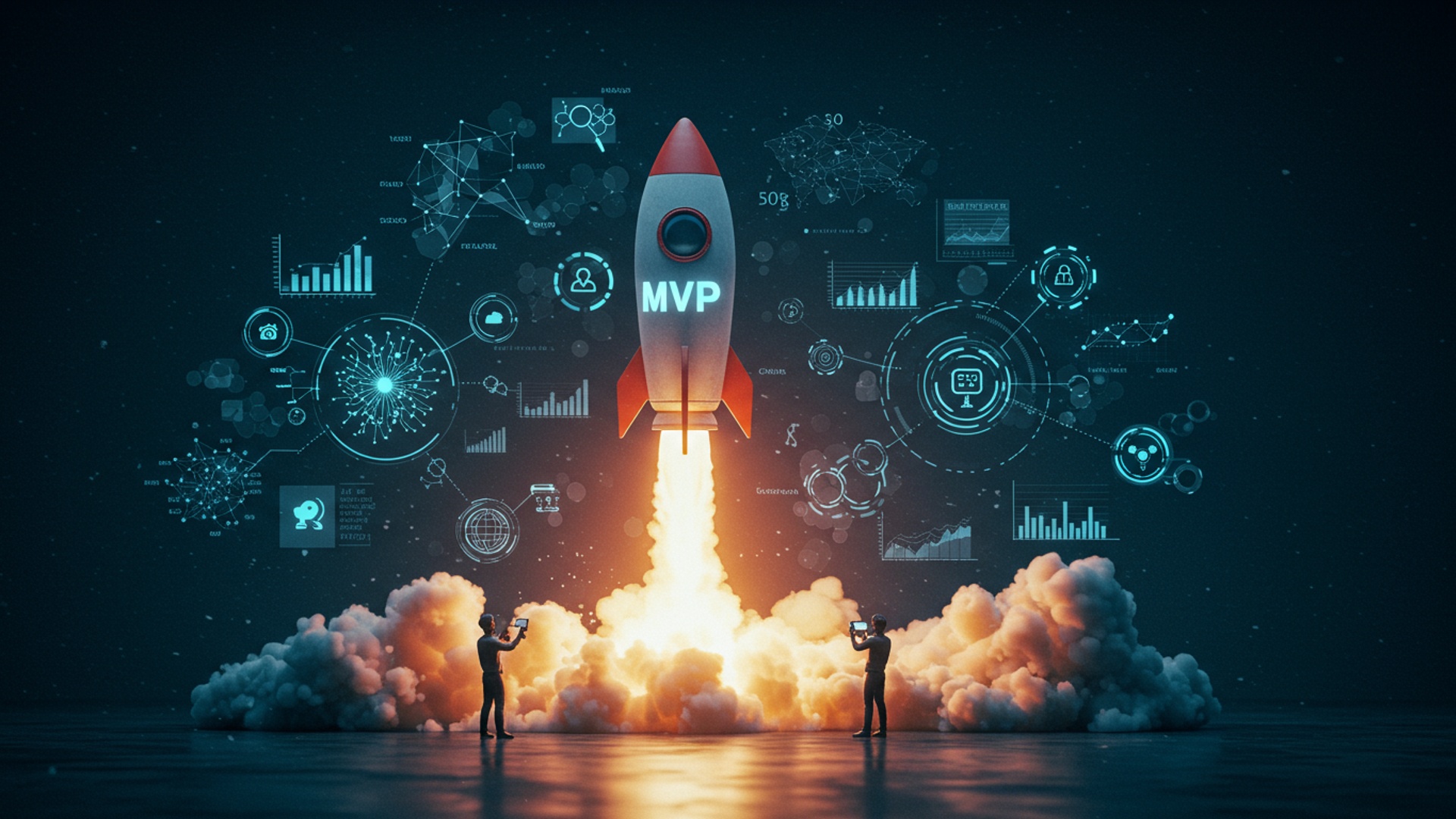
Understanding the MVP: Why Speed is Your Superpower
Ever had a brilliant idea for an app or a website. felt overwhelmed by the sheer amount of work to bring it to life? That’s where the concept of a Minimum Viable Product, or MVP, comes in. An MVP is the bare-bones version of your product with just enough features to satisfy early customers and provide feedback for future product development. Think of it as the smallest possible experiment you can run to test your big idea.
The “viable” part is key – it needs to work and offer core value. The “minimum” part is about stripping away anything non-essential. Why is speed so crucial here? Because the sooner you get your MVP into the hands of real users, the sooner you start learning what works, what doesn’t. what people actually want. This rapid feedback loop saves you time, money. prevents you from building something nobody needs. In today’s fast-paced world, getting ahead often means getting started quickly, iterating. adapting.
The AI Advantage: Turbocharging Product Development
Artificial Intelligence (AI) isn’t just for science fiction anymore; it’s a powerful toolkit that can revolutionize how you build and launch products. When we talk about AI for MVP, we’re referring to leveraging AI technologies – like Machine Learning (ML), Natural Language Processing (NLP). Generative AI – to automate, accelerate. optimize various stages of product development. From understanding your market to writing code and testing your product, AI can act as your intelligent co-pilot, helping you move from idea to launch at unprecedented speeds.
For young entrepreneurs and developers, this means you can accomplish more with less. Instead of spending weeks on tasks that can be automated, you can focus your energy on strategic thinking, creativity. direct user interaction. This shift in focus is what makes AI for MVP a game-changer for rapid product development.
Strategy 1: AI for Idea Validation and Market Research
Before you even write a single line of code, you need to know if your idea has legs. Is there a genuine need for your product? Who are your potential users? What problems are you solving? Traditionally, this involves extensive manual research, surveys. competitive analysis. AI can condense weeks of work into hours.
- Sentiment Analysis
AI-powered tools can scour social media, forums. review sites to interpret public opinion about existing products or problems you’re trying to solve. They can identify trends, pain points. unmet needs at scale.
Example: Using an AI tool to review Twitter conversations around "struggles with online learning" to pinpoint specific features for an educational app.
Machine Learning algorithms can examine vast datasets to identify emerging market trends, predict consumer behavior. even suggest niche opportunities you might have missed. This helps validate if your idea is relevant now and in the near future.
AI can quickly summarize competitor offerings, highlight their strengths and weaknesses. even suggest unique selling propositions for your MVP based on market gaps.
By using AI for MVP validation, you gain a data-driven understanding of your market, ensuring you’re building something people actually want, reducing the risk of launching a product into a void.
Strategy 2: AI-Powered Prototyping and Design
Once your idea is validated, the next step is to visualize it. This involves creating wireframes, mockups. prototypes to demonstrate your product’s user interface (UI) and user experience (UX). AI tools are now making this process incredibly fast and accessible, even if you’re not a design wizard.
- UI Generation from Text
Generative AI models can take a simple text description of your app idea and instantly generate design mockups. You describe the functionality. the AI suggests layouts, color schemes. component placements.
Example Prompt: "Design a mobile app screen for a task management tool with a clean, minimalist aesthetic. Include a list of daily tasks, a button to add new tasks. a progress bar."
Some AI tools can convert hand-drawn sketches or even existing website screenshots into digital wireframes or interactive prototypes, saving hours of manual design work.
AI can review your design choices and suggest improvements for consistency, accessibility. user flow, ensuring your MVP looks professional and is easy to use from day one.
This rapid prototyping capability through AI for MVP design means you can quickly test multiple design iterations with potential users, gather feedback. refine your UI/UX without needing a dedicated design team or extensive design software knowledge.
Strategy 3: AI in Code Generation and Development
Perhaps one of the most exciting applications of AI for MVP is in actual code development. AI code assistants are transforming how developers write, debug. optimize code, making the development process significantly faster.
- Code Autocompletion and Suggestions
- Boilerplate Code Generation
Tools like GitHub Copilot, powered by large language models, can suggest entire lines or blocks of code as you type, learning from billions of lines of public code. This drastically speeds up coding and reduces syntax errors.
AI can generate common boilerplate code (repetitive code structures) for various frameworks and languages based on your requirements, freeing you to focus on the unique logic of your application.
Example: Asking an AI to "Generate a Python Flask route for user registration with email and password fields, storing data in a SQLite database."
AI can review your existing code, identify inefficiencies, suggest better algorithms, or refactor complex sections to improve readability and performance.
Some AI tools can help identify potential bugs by analyzing your code and predicting where errors might occur, or even suggesting fixes for detected issues.
While AI can’t replace human developers entirely (yet!) , it acts as an incredibly powerful assistant. It handles the repetitive, mundane tasks, allowing you to focus on the core innovation of your MVP. This collaboration with AI for MVP coding can cut development time by a significant margin.
Strategy 4: AI for Automated Testing and Quality Assurance
Launching an MVP quickly is great. launching a buggy MVP can be disastrous. Users expect a certain level of quality, even in an early version. AI can step in to automate and enhance your testing process, ensuring your product works as intended without slowing down your launch.
- Automated Test Case Generation
- Intelligent Test Execution
- Bug Detection and Reporting
- Visual Regression Testing
AI can examine your product’s requirements and even your code to automatically generate comprehensive test cases. This ensures that all critical functionalities are covered.
AI can prioritize which tests to run based on code changes or risk assessment, making your testing cycles more efficient. It can also simulate user interactions more realistically than traditional automated tests.
Beyond just running tests, AI tools can identify anomalies in behavior, predict potential failure points. even provide detailed bug reports, sometimes suggesting root causes.
AI can compare screenshots of different versions of your UI to automatically detect unintended visual changes or layout issues, which are often missed by human eyes.
By integrating AI for MVP testing, you can significantly reduce the time spent on quality assurance, catch more bugs before launch. ensure a smoother user experience, all while maintaining your rapid development pace.
Strategy 5: AI for User Feedback Analysis and Iteration
The whole point of an MVP is to learn from users. But sifting through mountains of feedback – reviews, support tickets, social media comments – can be overwhelming. AI makes this process incredibly efficient, allowing you to quickly comprehend user needs and iterate your product.
- Sentiment Analysis of Feedback
- Feature Request Prioritization
- Automated Support and FAQs
- User Behavior Prediction
AI can process large volumes of user comments, reviews. survey responses to identify overall sentiment (positive, negative, neutral) and extract key themes or common complaints.
AI can review user feedback to identify frequently requested features or recurring pain points, helping you prioritize what to build next based on actual user demand.
AI-powered chatbots can handle common user queries, providing instant support and freeing up your time, while also collecting valuable data on user questions and difficulties.
By analyzing user interaction data, AI can predict future behavior, identify churn risks, or suggest personalized experiences to improve engagement.
This rapid feedback analysis, powered by AI for MVP iteration, ensures that your product evolves in the right direction, addressing real user needs and maximizing its chances of success. You learn faster, adapt quicker. build a better product.
Key Considerations and Best Practices When Using AI for MVP
While AI offers incredible advantages, it’s essential to use it wisely. Here are some best practices:
- Start Small
- grasp AI Limitations
Don’t try to AI-ify every single step at once. Pick one or two strategies where you feel AI can make the biggest impact on your MVP launch speed.
AI tools are powerful. they aren’t perfect. Generative AI can sometimes “hallucinate” incorrect details or code. Always review and verify AI-generated content or code.
Remember: AI is a co-pilot, not an autopilot. Your critical thinking is still essential.
Use AI to accelerate the development of your MVP’s core features. Don’t let AI distract you into adding unnecessary complexity too early.
Learning how to write effective prompts for generative AI tools (like ChatGPT or Copilot) is a skill in itself. The clearer and more specific your prompts, the better the AI’s output will be.
Be mindful of any sensitive data you input into AI tools, especially third-party services. Always check their terms of service and data handling policies.
The field of AI is evolving rapidly. Stay updated on new tools and techniques that can further enhance your product development process.
By embracing these strategies and best practices, you can effectively leverage AI for MVP development, dramatically cutting down your time to market. giving your ideas the best possible chance to succeed.
Conclusion
Embracing these five AI strategies isn’t just about speed; it’s about smart, iterative product development. You’ve seen how AI can rapidly transform abstract ideas into tangible prototypes, like using generative AI for instant UI mock-ups or sentiment analysis to quickly distil user feedback. My personal tip: become a master of prompt engineering. Understanding how to craft precise instructions, as explored in articles like Mastering AI Prompts Elevate Your Outputs, is the secret sauce to unlocking AI’s full potential for rapid prototyping and feedback analysis. The current trend of AI-driven development empowers small teams to achieve what once required vast resources. I’ve personally witnessed how a well-structured prompt can generate code snippets or even entire test suites in minutes, accelerating cycles dramatically. Don’t just read about it; start experimenting. Take one strategy, perhaps leveraging AI for user persona generation. integrate it into your next sprint. The goal is to build, learn. iterate faster than ever before. The future of product development isn’t waiting; it’s being built by those who harness AI as their ultimate co-pilot. Go forth and launch your vision.
More Articles
How Developers Can Master AI for Real World Solutions
Generate Brilliant Ideas AI Tools for Creativity
Write Effective AI Prompts A Step by Step Tutorial
Master AI Blog Writing 7 Simple Steps to Create Engaging Content 
FAQs
How can AI really help me launch my MVP faster?
This approach focuses on leveraging AI tools and techniques to automate repetitive tasks, generate code or content, review data for quicker decision-making. even help with testing, significantly cutting down development time and resources needed for your Minimum Viable Product.
What kind of AI strategies are we talking about for rapid product development?
The strategies typically involve using AI for things like automated code generation, smart data analysis for market validation, AI-powered prototyping and design assistance, intelligent testing and quality assurance. even AI-driven content creation for product descriptions or user guides.
Do I need a deep tech background to use these AI strategies for my MVP?
Not necessarily. Many modern AI tools are designed with user-friendly interfaces, making them accessible even for those without extensive AI or coding knowledge. The focus is on applying these tools strategically, not on building AI models from scratch.
Will using AI mean I don’t need my human development team anymore?
No, AI is intended to augment your team, not replace it. It handles the more repetitive, time-consuming tasks, freeing up your human developers to focus on higher-level problem-solving, creative design. strategic decision-making, ultimately making the team more efficient.
What are the biggest advantages of incorporating AI into MVP development?
The primary benefits include drastically reduced time-to-market, lower development costs, improved product quality through automated testing, faster iteration cycles based on AI-driven insights. the ability to pivot more quickly if needed, giving you a competitive edge.
Can these AI strategies work for any type of MVP, or are there specific product types that benefit most?
While many products can benefit, those that involve data processing, content generation, repetitive UI elements, or require quick market feedback often see the most significant gains. But, the principles are broadly applicable to streamline various aspects of almost any MVP.
Are there any common pitfalls or challenges when trying to use AI to speed up my MVP?
Absolutely. Potential challenges include choosing the right AI tools, ensuring data privacy and security, integrating AI effectively into existing workflows, managing the initial learning curve. avoiding over-reliance on AI without human oversight. It’s about smart integration, not blind adoption.