
Creative breakthroughs often stall when faced with mental blocks or conventional thinking. Generative AI, leveraging advanced large language models like GPT-4, now transforms this landscape by acting as a powerful co-ideator, moving far beyond mere details retrieval. This technology actively synthesizes vast datasets, presenting novel concept permutations and identifying latent connections human brains might overlook, thereby supercharging your ideation process. Imagine AI proposing unconventional solutions for sustainable product design, or generating diverse marketing taglines based on complex customer insights. AI for ideation doesn’t replace human ingenuity; instead, it expands the creative solution space, prompting divergent thinking and accelerating the journey from a nascent idea to a brilliant concept. 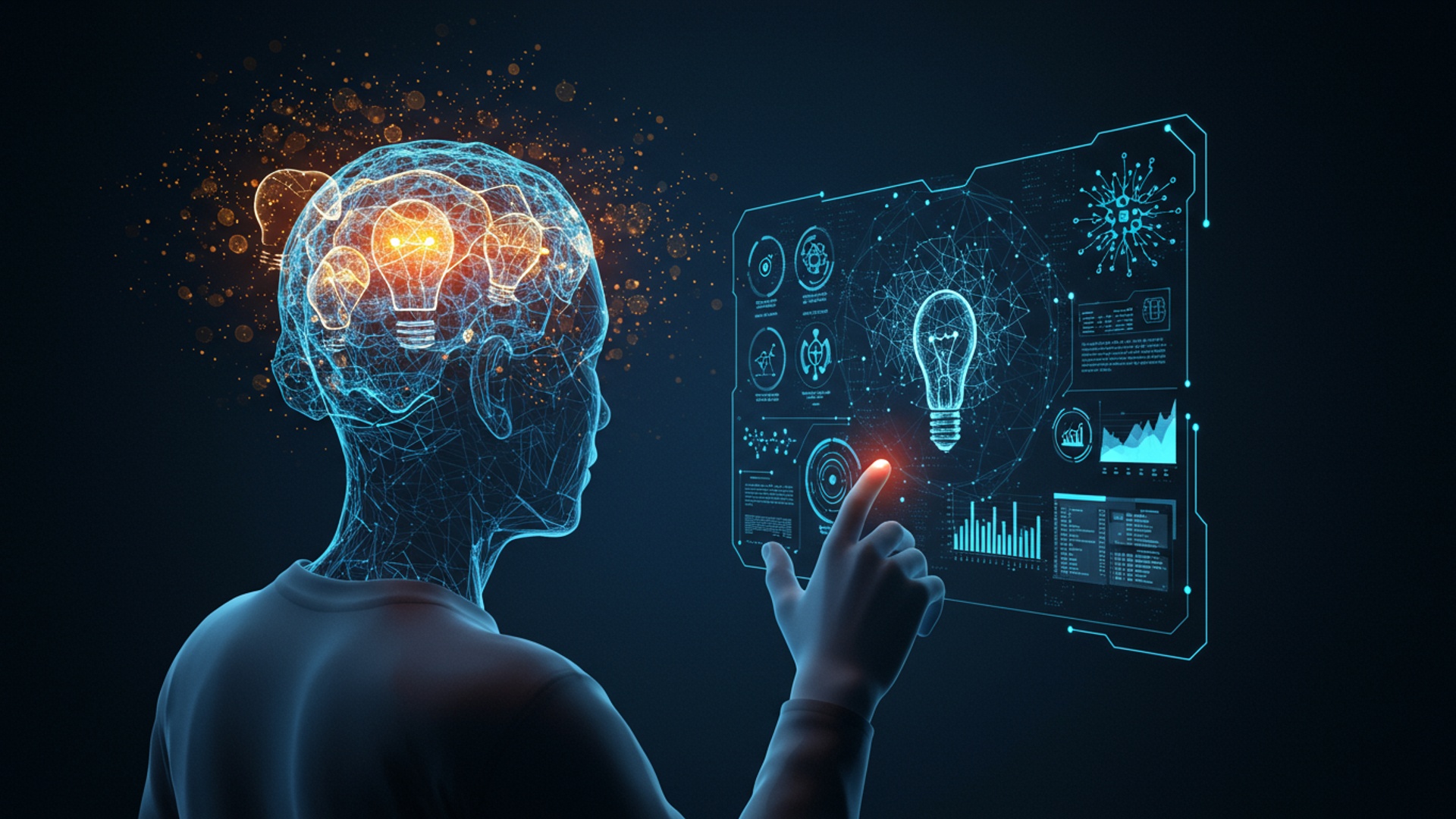
Understanding the Creative Brainstorming Process
Creativity is often seen as a spark of genius. in reality, it’s a process—a structured (or sometimes chaotic) journey of generating, developing. communicating new ideas. At its heart, brainstorming is a technique designed to unleash this creative potential, encouraging the free flow of thoughts without immediate judgment.
Traditionally, brainstorming sessions involve groups of people or individuals using various methods to stimulate idea generation. Some common techniques include:
- Mind Mapping: Starting with a central concept and branching out with related ideas, keywords. images. It’s a visual way to organize thoughts and discover connections.
- Free Association: Jotting down whatever comes to mind in response to a prompt, allowing one idea to naturally lead to the next without censoring.
- SCAMPER Method: A framework that uses action verbs to prompt new ideas by looking at an existing product, service, or idea and asking how it can be Substituted, Combined, Adapted, Modified (Magnified/Minified), Put to another use, Eliminated, or Reversed.
- Brainwriting: A silent brainstorming method where participants write down their ideas, then pass them around for others to add to or be inspired by.
While these methods are incredibly effective, they often come with their own set of challenges. We’ve all experienced moments of “writer’s block,” where ideas simply won’t flow. Group dynamics can lead to “groupthink,” where dominant voices overshadow others, or fear of judgment stifles unique contributions. Sometimes, our own perspectives are too narrow, limiting the range of possibilities we can envision. This is precisely where the power of AI can transform the landscape of ideation.
What is AI and How Does it Work for Ideation?
Artificial Intelligence (AI) refers to the simulation of human intelligence in machines that are programmed to think and learn like humans. In the context of creative brainstorming, AI isn’t about replacing human ingenuity; it’s about augmenting it, acting as a powerful co-pilot that can help us overcome those traditional hurdles and unlock new dimensions of thought. The core technologies driving AI for ideation include:
- Natural Language Processing (NLP): This branch of AI allows computers to comprehend, interpret. generate human language. When you give an AI a prompt or a topic, NLP is what helps it comprehend your request and formulate coherent, relevant responses.
- Machine Learning (ML): A subset of AI that enables systems to learn from data, identify patterns. make decisions with minimal human intervention. For ideation, ML models are trained on vast datasets of text, images. concepts, allowing them to draw connections and generate ideas based on what they’ve “learned.”
- Generative AI: This is perhaps the most exciting development for brainstorming. Generative AI models, such as large language models (LLMs) like GPT-4, are designed to create new content—be it text, images, audio, or even code—that is original and contextually relevant. This capability is absolutely central to leveraging AI for ideation, as it allows the AI to not just process data but to actively invent and propose novel concepts.
When you engage with an AI tool for brainstorming, you’re essentially tapping into a colossal knowledge base and a sophisticated pattern-matching engine. It can process details at speeds impossible for a human, cross-referencing ideas, exploring obscure connections. generating diverse options that might never occur to a single person or even a group. This makes AI for ideation a game-changer for anyone looking to supercharge their creative output.
The Core Mechanisms: How AI Sparks Ideas
The magic of AI in generating brilliant ideas lies in its unique operational mechanisms. These capabilities allow it to approach problems and generate solutions in ways that complement. often expand upon, human thinking.
- Pattern Recognition & Connection Making: AI models are trained on immense datasets, allowing them to detect subtle patterns and relationships across vast amounts of details that would be impossible for a human to process. For instance, an AI can find unexpected links between seemingly unrelated industries or concepts, suggesting innovative hybrid solutions. Imagine asking an AI to combine “sustainable packaging” with “space exploration” – it might propose biodegradable materials grown from specific extraterrestrial microbes.
- data Synthesis: When faced with a complex problem, AI can rapidly gather, filter. synthesize data from countless sources. Need to grasp the latest trends in renewable energy for a new business idea? An AI can summarize research papers, news articles. market analyses in minutes, providing a consolidated knowledge base from which to ideate. This speed and breadth of data processing directly fuels the effectiveness of AI for ideation.
-
Generative Capabilities: This is where AI moves beyond analysis to creation. Generative AI can produce entirely new text, images, audio, or even code based on your prompts. For brainstorming, this means it can generate:
- Unique headlines for an article.
- Diverse plot ideas for a story.
- Variations of a product concept.
- Different scenarios for a marketing campaign.
The AI doesn’t just retrieve existing ideas; it constructs novel combinations and expressions, giving you fresh starting points.
- Perspective Shifting: Our human experiences and biases often limit our viewpoints. AI, lacking these biases (though it can inherit biases from its training data, which is an vital consideration), can offer radically different angles. It can generate ideas from the perspective of a specific demographic, a historical figure, or even an inanimate object, forcing us to think outside our usual cognitive boxes and discover unexpected solutions.
Consider a situation where a team is struggling to come up with new product features for a smartphone. A human brainstorming session might focus on obvious improvements like camera quality or battery life. An AI, But, prompted with “What if a smartphone was designed for someone living off-grid?” or “How could a smartphone enhance empathy?” , might suggest features that are entirely novel, such as a built-in air quality sensor for nature monitoring, or an AI companion that helps examine emotional tones in conversations. This ability to explore unconventional paths makes AI for ideation an invaluable creative partner.
Practical Applications: AI Tools for Ideation
The theoretical capabilities of AI translate into practical, tangible tools that can be integrated into virtually any creative process. These applications leverage AI’s strengths to provide concrete support for idea generation.
-
Text Generation for Brainstorming Prompts and Content:
One of the most straightforward uses of AI is to generate text. This can range from simple lists to detailed outlines.
"Generate 10 innovative marketing campaign ideas for a new plant-based protein snack targeting athletes, focusing on social media platforms and unique selling propositions."An AI could respond with ideas like “The ‘Fuel Your Victory’ TikTok challenge,” “Athlete testimonial series on Instagram using AR filters,” or “Partnership with e-sports teams for in-game snack endorsements.” It can also help with:
- Creating blog post ideas and outlines.
- Drafting catchy slogans and headlines.
- Generating variations of product descriptions.
- Developing character backstories or plot twists for creative writing.
-
Image Generation for Visualizing Concepts:
Visualizing ideas is crucial, especially in design, marketing. product development. AI image generators can bring abstract concepts to life.
"Create an image of a futuristic eco-friendly city where buildings are integrated with living plants and transportation is entirely autonomous and emission-free."This capability allows designers to quickly prototype visual ideas, create mood boards, or explore different aesthetic directions without needing advanced graphic design skills or hours of manual work. It’s fantastic for exploring “what if” scenarios visually, which is a powerful aspect of AI for ideation.
-
Concept Expansion & Elaboration:
Have a nascent idea but not sure how to develop it? AI can take a seed of an idea and help it grow. For example, if you have an idea for a “smart water bottle,” an AI can suggest features like temperature regulation, hydration tracking, integration with fitness apps, self-cleaning mechanisms, or even a gamified hydration challenge system.
-
Problem-Solving Frameworks:
AI can also apply structured problem-solving frameworks to your challenges. You can ask it to perform a SWOT analysis (Strengths, Weaknesses, Opportunities, Threats) on a business idea, or apply the SCAMPER method to an existing product to suggest improvements. This provides a systematic approach to ideation, ensuring all angles are considered.
These tools, when used effectively, transform the brainstorming experience from a potentially slow and arduous task into a dynamic, interactive. highly productive session. The key is to see the AI as an intelligent assistant, not a replacement for your own critical thinking and creativity.
AI vs. Traditional Brainstorming: A Comparative Look
To fully appreciate how AI supercharges creative brainstorming, it’s helpful to compare its characteristics with traditional methods. While both have their merits, AI introduces capabilities that fundamentally shift the ideation landscape.
| Feature | Traditional Brainstorming | AI for Ideation |
|---|---|---|
| Speed of Idea Generation | Relatively slow; limited by human processing speed and group dynamics. | Extremely fast; can generate hundreds of ideas in seconds. |
| Breadth of Ideas | Limited by participants’ knowledge, experiences. biases. | Vast; draws from massive datasets, connecting disparate concepts. |
| Novelty/Originality | Dependent on individual creativity; can suffer from groupthink. | High potential for novel combinations and unexpected perspectives. |
| insights Access | Limited to participants’ memory or pre-session research. | Instant access to vast amounts of up-to-date data for context. |
| Bias | Prone to human cognitive biases, groupthink. confirmation bias. | Can inherit biases from training data. offers “unbiased” combinatorial suggestions. |
| Cost/Resources | Requires meeting space, facilitators. participant time. | Primarily software/subscription cost; minimal time investment once familiar. |
| Human Intuition/Emotion | Central to the process; provides empathy and nuanced understanding. | Lacks genuine intuition or emotional understanding; relies on learned patterns. |
| Refinement/Elaboration | Manual, iterative process, often requiring multiple sessions. | Can rapidly refine, expand, or rephrase ideas based on prompts. |
As the table illustrates, AI for ideation excels in speed, breadth. the ability to generate novel combinations. But, it’s crucial to remember that AI complements, rather than replaces, human insight. The most powerful brainstorming sessions will likely integrate both approaches, using AI to generate a wide array of starting points, which are then refined, filtered. imbued with human intuition and strategic thinking.
Real-World Use Cases: Where AI for Ideation Shines
The application of AI for ideation isn’t confined to abstract theory; it’s actively transforming how professionals across various sectors approach creative challenges. Here are some real-world examples where AI proves invaluable:
-
Marketing & Advertising:
Imagine a small marketing agency tasked with creating a fresh campaign for a new line of organic dog food. Traditional brainstorming might yield a few good slogans and visual concepts. With AI, they could:
- Generate hundreds of taglines and ad copy variations in minutes, exploring different tones (playful, authoritative, heartwarming).
- Brainstorm unique social media challenges or interactive campaigns targeting specific dog owner demographics.
- Develop creative concepts for video ads, including character ideas for mascots or narrative arcs.
This accelerates the initial creative burst, allowing the human team to spend more time refining the best ideas.
-
Product Development:
A tech startup is designing a new smart home device. Instead of relying solely on internal design sprints, they use AI for ideation:
- To suggest innovative features based on user pain points identified from online reviews of competitors.
- To generate different industrial design aesthetics (e. g. , “minimalist and futuristic,” “warm and natural,” “playful and retro”).
- To brainstorm potential accessory products or service integrations that would enhance the core device’s value.
This helps in exploring a broader design space and uncovering unexpected opportunities.
-
Content Creation:
A freelance writer needs to generate a year’s worth of blog topics for a client in the sustainable travel niche. Manually researching and brainstorming could take days. Using AI:
- The writer inputs the niche and target audience. the AI generates a diverse list of blog post titles and topic clusters (e. g. , “Eco-Friendly Backpacking Gear Reviews,” “Top 10 Sustainable European Cities,” “Responsible Wildlife Tourism Guides”).
- The AI can also suggest subheadings and key points for each topic, providing a solid foundation for drafting.
This significantly reduces the initial ideation phase, freeing up time for writing and detailed research.
-
Scientific Research & Innovation:
Researchers exploring new drug compounds might use AI to:
- Generate novel molecular structures with specific properties.
- Brainstorm alternative experimental designs or hypotheses based on existing literature.
- Identify potential interdisciplinary connections that could lead to breakthrough discoveries.
While human expertise remains paramount, AI acts as a powerful hypothesis-generation engine.
-
Personal Projects & Learning:
Even for personal hobbies, AI for ideation can be a fantastic resource. Planning a themed party? Ask AI for unique theme ideas, decorations. menu suggestions. Learning a new skill? Ask AI for a personalized learning path or creative projects to practice with. The applications are as limitless as your imagination.
These examples underscore that AI isn’t just for large corporations; it’s a democratic tool that can empower individuals and small teams to achieve unprecedented levels of creative output.
Actionable Takeaways: Integrating AI into Your Creative Process
Harnessing the power of AI for ideation doesn’t require you to be a tech guru. It’s about adopting a new mindset and integrating these tools thoughtfully into your existing creative workflow. Here are some actionable steps to get started:
- Start with a Clear, Specific Prompt: The quality of AI-generated ideas heavily depends on the clarity and detail of your input. Instead of “Give me ideas,” try “Generate 10 unique product names for a luxury vegan skincare brand targeting eco-conscious millennials, emphasizing natural ingredients and ethical sourcing.” The more context you provide, the better the output.
- Iterate and Refine: AI as a Co-Pilot: View AI as an intelligent assistant, not a magic bullet. The first set of ideas might not be perfect. Use them as a springboard. Ask the AI to “Expand on idea #3,” “Give me variations of idea #7 with a more playful tone,” or “Combine elements from idea #2 and #5.” It’s a dialogue, not a monologue.
- Combine AI with Human Insight: The ultimate power comes from the synergy between AI’s generative capacity and your human critical thinking, intuition. emotional intelligence. Use AI to cast a wide net, then apply your expertise to filter, select. develop the most promising ideas. Your unique perspective is what transforms raw AI output into truly brilliant concepts. This blended approach is where the true value of AI for ideation lies.
- Experiment with Different Tools: The AI landscape is rapidly evolving. Explore various AI platforms and tools (e. g. , ChatGPT, Midjourney, Jasper, Copy. ai) as they each have their strengths and nuances. Some might be better for text, others for images. some excel at specific types of ideation. Find what resonates with your workflow.
- Embrace Ethical Considerations and Critical Thinking: While AI is powerful, it’s not infallible. Be aware of potential biases in its training data that might lead to unrepresentative or stereotypical ideas. Always fact-check and critically evaluate the suggestions. grasp that while AI can generate creative outputs, the originality and ethical responsibility ultimately rest with you. Ensure your ideas are not just novel. also appropriate, inclusive. actionable.
Conclusion
AI doesn’t replace human creativity; it supercharges it, transforming your brainstorming from a solitary sprint into a collaborative marathon. I challenge you to treat AI as your tireless creative partner. Next time you’re stuck, ask it to ‘generate 20 unconventional solutions for [problem]’ or ‘develop unique character arcs for [story idea].’ Personally, I’ve found it invaluable for injecting fresh perspectives when my own well of ideas feels dry, pushing me beyond conventional thinking. With rapid advancements in models like Gemini and custom AI tools, the quality and diversity of AI-generated insights are continually improving, offering truly novel starting points. This isn’t about outsourcing thought. about amplifying it, allowing you to explore more avenues and discover connections you might otherwise miss, challenging your inherent biases. Embrace this partnership, experiment fearlessly. watch your brainstorming sessions transcend the ordinary, truly sparking brilliant ideas. For more ways to harness AI’s potential, explore Skyrocket Your Marketing Efforts with ChatGPT Proven Tactics.
More Articles
Skyrocket Your Marketing Efforts with ChatGPT Proven Tactics
Supercharge Teamwork 10 AI Tools for Unstoppable Productivity
Transform Your Ideas into Art How AI Image Generators Work
Master Gemini Image Prompts For Creative Visuals 
FAQs
What’s this ‘AI supercharging brainstorming’ all about?
It’s essentially about leveraging artificial intelligence tools to significantly boost your creative thinking and idea generation sessions. AI acts as a smart assistant, helping you dig deeper, explore more angles. come up with a wider range of brilliant ideas than you might on your own.
How does AI actually help me generate more ideas?
AI can help in several ways: it can suggest new perspectives, find connections between seemingly unrelated concepts, generate variations of an initial idea, provide background data or examples. even help organize and categorize your thoughts, making the whole process much more dynamic and insightful.
Will AI just give me its ideas, or will I still be the creative one?
You’re definitely still the creative mastermind! AI functions more like a super-powered co-pilot or a tireless research assistant. It takes your initial prompts and thoughts, expands on them, offers suggestions. sparks new directions. the core creativity, critical evaluation. final decision-making remain firmly with you. It’s about augmentation, not replacement.
Is this only for tech geniuses, or can anyone use AI for brainstorming?
Absolutely anyone can use it! Many AI-powered brainstorming tools are designed with very user-friendly interfaces. You don’t need to be a coding expert or a tech wizard to get started. If you can type a question or a concept, you can use these tools to enhance your creativity.
What kinds of problems or projects can AI help brainstorm ideas for?
Pretty much anything! Whether you’re looking for innovative business strategies, catchy marketing campaign concepts, creative writing prompts, solutions to complex design challenges, or even just ideas for a personal project, AI can lend a hand across a vast range of topics and industries.
Does AI replace traditional brainstorming methods, like group sessions with a whiteboard?
Not at all! Think of AI as an incredibly powerful addition to your existing toolkit. It can make individual brainstorming much more productive. it can even enhance group sessions by providing a wealth of initial ideas, different perspectives, or data points to discuss and build upon. It complements, rather than replaces, other methods.
Are there any potential downsides or things to be careful about when using AI for idea generation?
That’s a great question! While AI is fantastic, it’s crucial to remember it learns from existing data. So, occasionally, it might generate ideas that are generic, biased, or lack true originality. Always apply your critical thinking, human judgment. unique perspective to refine and personalize the AI’s output. It’s a tool to inspire, not to dictate.