
The landscape of visual communication is undergoing a seismic transformation, propelled by rapid advancements in artificial intelligence. Traditional video production, long constrained by significant time, cost. technical barriers, is now being fundamentally redefined as ai video creation empowers creators to generate sophisticated, engaging content with unprecedented speed and efficiency. Consider the astonishing capabilities of emerging text-to-video models that craft intricate scenes from simple prompts, or the widespread adoption of AI-driven platforms enabling the creation of photorealistic digital presenters and dynamic motion graphics in minutes. This technological evolution not only streamlines workflows but also democratizes access to high-quality content production, shifting the focus from arduous manual processes to strategic, creative iteration and faster audience engagement.
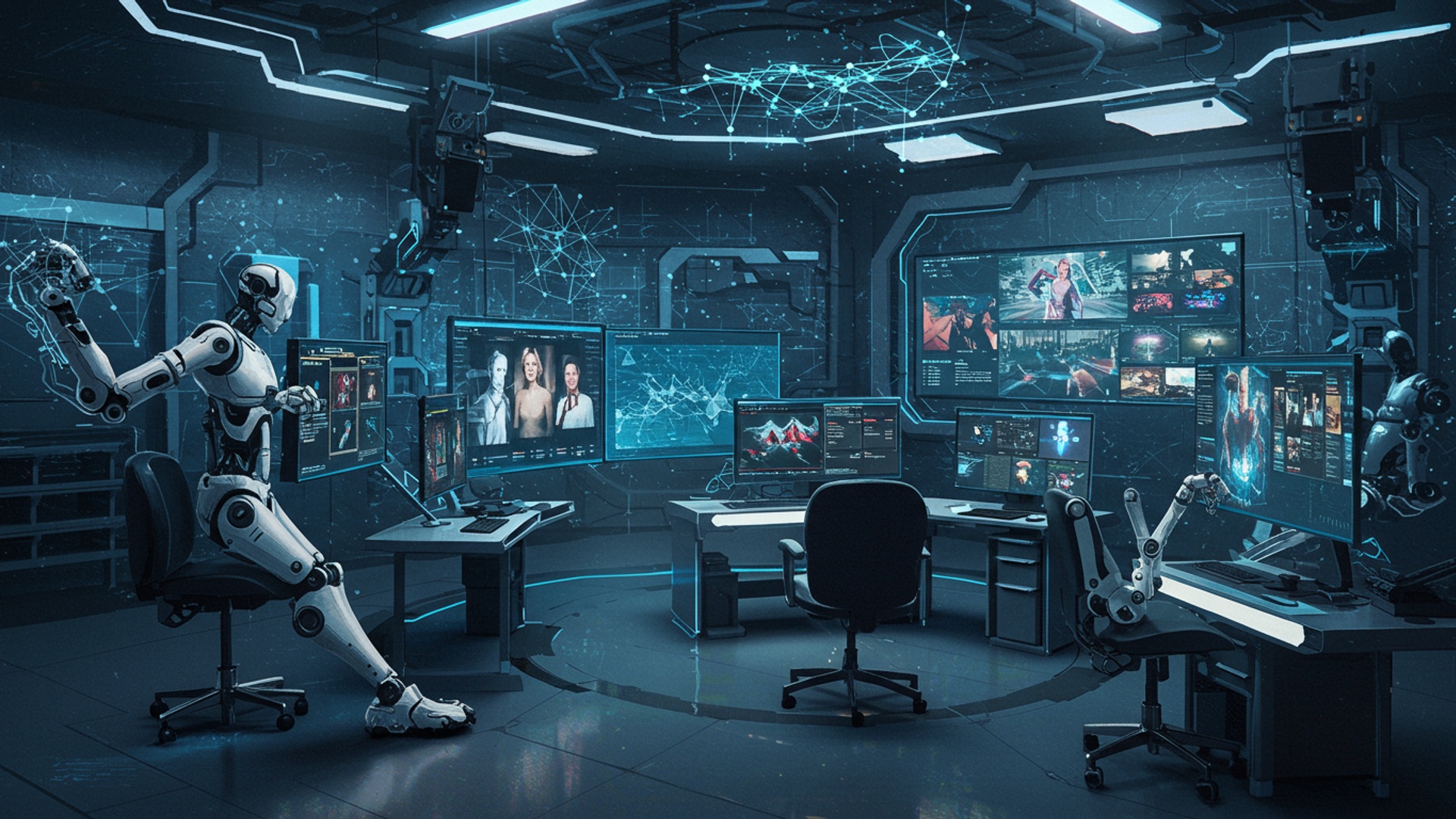
Understanding AI Video Creation: The Basics
In today’s fast-paced digital world, video content is king. From educational tutorials to engaging marketing campaigns, video captures attention like no other medium. But traditional video production can be time-consuming, expensive. require specialized skills. This is where AI video creation steps in, revolutionizing how we produce visual stories. At its core, AI video creation refers to the use of artificial intelligence technologies to automate, assist. enhance various stages of video production, from scriptwriting to final editing.
How does AI transform this process? Imagine converting a written article into a professional-looking video complete with voiceovers, visuals. background music, all with minimal human intervention. AI makes this possible by understanding text, generating speech, identifying relevant visuals. even animating characters. This significantly speeds up production, reduces costs. opens up video creation to individuals and businesses without extensive technical expertise or large budgets. It’s like having a virtual film crew and editor at your fingertips, ready to produce engaging content faster.
Key technologies powering this revolution include:
- Machine Learning (ML)
- Natural Language Processing (NLP)
- Computer Vision (CV)
- Generative AI
The backbone of AI, ML algorithms learn from vast datasets to recognize patterns, predict outcomes. make decisions. In AI video creation, ML helps in tasks like object recognition, scene classification. even predicting audience engagement.
This technology enables AI to comprehend, interpret. generate human language. NLP is crucial for converting scripts into video scenes, generating voiceovers from text. even creating summaries.
CV allows AI systems to “see” and interpret visual data from images and videos. It’s used for tasks such as identifying faces, objects, actions. even emotions, which helps in selecting appropriate visuals or generating realistic avatars.
A subset of AI that can create new content, such as images, audio, or video, that didn’t exist before. This is what powers the generation of unique visuals, realistic synthetic voices. even entire video segments from simple text prompts.
The Core Components of AI Video Creation Platforms
Modern AI video creation platforms are sophisticated tools, each offering a unique suite of features designed to streamline the video production workflow. Understanding these core components will help you leverage the technology effectively:
- Text-to-Video Generation
- AI-Powered Scriptwriting & Storyboarding
- Voice Synthesis (Text-to-Speech) & Voice Cloning
- Automated Editing & Post-Production
- Avatar/Presenter Generation
This is arguably the most transformative feature. Users input a script or an article. the AI analyzes the text, selects relevant stock footage or images, generates animated text overlays. stitches them together into a coherent video. Some advanced platforms can even generate entirely new visual scenes based on textual descriptions. For instance, you might type “a bustling market street in Marrakech” and the AI generates a visual representation.
Stuck on ideas? Some AI tools can assist with brainstorming, generating script outlines, or even drafting full scripts based on a topic or keywords you provide. They can also help in storyboarding by suggesting visual sequences that match your narrative, ensuring a logical flow before you even start generating the video.
Gone are the days of robotic-sounding voiceovers. AI-powered text-to-speech (TTS) engines now produce incredibly natural and expressive voices in multiple languages and accents. Voice cloning takes this a step further, allowing you to train an AI model on your own voice (or a specific voice actor’s) to generate new speech that sounds exactly like them, maintaining consistent branding and tone.
AI can significantly cut down on editing time. It can automatically remove filler words from audio, identify and cut silence, add appropriate background music. even suggest optimal cuts for pacing. Some tools can also apply color grading, add transitions. stabilize shaky footage automatically, bringing a professional polish without manual effort.
For those who don’t want to appear on camera, AI can create realistic human-like avatars that can deliver your script. These avatars can range from animated cartoons to incredibly lifelike digital humans, complete with facial expressions and gestures that synchronize with the AI-generated voiceover. This is a game-changer for explainer videos, corporate training. news updates where a consistent presenter is desired without the need for a physical shoot.
Exploring Different AI Video Creation Tools
The market for AI video creation tools is booming, with new platforms emerging regularly. Each tool has its strengths, ideal use cases. pricing structures. Here’s a comparison of some popular options to give you an idea:
| Feature/Tool | Synthesys X | HeyGen | Pictory | Descript | InVideo AI |
|---|---|---|---|---|---|
| Primary Focus | Realistic AI human presenters & voiceovers | AI avatars, voice cloning. text-to-video | Text-to-video (articles, scripts) & video editing | All-in-one audio/video editing with AI tools | Text-to-video, AI script generation, rich media library |
| Key Strengths | High-quality synthetic media, extensive avatar library, multilingual support | Advanced voice cloning, diverse avatar options, intuitive interface | Quick conversion of long-form content, automatic captioning, brand kit integration | “Overdub” voice cloning, text-based video editing, screen recording | Ease of use for beginners, vast stock media, AI script assistant |
| Ideal For | Corporate training, e-learning, marketing, news broadcasts | Marketing, social media, explainers, personalized videos | Bloggers, marketers, educators transforming text into video | Podcasters, YouTubers, content creators needing efficient editing | Small businesses, content creators, quick social media videos |
| Ease of Use | Moderate to High | High | High | Moderate | High |
| Pricing Model | Subscription (tiered based on features/usage) | Subscription (tiered based on video length/credits) | Subscription (tiered based on video minutes) | Subscription (tiered based on features/hours) | Subscription (tiered based on video exports) |
When choosing an AI video creation tool, consider your specific needs: Do you prioritize realistic avatars? Seamless text-to-video conversion? Or powerful editing capabilities? Most platforms offer free trials, allowing you to test them before committing.
How AI Video Creation Works: A Step-by-Step Guide
While each AI video creation platform might have its unique interface, the underlying workflow generally follows a similar pattern. Understanding these steps will demystify the process and help you get started:
- Content Input
This is where you feed the AI your core message.
- Text Input
- Audio Input
- Image/Video Input
You can paste an article, a blog post, a script you’ve written, or even just a few bullet points. The AI’s NLP capabilities will review this text to comprehend its meaning, identify key themes. break it down into logical segments.
Some tools allow you to upload an existing audio track. the AI will transcribe it, match visuals, or even clone the voice for future use.
You might upload your own brand assets, logos, specific images, or short video clips that you want the AI to incorporate into the final production.
Once the input is received, the AI gets to work.
- Script Analysis & Scene Mapping
- Voiceover Generation
- Avatar Animation
The AI breaks down your text into individual sentences or paragraphs, identifying keywords and concepts. It then uses its internal algorithms and vast databases to suggest or automatically select relevant visuals (stock photos, videos, animations) for each segment.
If you’ve chosen a text-to-speech option, the AI generates a voiceover using your selected voice, language. tone, synchronizing it with the textual content.
If an AI avatar is used, the AI animates its facial expressions and body language to match the generated speech, creating a natural-looking presentation.
This is where your creative input truly shines. The AI provides a first draft. you’re in the driver’s seat for fine-tuning.
- You can swap out visuals, trim clips, adjust timing, change background music. modify text overlays.
- You might refine the AI-generated script, tweak the voiceover pronunciation, or even change the avatar’s outfit.
- Many platforms offer drag-and-drop interfaces, making these adjustments intuitive. Think of it as collaborating with a highly efficient. not yet perfect, assistant.
Once you’re satisfied with the result, the platform renders your video.
- You typically download the final video in standard formats like MP4.
- Some platforms offer direct sharing options to social media channels or video hosting sites like YouTube, streamlining your distribution process.
Here’s a simplified conceptual prompt flow for an AI video creation tool:
// Example for a text-to-video platform
// User Input:
TEXT_SCRIPT = "Artificial intelligence is rapidly transforming the digital landscape. It offers unprecedented opportunities for innovation across industries." VOICE_STYLE = "professional_male" // or "energetic_female", "your_cloned_voice"
LANGUAGE = "English (US)"
VIDEO_ASPECT_RATIO = "16:9" // or "9:16" for vertical video
BACKGROUND_MUSIC_THEME = "corporate_inspirational" // AI Processing (internal steps - user doesn't directly see this code)
// 1. NLP parses TEXT_SCRIPT to identify keywords: "Artificial intelligence", "digital landscape", "innovation", "industries". // 2. Computer Vision searches stock media library for visuals related to these keywords. // - Scene 1: "Artificial intelligence" -> suggests abstract AI visuals, circuit boards. // - Scene 2: "digital landscape" -> suggests cityscapes with data overlays, people interacting with tech. // - Scene 3: "innovation across industries" -> suggests diverse industry shots (healthcare, manufacturing, finance). // 3. Text-to-Speech engine generates audio for TEXT_SCRIPT using VOICE_STYLE and LANGUAGE. // 4. Generative AI assembles scenes, adds text overlays, synchronizes audio. applies BACKGROUND_MUSIC_THEME. // User Refinement:
// - Replace auto-selected visual for Scene 1 with a specific image: my_ai_logo. jpg
// - Adjust timing of Scene 2 to be 3 seconds longer. // - Change background music volume to 70%. // Final Output: MP4 video file
Real-World Applications and Use Cases
The versatility of AI video creation makes it applicable across a vast array of industries and personal projects. Here are some compelling real-world use cases:
- Marketing & Advertising
- Education & E-learning
- Corporate Communications
- Content Creators & Influencers
- Personal Storytelling & Social Media
- News & Media Outlets
Businesses can quickly produce high-quality product demos, explainer videos for services, social media ads. promotional content. Imagine a small e-commerce business rapidly generating dozens of unique video ads for different product lines without needing a full production team. I’ve seen a local bakery use AI to turn their daily blog posts about new recipes into short, engaging videos for Instagram, significantly boosting their reach.
Educators can transform written lesson plans, lecture notes, or textbook chapters into dynamic video tutorials and courses. This is particularly useful for creating accessible content, translating lessons into multiple languages with AI voiceovers, or generating personalized learning modules. Think of a history teacher converting dense historical texts into engaging animated narratives for students.
Companies use AI video creation for internal training videos, onboarding new employees, CEO messages, quarterly reports. internal announcements. A global corporation can quickly disseminate a consistent message to its workforce across different regions and languages using AI-generated presenters and multilingual voiceovers.
YouTubers, TikTokers. bloggers can rapidly prototype video ideas, create animated summaries of their articles, or generate engaging intros and outros. An influencer focusing on tech reviews could use AI to quickly produce animated explainers for complex technical features, making their content more digestible for their audience.
Individuals can turn their personal stories, travel blogs, or photo albums into captivating video montages. It’s a fantastic way to share memories with friends and family, or even create unique personalized video greetings.
AI can generate breaking news updates, weather forecasts, or financial reports with virtual anchors, allowing newsrooms to produce more content faster and with fewer resources.
Actionable Tips for Producing Engaging AI Videos
While AI handles much of the heavy lifting, your creative input remains paramount. Here’s how to ensure your AI-generated videos truly engage your audience:
- Craft Compelling Scripts
- Start with a Hook
- One Idea Per Scene
- Call to Action
- Edit for Brevity
- Choose the Right AI Voice and Avatar
- Match Tone to Content
- Consistency is Key
- Experiment with Accents and Languages
- Leverage Visuals and Music Wisely
- Don’t Settle for Defaults
- Quality Over Quantity
- Background Music Sets the Mood
- grasp Your Audience
- Demographics
- Platform
- Purpose
- Iterate and Experiment
- Test Different Versions
- Learn from Analytics
- Embrace the AI’s Strengths
The AI is only as good as the input you provide. A clear, concise. engaging script is the foundation of a great video.
Grab attention in the first few seconds.
Break down complex details into digestible chunks, aligning each with a distinct visual.
Clearly tell your audience what you want them to do next (e. g. , “Visit our website,” “Subscribe,” “Learn More”).
AI video creation excels at efficiency, so make your script efficient too. Remove unnecessary words.
The voice and visual presenter significantly impact viewer perception.
A serious topic might call for a calm, authoritative voice, while a marketing video might benefit from an energetic, enthusiastic one.
If you’re building a brand, consider using the same voice or avatar across your videos for recognition.
Leverage AI’s multilingual capabilities to reach a broader audience. ensure the accent is appropriate for your target demographic.
These elements elevate your AI video creation from good to great.
While AI suggests visuals, always review and replace them with more impactful or brand-aligned options from your platform’s library or your own uploads.
A few strong, relevant images or video clips are better than many generic ones.
Choose music that complements your message and doesn’t distract. Ensure it has an appropriate license for your use case. Adjust its volume so it supports, rather than overwhelms, the voiceover.
Tailor your content to who will be watching.
Are they teens, young adults, or older adults? This influences your language, visual style. even the pace of the video.
A video for TikTok will be different from one for LinkedIn. Consider aspect ratio (e. g. , 9:16 for vertical mobile video), length. tone.
Is it to inform, entertain, persuade, or educate? Your video’s structure and content should align with its primary goal.
The beauty of AI video creation is its speed.
Create two or three variations of a video with slight changes (e. g. , different hooks, different calls to action, different music) and A/B test them with a small audience to see what performs best.
Pay attention to viewer retention, engagement rates. click-through rates. Use this data to refine your future AI video creation efforts.
Use AI to handle the repetitive tasks, freeing you up to focus on the creative strategy and messaging.
Overcoming Challenges and Ethical Considerations
While AI video creation offers incredible advantages, it’s essential to address the challenges and ethical questions that come with this powerful technology.
- Maintaining Authenticity and the Human Touch
- Bias in AI-Generated Content
- Actionable Takeaway
- Copyright and Ownership
- Actionable Takeaway
- The Future of AI Video Creation
One of the biggest concerns is that AI-generated content can feel impersonal or artificial. To counter this, always review and inject your unique brand voice, personality. genuine emotions into the script and visual choices. Human oversight is crucial. For instance, after generating a draft with AI, I often go back and rephrase sections to sound more natural, as if I were speaking directly to the audience.
AI models learn from vast datasets. if those datasets contain biases (e. g. , gender, racial, or cultural stereotypes), the AI can perpetuate them in its outputs. This could manifest in avatar appearance, voice representation, or even the stock footage selected.
Be vigilant in reviewing AI-generated content for unintended biases. Diversify your input prompts and actively seek out inclusive visual and audio options. Choose platforms that prioritize ethical AI development.
As generative AI creates new content, questions arise about who owns the copyright – the user, the AI developer, or the original creators of the data used for training? Also, ensure that any stock media used by the AI platform is properly licensed for your intended use.
Always check the terms of service for your chosen AI video creation platform regarding content ownership and usage rights. Use reputable stock media sources or your own original content to minimize risks.
The technology is evolving at an astonishing pace. We can expect even more realistic avatars, more nuanced emotional range in AI voices. even greater automation in complex editing tasks. AI might soon be able to generate entire unique storylines and visual styles based on minimal prompts. But, the role of human creativity and strategic thinking will remain indispensable in guiding these powerful tools to produce truly impactful and meaningful content. The synergy between human ingenuity and AI efficiency will define the next era of video production.
Conclusion
You’ve now explored the incredible potential of AI in transforming video creation. Remember, the goal isn’t just speed. leveraging these powerful tools to craft more engaging, personalized stories. Start by experimenting with a dedicated AI video platform for your next social media short, perhaps focusing on a specific feature like avatar generation or dynamic scene creation. Don’t just automate; elevate your narrative by focusing on the unique human touch AI allows you to amplify. My personal journey involved seeing AI as a co-creator, not just a tool. For instance, using AI to quickly generate diverse voiceovers for A/B testing different intros dramatically sped up my workflow and improved audience retention, a crucial metric in today’s fast-paced content landscape. The current trend of hyper-personalized video, driven by advancements like realistic avatar generation and dynamic content, is no longer futuristic—it’s here. Embrace this shift, continuously refine your prompts. let AI be the catalyst for your most compelling visual stories yet.
More Articles
Your Essential Guide to AI Prompt Engineering Unlock Smarter AI Responses
5 Smart Ways Grok AI Video Boosts Your Brand
How to Write Perfect AI Prompts A Step-by-Step Guide
Unlock Stunning Videos with Grok Generator Secrets
Mastering AI Prompts 7 Simple Rules for Better Content 
FAQs
What’s this ultimate guide all about?
This guide is your complete roadmap to using artificial intelligence for making videos. It’s specifically designed to help you create captivating content much more quickly and efficiently than traditional methods, so you can produce more engaging videos faster.
Who should read this ultimate guide to AI video creation?
Anyone looking to streamline their video production, from content creators and marketers to small business owners, educators. even solopreneurs. If you want to make high-quality, engaging videos without spending endless hours on editing, this guide is definitely for you.
How does AI actually speed up the video creation process?
AI tools can automate many time-consuming tasks like script generation, voiceovers, selecting visuals, basic animation. even initial editing. This automation frees you up to focus on the creative direction and overall message, drastically cutting down production time.
Do I need to be a tech wizard to use AI for videos?
Not at all! This guide breaks down complex concepts into easy-to-interpret steps. Many AI video platforms are designed with user-friendliness in mind, meaning you don’t need advanced technical skills or coding knowledge to get started and create impressive content.
What kind of engaging content can I produce with AI assistance?
You can create a wide variety, including marketing videos, educational tutorials, social media clips, product demos, explainer videos, personalized messages. even internal communications. The focus is on making your content more dynamic, professional. attention-grabbing.
Will AI replace my need for human creativity in video making?
Absolutely not! AI is a powerful tool that enhances your creativity, not replaces it. It handles the repetitive and technical aspects, allowing you to pour more energy into storytelling, unique ideas, strategic vision. the emotional connection of your videos.
What key benefits can I expect after going through this guide?
You’ll learn how to significantly reduce video production time, create professional-looking content with fewer resources, overcome creative blocks. consistently produce engaging videos that resonate with your audience. Ultimately, you’ll be able to boost your content output and maintain high quality effortlessly.