
The burgeoning AI landscape, propelled by innovations like generative models and advanced analytics, often appears exclusive to those with computer science degrees, yet this perception misses a critical truth. Today’s AI revolution, evidenced by the rapid integration of tools like ChatGPT into business operations, demands diverse skill sets extending far beyond traditional coding. Non-technical professionals possess invaluable domain expertise, critical thinking. communication abilities crucial for ethical AI deployment, strategic implementation. effective user adoption. Roles in AI product management, business analysis, prompt engineering. AI ethics are rapidly emerging, demonstrating a significant shift where understanding AI’s practical applications and societal impact outweighs solely technical development. An impactful AI career transition leverages these existing strengths, focusing on practical application and strategic understanding rather than a deep dive into neural network architectures from scratch, opening pathways for professionals from any background to contribute meaningfully to this transformative field.
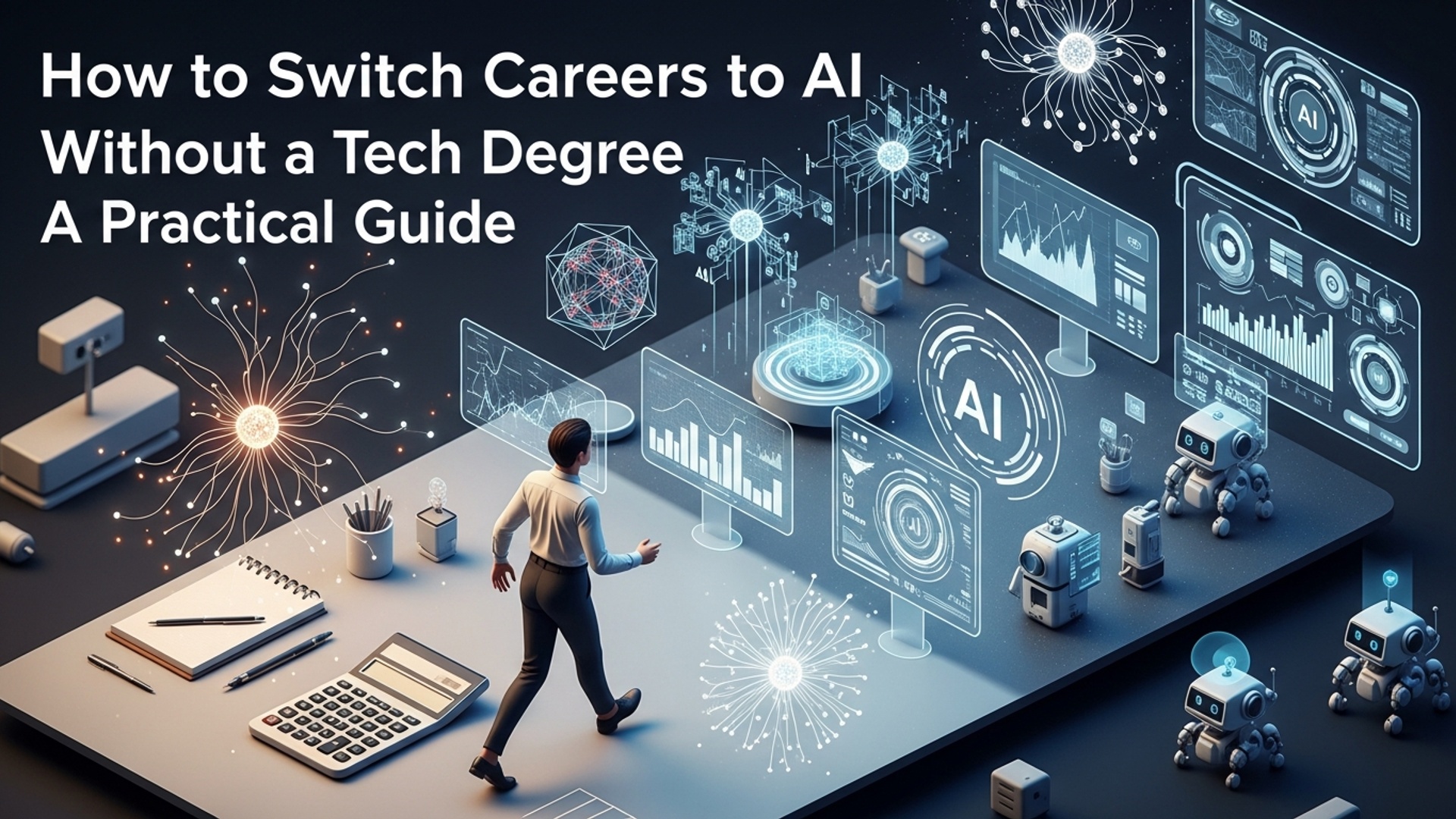
Understanding the AI Landscape for Non-Tech Backgrounds
Many young people hear “Artificial Intelligence” and immediately think of complex coding, advanced mathematics. a need for a computer science degree. While those skills are certainly vital for some AI roles, the reality of the AI industry is much broader and more diverse. An AI career transition is becoming increasingly accessible for individuals from non-technical backgrounds because AI isn’t just about building the core technology; it’s also about applying it, managing it, understanding its impact. communicating its value.
What is AI (Simply Put)?
At its core, Artificial Intelligence refers to systems or machines that mimic human intelligence to perform tasks and can iteratively improve themselves based on the data they collect. Think of it as teaching a computer to ‘think’ or ‘learn’ like us. much faster and on a larger scale. This can involve anything from recognizing faces in photos to understanding your voice commands on a smart speaker, or even recommending movies you might like.
Beyond Coding: Diverse Roles in AI
The beauty of the expanding AI field is the emergence of roles that leverage skills far beyond traditional programming. Here are some examples of positions where your non-tech background can shine:
- AI Project Manager: These individuals oversee the development and deployment of AI projects, ensuring deadlines are met, resources are managed. teams (often multidisciplinary) communicate effectively. Strong organizational and communication skills are key.
- Prompt Engineer: With the rise of large language models (LLMs) like ChatGPT, prompt engineers specialize in crafting effective ‘prompts’ or instructions to get the best possible output from AI models. This requires creativity, critical thinking. a deep understanding of language and context.
- Data Annotator/Labeler: AI models learn from data. Data annotators are crucial for preparing this data, labeling images, text, or audio so the AI knows what it’s looking at or listening to. This is often an entry-level role perfect for starting an AI career transition.
- AI Ethicist/Policy Specialist: As AI becomes more powerful, ethical considerations (bias, privacy, societal impact) are paramount. People from humanities, law, or social sciences are invaluable in shaping responsible AI development and policy.
- UX/UI Designer for AI: User Experience (UX) and User Interface (UI) designers ensure AI products are intuitive, easy. pleasant for people to use. Empathy, design thinking. understanding human behavior are crucial.
- AI Technical Writer/Content Creator: Translating complex AI concepts into clear, understandable language for users, developers, or the general public. Excellent writing and communication skills are essential.
- Business Analyst (AI focus): Understanding business needs and how AI can solve them, then translating those needs into requirements for technical teams.
As you can see, the world of AI is vast. there’s a significant demand for diverse perspectives and skill sets to ensure these powerful technologies are developed and applied effectively and responsibly. Your unique background could be precisely what an AI team needs.
Identifying Your Transferable Skills
Don’t underestimate the power of your existing skills! Even without a tech degree, you’ve likely developed a rich set of capabilities that are highly valuable in the AI world. The key is to recognize them and interpret how they translate into an AI career transition.
What Are Transferable Skills?
These are abilities you’ve gained from any experience—school projects, part-time jobs, volunteer work, hobbies, or even just daily life—that can be applied across different roles and industries. For an AI career transition, these are your secret weapons.
- Communication Skills: Whether it’s writing essays, giving presentations, or collaborating on group projects, clear communication is vital. In AI, you’ll need to explain complex ideas, write user guides, or articulate project requirements.
- Problem-Solving: Every subject, from history to art, requires problem-solving. AI is all about solving problems—from figuring out how to improve a customer service bot to identifying biases in data.
- Critical Thinking: Analyzing data, evaluating arguments. making reasoned judgments are skills you use constantly. AI needs people who can critically assess its outputs, identify potential issues. strategize solutions.
- Creativity & Innovation: Developing new ideas, thinking outside the box. approaching challenges from fresh angles are highly sought after. This is crucial for prompt engineering, AI product design, or developing novel AI applications.
- Empathy & User Understanding: If you’ve ever worked in customer service, retail, or even just helped a friend interpret a difficult concept, you’ve used empathy. This is critical for UX design for AI, ensuring AI systems are user-friendly and meet human needs.
- Domain Expertise: Do you have a deep understanding of healthcare, finance, marketing, education, or any other specific industry? This “domain knowledge” is incredibly valuable. An AI specialist who also understands the nuances of the medical field, for example, can help design more effective AI solutions for hospitals.
- Data Literacy (even basic): If you’ve ever tracked grades, managed a budget, or analyzed survey results, you’ve engaged with data. Understanding how to interpret insights, even basic statistics, is a foundational skill for AI.
- Organization & Project Management: Managing your school assignments, organizing events, or coordinating group efforts all build project management skills. These are directly applicable to AI project management roles.
Connecting Your Skills to AI Roles: Real-World Examples
- From English Major to Prompt Engineer: Your deep understanding of language, nuance. context from studying literature or writing can make you excellent at crafting precise prompts for AI language models.
- From Marketing/Business to AI Product Manager: Your ability to interpret market trends, customer needs. business strategy is perfect for guiding the development of AI products that meet real-world demands.
- From Arts/Design to AI UX/UI Designer: Your eye for aesthetics, understanding of user journeys. ability to create intuitive experiences are directly transferable to designing user interfaces for AI applications.
- From Social Sciences to AI Ethicist: Your background in understanding human behavior, societal structures. ethical frameworks is invaluable for ensuring AI is developed and deployed responsibly.
Take time to reflect on your experiences and list out these transferable skills. They are your bridge to an AI career transition, proving that your unique perspective is an asset, not a limitation.
Essential Foundational Knowledge in AI
While you might not need a tech degree, you absolutely need to build a solid foundation of AI knowledge. This doesn’t mean becoming a machine learning engineer overnight. rather understanding the core concepts and how different parts of AI work together. This knowledge is crucial for a successful AI career transition.
What to Learn: Key AI Concepts Explained
-
Machine Learning (ML): This is a subset of AI that focuses on enabling systems to learn from data without being explicitly programmed. Think of it as teaching a computer by showing it many examples.
- Example: Showing an ML model thousands of pictures of cats and dogs until it can correctly identify new pictures as either a cat or a dog.
-
Deep Learning (DL): A more advanced form of Machine Learning that uses artificial neural networks (inspired by the human brain) with many layers to learn very complex patterns from vast amounts of data.
- Example: Powering facial recognition systems or advanced voice assistants.
-
Natural Language Processing (NLP): This field of AI focuses on enabling computers to interpret, interpret. generate human language.
- Example: Spam filters, language translation tools, chatbots. AI writing assistants.
-
Computer Vision (CV): Allows computers to “see” and interpret visual data from the world, like images and videos.
- Example: Self-driving cars detecting pedestrians, medical imaging analysis, or security surveillance.
- Data Literacy: Understanding how data is collected, stored, cleaned, analyzed. used. This includes basic statistics and knowing how to interpret charts and graphs. You don’t need to be a data scientist. understanding the basics of data quality and interpretation is crucial for any AI role.
- Ethical Considerations in AI: This involves understanding the potential biases in AI systems, privacy concerns, the impact on jobs. the importance of fairness and transparency. This is especially vital for non-technical roles where you’ll be making decisions about AI’s application.
How to Acquire This Knowledge: Accessible Learning Paths
The great news is that there are more resources than ever to learn about AI without enrolling in a traditional university program. These platforms are perfect for an AI career transition:
| Learning Platform/Method | Description | Pros for Non-Tech Backgrounds |
|---|---|---|
|
Online Courses (MOOCs) (e. g. , Coursera, edX, Udacity, DataCamp) |
Structured courses from top universities and companies, often with quizzes, assignments. certificates. Many offer free audit options. | Structured learning path, reputable content, often beginner-friendly tracks, peer communities. |
|
YouTube Channels (e. g. , freeCodeCamp. org, CrashCourse AI, IBM Technology) |
Thousands of free video tutorials and explanations on various AI topics, from basic concepts to practical guides. | Completely free, visual explanations, learn at your own pace, diverse teaching styles. |
|
Blogs & Articles (e. g. , Towards Data Science on Medium, Google AI Blog) |
In-depth articles, tutorials. opinion pieces written by experts in the field. | Stay updated on trends, deep dives into specific topics, often less formal and easier to digest. |
|
Books for Beginners (e. g. , “AI Superpowers” by Kai-Fu Lee, “Artificial Intelligence for Dummies”) |
Comprehensive guides that explain concepts from the ground up, often with real-world examples. | In-depth understanding, can be read offline, good for foundational knowledge. |
|
Interactive Platforms (e. g. , Kaggle Learn, Google AI for Everyone) |
Platforms offering free tutorials and hands-on coding (even basic Python) challenges and datasets. | Practical application, community support, great for building a portfolio. |
When choosing resources, look for courses or content explicitly labeled “for beginners,” “non-technical,” or “introduction to AI.” Focus on understanding the “what” and “why” before diving deep into the “how” (the technical implementation). Many successful professionals have made an AI career transition by leveraging these accessible learning paths.
Building Your AI Portfolio and Practical Experience
When you don’t have a traditional tech degree, your portfolio becomes your most powerful tool for an AI career transition. It demonstrates your skills, passion. ability to apply AI concepts in real-world scenarios, often more effectively than a degree alone. Employers want to see what you can do, not just what you’ve studied.
Why a Portfolio is Crucial
- Demonstrates Applied Knowledge: Shows you can move beyond theory and put AI concepts into practice.
- Highlights Transferable Skills: Your projects can showcase your problem-solving, communication, creativity. analytical abilities.
- Personalizes Your Application: Differentiates you from other candidates by reflecting your unique interests and approach.
- Proof of Initiative: Taking the time to build projects independently signals strong motivation and self-learning capabilities.
Types of Projects You Can Build (No Coding Required for Many!)
You don’t need to code complex algorithms to build a compelling AI portfolio. Many impactful projects focus on the application, analysis, or management of AI.
-
Prompt Engineering Showcase:
- Project Idea: Develop a portfolio of advanced prompts for an LLM (like ChatGPT or Google Bard) to achieve specific goals. This could include prompts for generating marketing copy, summarizing complex texts, writing creative stories, or even debugging simple code.
- How to Showcase: Document the prompt, the AI’s output. your analysis of why certain prompts were more effective. You can host this on a personal website, a blog, or even a detailed LinkedIn post.
-
AI Ethics Case Study:
- Project Idea: Choose a real-world AI application (e. g. , facial recognition in policing, AI in hiring, personalized medicine) and examine its ethical implications. Research potential biases, privacy concerns. societal impacts. Propose solutions or policy recommendations.
- How to Showcase: Write a detailed report, create an infographic, or give a presentation (recorded) outlining your findings and recommendations.
-
Data Annotation/Labeling Project:
- Project Idea: Take a publicly available dataset (e. g. , images of different objects, text reviews with sentiment) and manually annotate a portion of it. Document your process, challenges. insights into data quality.
- How to Showcase: Describe the dataset, your annotation guidelines. show examples of your labeled data. Discuss how your annotation choices impact potential AI model performance.
-
AI Tool Review & Analysis:
- Project Idea: Select several AI tools (e. g. , different AI writing assistants, image generators, translation tools) and conduct a comparative analysis. Evaluate their strengths, weaknesses, user experience. ideal use cases.
- How to Showcase: Create a blog post, a video review, or a detailed comparison table (using HTML for clarity) outlining your findings.
-
UX/UI Redesign for an AI Product:
- Project Idea: Choose an existing AI-powered product (e. g. , a chatbot, a smart home device app) and propose a redesign of its user interface or user experience to make it more intuitive, accessible, or enjoyable.
- How to Showcase: Create mockups (using tools like Figma or Adobe XD), user flows. explain your design choices based on user research principles.
-
Simple AI Application Development (using no-code/low-code tools):
- Project Idea: Explore platforms like Google’s Teachable Machine, Microsoft’s Lobe, or even simple drag-and-drop AI builders to create a basic AI model (e. g. , an image classifier, a simple text generator based on your data).
- How to Showcase: Record a video demonstrating your simple AI application, explain its purpose, how you built it. its limitations.
- Online Portfolio/Personal Website: This is your central hub. Use platforms like WordPress, Wix, or Squarespace to create a professional site where you can host all your projects.
- GitHub (Yes, Even for Non-Coders!) : While traditionally for code, GitHub can host documentation, research papers, project reports. even prompt examples. It shows you comprehend industry-standard collaboration tools.
- LinkedIn: Share updates about your projects, write articles about your learnings. connect with people in the AI space. Your profile should link directly to your portfolio.
- Medium/Personal Blog: Use these platforms to write about your AI insights, project processes. what you’re learning. This establishes you as a thought leader and communicator.
- Uncover Hidden Opportunities: Many jobs are filled through referrals and personal connections before they’re ever publicly advertised.
- Gain Industry Insights: Talking to people already working in AI can give you a clearer picture of different roles, required skills. current trends.
- Build Your Reputation: Actively engaging in the community shows your passion and commitment, making you a memorable candidate.
- Find Mentors: Networking is the primary way to connect with experienced professionals willing to share their knowledge and guidance.
-
LinkedIn: The Professional Hub:
- Strategy: Connect with AI professionals, recruiters. thought leaders. Don’t just send a generic connection request; personalize it by mentioning something specific you admire about their work or a shared interest.
- Engagement: Comment thoughtfully on posts, share relevant articles. even publish your own insights or project updates. Join AI-focused groups.
-
Example Message:
Hello [Name], I've been following your work on [specific AI project/area] and was really impressed by [specific aspect]. As someone looking to make an AI career transition from a [your background] background, I'd love to connect and learn more about your journey. Thank you, [Your Name]
-
Online Communities & Forums:
- Platforms: Reddit (e. g. , r/MachineLearning, r/datascience, r/AI), Discord servers dedicated to AI, Kaggle forums.
- Strategy: Participate genuinely. Ask thoughtful questions, answer when you can. share your learning journey. Avoid self-promotion; focus on adding value.
-
Local Meetups & Workshops:
- Platforms: Meetup. com, Eventbrite. Search for local AI, data science, or tech-related events.
- Strategy: Attend virtual or in-person events. Be prepared with a brief “elevator pitch” about who you are and what you’re interested in. Ask open-ended questions and listen actively.
-
Conferences & Webinars:
- Strategy: Many conferences (even major ones) offer free virtual passes or student discounts. Attend sessions relevant to your interests and use the networking features (if available).
- Follow-up: If you connect with someone, send a personalized follow-up message within 24 hours.
-
How to Find a Mentor:
- Through Networking: Often, mentorship relationships evolve naturally from networking conversations. Don’t explicitly ask “Will you be my mentor?” in the first interaction. Instead, ask for advice or an informational interview.
- Formal Programs: Some organizations or online platforms offer formal mentorship programs.
- Alumni Networks: If you attended college or university, check if they have an alumni network where you can connect with professionals in AI.
-
What to Look for in a Mentor:
- Someone with experience in the AI field or a role you aspire to.
- Someone who genuinely enjoys helping others.
- Someone whose communication style aligns with yours.
-
Making the Most of Mentorship:
- Be Prepared: Have specific questions or topics ready for each meeting.
- Be Respectful of Their Time: Mentors are busy professionals. Be punctual, follow up politely. keep meetings focused.
- Be Proactive: Take action on their advice and report back on your progress.
- Show Gratitude: Always thank your mentor for their time and insights.
Showcasing Your Work
The key is to start small, complete projects. then clearly articulate what you did, why you did it. what you learned. This practical experience is invaluable for making a successful AI career transition.
Networking and Mentorship in the AI Community
In any career field, who you know can be as crucial as what you know. This is especially true for an AI career transition when you’re coming from a non-traditional background. Networking opens doors to opportunities, provides insights. can connect you with invaluable mentors who can guide your journey.
Why Networking is Crucial for Your AI Career Transition
Where and How to Network
Finding and Leveraging Mentorship
A mentor can be a game-changer for your AI career transition. They can offer guidance, introduce you to contacts, provide feedback on your projects. help you navigate challenges.
Building a strong network and finding a mentor requires effort and persistence. the rewards in accelerating your AI career transition are immeasurable.
Conclusion
More Articles
How to Land Your Dream AI Job Practical Strategies for Success
Unlock Your Purpose 7 Essential Skills for Ethical AI Career Success
Discover 5 Surprising AI Roles Shaping Tomorrow’s Careers
Write Smarter Not Harder Master Advanced Prompt Engineering
Master AI Content Challenges Your Essential Guide to Ethical and Accurate AI Writing
FAQs
Can someone really break into AI without a traditional tech degree?
Yes, absolutely! While a tech degree is certainly helpful, many successful AI professionals come from diverse backgrounds, including business, humanities. science. The key is demonstrating relevant skills and a strong passion for the field, often through self-study, practical projects. specialized courses rather than a formal degree.
What are the absolute must-have skills for a career in AI if I’m starting from scratch?
Focus on foundational skills like data literacy (understanding, cleaning. analyzing data), basic programming (Python is crucial), statistical thinking. a grasp of core AI/Machine Learning concepts. Beyond the technical, strong problem-solving abilities, critical thinking. communication skills are invaluable, especially for non-technical AI roles.
I don’t have a lot of money for fancy bootcamps. Are there affordable ways to learn AI?
Definitely! Online platforms like Coursera, edX. Udacity offer excellent courses, often with financial aid or free audit options. YouTube tutorials, free online books, blogs. open-source projects are also fantastic resources. Start with free options to build a base and then invest strategically as you gain clarity on your path.
How can I make my previous non-tech work experience relevant to an AI job application?
Think about your transferable skills. Did you assess data, solve complex problems, manage projects, improve processes, or communicate technical concepts to non-technical audiences in your previous roles? Highlight these experiences and frame them in the context of how they apply to data understanding, automation, user experience, or understanding business needs for AI solutions.
What types of AI roles are suitable for someone without a deep programming background?
Look into roles like AI Project Manager, AI Ethicist, UX Designer for AI products, AI Business Analyst, AI Technical Writer, Data Storyteller, or AI Strategy Consultant. These positions require a solid understanding of AI concepts and processes. often less intensive coding than, say, a Machine Learning Engineer or Data Scientist.
How crucial is building a portfolio when I don’t have professional AI experience yet?
A portfolio is incredibly crucial – it’s your tangible proof of skill and initiative. Work on personal projects using publicly available datasets, participate in online challenges (like Kaggle), or contribute to open-source AI projects. Clearly document your process, the challenges you faced. the results you achieved for each project.
What’s the best way to network and connect with people in the AI industry when I’m new to it?
Start by joining online communities (LinkedIn groups, Reddit, Discord servers), attending virtual meetups or webinars. following thought leaders in the field. Don’t be afraid to reach out to people for informational interviews – many professionals are happy to share their journey and advice. Focus on genuine curiosity and learning from others.
Your journey into AI without a traditional tech degree isn’t just possible; it’s an increasingly vital path in a rapidly evolving industry. The key is to leverage your unique background and apply AI tools creatively within your existing domain. Start small, perhaps by integrating a no-code AI solution like into your current workflow, or by analyzing data with AI-powered insights. I’ve seen former teachers excel as AI trainers, focusing on human-AI interaction principles rather than complex algorithms, proving that foundational understanding and practical application matter most. My personal tip is to cultivate a “builder’s mindset” with accessible tools; don’t just learn about AI, it. The rise of roles like prompt engineers and AI ethicists highlights that critical thinking, communication. domain expertise are often more valuable than raw coding skills. Embrace continuous learning, network with purpose. remember that your non-traditional perspective is not a weakness. a powerful asset poised to bring fresh innovation to the AI landscape. Go forth and shape the future!