The landscape of digital artistry transformed radically with the advent of generative AI, democratizing ai image creation for millions. No longer confined to specialized coders, tools like Midjourney’s photorealistic outputs or DALL-E 3’s nuanced understanding of intricate text prompts empower anyone to manifest imagination into visual reality. This rapid evolution, fueled by models offering unparalleled control and creative freedom, allows for stunning visuals – from hyper-realistic landscapes to abstract digital art – to emerge from simple descriptions. Harnessing this power means mastering prompt engineering, a skill that unlocks limitless creative potential in an era where pixels are painted by words.
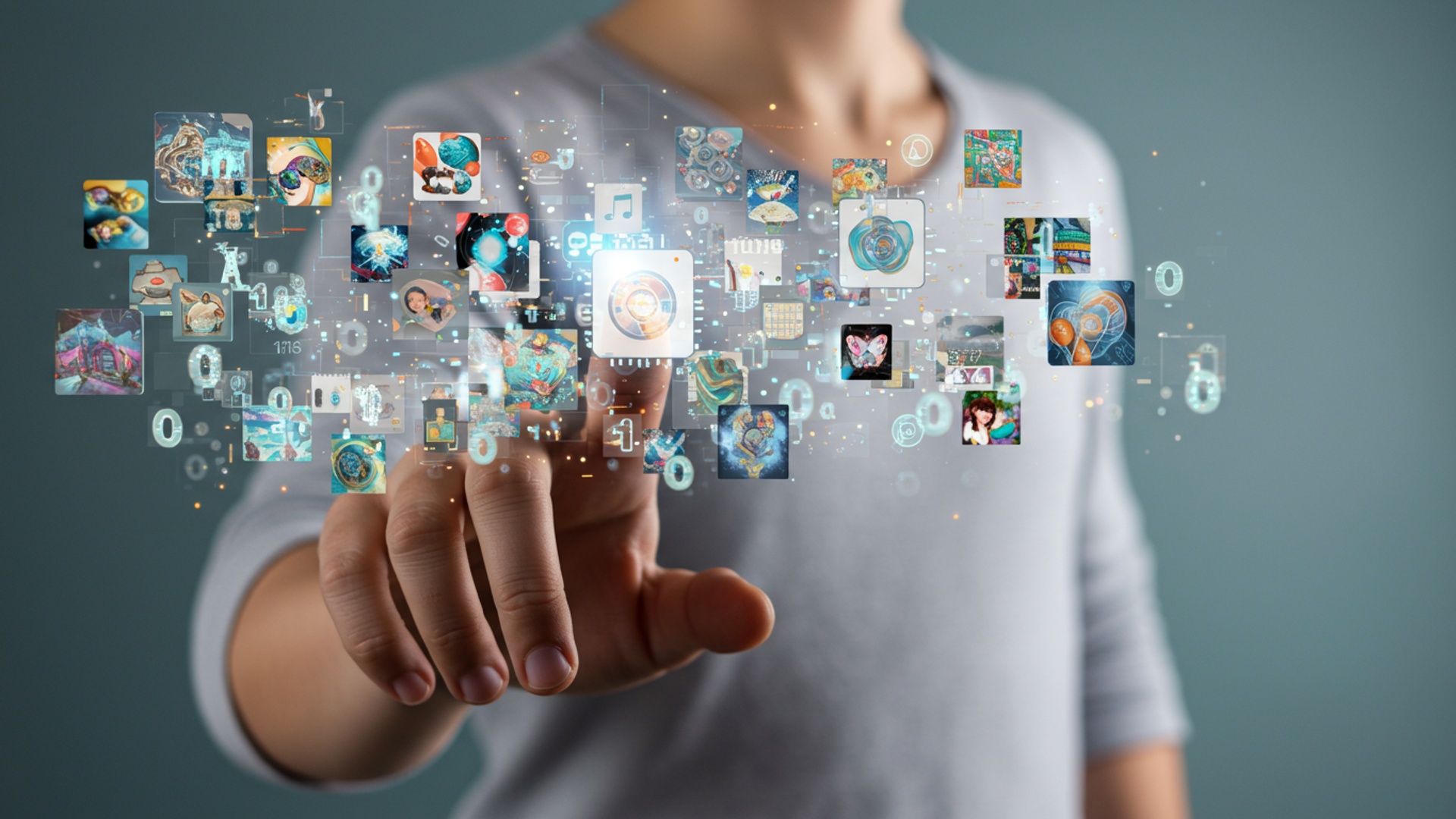
Understanding the World of AI Image Creation
In recent years, the landscape of digital art and content creation has been revolutionized by a fascinating technology: artificial intelligence. At its core, AI image creation refers to the process where computer algorithms generate visual content, ranging from photorealistic images to abstract art, based on textual descriptions or other input. This isn’t just about applying filters or editing existing photos; it’s about creating entirely new images from scratch, often in seconds.
The magic behind this capability lies in a branch of AI known as Generative AI. Unlike traditional AI that might classify data or predict outcomes, generative models are designed to produce novel data. For images, this means they learn patterns, styles. concepts from vast datasets of existing images and then use that knowledge to construct new visuals. Think of it like a highly trained artist who has studied millions of paintings and photographs and can now interpret your requests to produce a unique piece.
- Generative Adversarial Networks (GANs): One of the earliest and most influential architectures for generative AI. GANs involve two neural networks, a ‘generator’ that creates images and a ‘discriminator’ that tries to tell if an image is real or fake. They train in competition, improving each other until the generator can produce highly convincing images.
- Diffusion Models: These are the powerhouse behind many of today’s most stunning AI image creation tools. Diffusion models work by gradually adding noise to an image until it’s pure static, then learning to reverse this process, “denoising” the image back to a coherent visual, guided by a text prompt.
- Large Language Models (LLMs) for Vision: While LLMs are known for text, they often play a crucial role in interpreting user prompts for image generation, translating complex natural language into instructions the image model can comprehend.
How AI Image Generation Works: The Magic Behind the Pixels
The process of AI image creation often begins with a simple text prompt – a description of what you want the AI to create. This prompt acts as the creative director, guiding the AI’s artistic output. Let’s break down the general workflow:
- Prompt Interpretation: When you type in a prompt like “A majestic lion wearing a crown, sitting on a throne in a futuristic city, highly detailed, cinematic lighting,” the AI’s language understanding components break down this request. It identifies key subjects (lion, crown, throne), actions (sitting), environments (futuristic city). stylistic elements (highly detailed, cinematic lighting).
- Latent Space Exploration: The AI doesn’t draw pixel by pixel like a human. Instead, it operates in a ‘latent space,’ which is a high-dimensional representation of all possible images. Every image can be represented as a point in this space. The AI searches this space for points that match the concepts extracted from your prompt.
- Noise Reduction (Diffusion): For diffusion models, which are predominant, the process starts with a canvas of random noise. The model then iteratively “denoises” this static, slowly shaping it into a recognizable image. Each step in the denoising process is guided by the prompt, ensuring the emerging image aligns with your description.
- Rendering and Refinement: As the noise is removed, the image takes form. The AI continuously refines details, colors. textures until it presents a final, coherent image that attempts to fulfill your prompt. This iterative process is what allows for such intricate and detailed results in modern AI image creation.
It’s a fascinating dance between language, statistics. vast neural networks, culminating in a visual output that can feel remarkably creative and often breathtaking.
Getting Started: Your First AI Image Creation Journey
Ready to dive into the world of AI image creation? It’s easier than you might think! Here’s a step-by-step guide to generating your first AI image:
- Choose Your Tool: Several platforms offer AI image generation. Popular choices include Midjourney, DALL-E 3 (often integrated into ChatGPT Plus). Stability AI’s Stable Diffusion (available via various interfaces like ClipDrop, DreamStudio, or locally). For beginners, web-based tools often provide the simplest entry point.
- Sign Up and Access: Most platforms require an account. Some offer free trials or limited free usage, while others are subscription-based.
- Locate the Prompt Input: Once logged in, you’ll typically find a text box or an input field clearly labeled for your prompt.
- Craft Your Prompt: This is where your imagination comes into play. Start simple! Instead of “A cat,” try “A fluffy orange cat sitting on a windowsill, looking out at a rainy city, realistic, warm colors.” The more descriptive you are, the better the AI can comprehend your vision.
- Generate the Image: Hit the “Generate” or “Create” button. The AI will then get to work, usually taking a few seconds to a minute to produce several variations of your image.
- Review and Refine: Look at the generated images. Do they match your vision? If not, tweak your prompt. Maybe add more details, change a style, or remove something you didn’t like. This iterative process is key to mastering AI image creation.
Actionable Takeaway: Your First Prompt Experiment
Try this prompt in your chosen tool:
A whimsical treehouse nestled in a giant oak tree, glowing lanterns, forest background, fairy tale illustration style, soft lighting.
See what the AI produces, then try changing “fairy tale illustration style” to “photorealistic” or “digital painting” and observe the differences!
Popular AI Image Creation Tools and Platforms
The landscape of AI image creation tools is diverse, with each platform offering unique strengths, features. pricing models. Choosing the right one depends on your needs, skill level. budget. Here’s a comparison of some of the leading contenders:
| Feature | Midjourney | DALL-E 3 (via ChatGPT Plus) | Stable Diffusion (e. g. , DreamStudio) |
|---|---|---|---|
| Ease of Use | Medium (Discord-based interface, requires learning commands) | High (Integrated into a conversational AI, very intuitive) | Varies (Web UIs are easy, local installation is complex) |
| Image Quality/Style | Highly artistic, often cinematic and painterly, excellent for creative concepts. | Exceptional for understanding complex prompts, consistent text generation, photorealistic. | Extremely versatile, capable of diverse styles from photorealism to anime, highly customizable. |
| Prompt Understanding | Good. benefits from specific artistic language. | Excellent, can interpret long and nuanced prompts very well. | Good. often requires more specific technical parameters for best results. |
| Customization/Control | Good (parameters for aspect ratio, style, seeds). | Limited direct control over parameters, more conversational guidance. | Extensive (negative prompts, seeds, CFG scale, samplers, inpainting, ControlNet for advanced users). |
| Pricing Model | Subscription-based (no free tier for V5/V6). | Included with ChatGPT Plus subscription. | Freemium (free credits, then pay-as-you-go or subscription). Open-source version is free. |
| Strengths | Stunning aesthetic, excellent for concept art, unique visual style. | Ease of use, strong prompt adherence, generating text within images. | Open-source flexibility, vast community, incredible customization, runs locally. |
| Weaknesses | Can be challenging for photorealism, Discord-centric interface might not suit everyone. | Less control for advanced users, limited to OpenAI’s ecosystem. | Can have a steeper learning curve for advanced features, quality can vary without good prompts. |
Mastering the Art of Prompt Engineering
The quality of your AI-generated images hinges almost entirely on the quality of your prompt. This is known as “prompt engineering” – the art and science of crafting effective instructions for AI. It’s the most crucial skill in AI image creation.
Think of a prompt as a recipe. The more precise and detailed your ingredients and instructions, the better the final dish. Here are key elements to consider:
- Subject: What is the main focus? (e. g. , “A majestic eagle,” “A bustling market street”)
- Action/Pose: What is the subject doing? (e. g. , “soaring through clouds,” “filled with people and stalls”)
- Environment/Setting: Where is it happening? (e. g. , “over snow-capped mountains,” “in a cyberpunk city at night”)
- Style: What artistic style should it emulate? (e. g. , “oil painting,” “digital art,” “pencil sketch,” “photorealistic,” “anime”)
- Lighting/Mood: What’s the atmosphere? (e. g. , “dramatic chiaroscuro lighting,” “soft golden hour,” “eerie moonlight”)
- Camera Angle/Shot: How is it framed? (e. g. , “wide-angle shot,” “close-up portrait,” “from above”)
- Specific Details: Any crucial elements? (e. g. , “wearing a small hat,” “with glowing neon signs,” “reflections in puddles”)
- Negative Prompts: What you don’t want. Many tools allow you to specify things to exclude (e. g. , “ugly, deformed, blurry, low quality”).
Actionable Takeaway: Deconstructing and Building Prompts
Let’s take a complex prompt and break it down:
A lone astronaut standing on a desolate red planet, gazing at a distant nebula, cinematic lighting, epic scale, sci-fi concept art, highly detailed, 8k. --ar 16:9 --v 6
- Subject: lone astronaut
- Action: standing, gazing
- Environment: desolate red planet, distant nebula
- Style/Mood: cinematic lighting, epic scale, sci-fi concept art
- Details: highly detailed, 8k
-
Parameters (Midjourney specific):
--ar 16:9(aspect ratio),--v 6(version 6 model)
Experiment by changing one element at a time. For instance, swap “desolate red planet” for “lush alien jungle” or “sci-fi concept art” for “retro comic book style.” This iterative process is how you learn what works best for different visions in AI image creation.
Beyond the Basics: Advanced Techniques and Customization
Once you’re comfortable with basic prompting, the world of advanced AI image creation opens up, offering even greater control and creative possibilities. These techniques allow you to move beyond simple text-to-image generation and truly tailor the AI’s output:
- Image-to-Image Generation: Instead of starting from scratch with a text prompt, you can provide an initial image. The AI then uses this image as a base, transforming it according to your text prompt or modifying its style and content. This is excellent for stylizing photos, creating variations of existing artwork, or even generating new images that maintain the composition of a reference. For instance, you could feed it a sketch and ask it to render a “photorealistic painting of a knight in shining armor” based on your sketch.
-
Inpainting and Outpainting:
- Inpainting: This technique allows you to selectively modify parts of an existing image. You can “paint over” an area you want to change, provide a prompt. the AI will generate new content within that masked region, blending it seamlessly with the rest of the image. It’s incredibly useful for removing unwanted objects, changing a character’s clothing, or adding details.
- Outpainting: The opposite of inpainting, outpainting expands an image beyond its original borders. You provide a prompt for what should appear in the expanded areas. the AI intelligently generates content that extends the scene, maintaining consistency in style and composition. Imagine taking a portrait and outpainting it to reveal a full body or a wider environment.
- ControlNet: For users of Stable Diffusion and similar open-source models, ControlNet is a game-changer. It allows for precise control over the composition, pose. structure of generated images. You can input a “control map” – such as a skeleton (OpenPose), a depth map, or an edge detection map – and the AI will generate an image that strictly adheres to that structure, while still following your text prompt for style and content. This is invaluable for artists, architects. anyone needing consistent composition.
- Fine-Tuning Models: For those with programming knowledge and significant computing resources, it’s possible to “fine-tune” an existing AI model on your own dataset of images. This teaches the AI to generate images in a very specific style or featuring particular subjects that weren’t well-represented in its original training data. This is how artists create models that perfectly mimic their unique artistic style.
These advanced techniques transform AI image creation from a simple text-to-image process into a powerful, interactive design tool, offering unprecedented levels of creative control.
Real-World Applications of AI Image Creation
The impact of AI image creation extends far beyond novelty, finding practical and transformative applications across numerous industries. This technology is not just changing how we create. also how we visualize, communicate. innovate:
-
Art and Design:
- Concept Art: Artists use AI to rapidly generate dozens of concept variations for characters, environments. props, significantly accelerating the ideation phase for games, films. animations. A concept artist might use AI to explore different armor designs for a knight, providing a diverse starting point for their traditional work.
- Illustrations and Digital Art: Creating unique illustrations for books, articles, websites. social media. I’ve personally used AI to generate unique social media graphics for my small business, saving hours of design time and budget that would typically go to stock photo subscriptions or freelance artists.
- Textile and Fashion Design: Generating new patterns, fabric textures. garment designs.
-
Marketing and Advertising:
- Ad Creatives: Quickly generating a multitude of visual ads for A/B testing, allowing marketers to find the most effective imagery without extensive photoshoots or graphic design work. A small startup can generate high-quality product mockups in various settings to test market response.
- Brand Content: Producing consistent brand imagery, social media posts. website visuals at scale.
- Product Visualization: Creating realistic product mockups and lifestyle shots without needing physical prototypes or photography.
-
Architecture and Interior Design:
- Design Exploration: Architects and designers use AI to quickly visualize different design options for buildings, interiors. landscapes based on textual descriptions or rough sketches. This helps clients see various possibilities before committing to expensive renders.
- Mood Boards: Generating cohesive visual mood boards for projects to convey aesthetic direction.
-
Gaming Industry:
- Asset Generation: Creating textures, environmental elements, character variations. even entire game backgrounds, vastly speeding up development.
- NPC Portraits: Generating unique portraits for non-player characters (NPCs) to add variety and depth to game worlds.
-
Education and Research:
- Visual Aids: Generating custom diagrams, illustrations. visual examples for educational materials, making complex topics easier to comprehend.
- Scientific Visualization: Creating visualizations of abstract scientific concepts or data.
-
Personal Use and Hobbies:
- Personalized Gifts: Creating unique artwork for friends and family.
- Storytelling: Generating visuals to accompany personal stories, fan fiction, or role-playing game campaigns.
- Profile Pictures: Crafting unique and stylized profile pictures or avatars.
The versatility of AI image creation means it’s continually finding new niches, empowering individuals and businesses to bring their visual ideas to life with unprecedented speed and creativity.
Ethical Considerations and the Future of AI Image Creation
As AI image creation rapidly advances, it brings forth a crucial set of ethical considerations that demand thoughtful discussion and responsible development. The power to generate photorealistic or highly stylized images at will has profound implications for society, art. truth.
- Deepfakes and Misinformation: The ability to generate highly convincing images of people, events, or scenarios that never happened is a significant concern. Malicious actors can create deepfakes – synthetic media in which a person in an existing image or video is replaced with someone else’s likeness – to spread misinformation, defame individuals, or commit fraud. This challenges our ability to discern what is real from what is artificial, potentially eroding trust in visual evidence.
- Copyright and Ownership: A complex legal and philosophical debate surrounds the ownership of AI-generated art. If an AI creates an image, who owns the copyright: the user who prompted it, the developer of the AI model, or the AI itself? Moreover, AI models are trained on vast datasets of existing images, many of which are copyrighted. Does the AI “learn” from these images in the same way a human artist does, or does it infringe on intellectual property by deriving new works from them? These questions are actively being litigated and discussed globally.
- Bias in Training Data: AI models learn from the data they are fed. If the training data contains biases (e. g. , disproportionately representing certain demographics, body types, or cultural contexts), the AI will perpetuate and even amplify those biases in its output. This can lead to the generation of images that are stereotypical, exclusionary, or perpetuate harmful narratives. Developers are working to curate more balanced datasets and implement methods to mitigate bias.
- Displacement of Artists and Creators: While AI image creation can augment human creativity, it also raises concerns about the potential displacement of human artists, illustrators. photographers. As AI tools become more sophisticated and accessible, the market for certain types of human-created visual content could shrink, impacting livelihoods.
- Authenticity and Originality: What does “art” mean in an age where machines can generate beautiful and complex visuals? The concept of human creativity, intent. originality is being redefined. While many view AI as a powerful tool for artists, others question the artistic merit of works generated without direct human hand or emotion.
The Future of AI Image Creation:
Despite these challenges, the future of AI image creation is bright and rapidly evolving. We can anticipate:
- Increased Accessibility: Tools will become even easier to use, integrating seamlessly into everyday applications and workflows, making AI image generation a common feature.
- Hyper-Personalization: AI will likely generate images tailored to individual preferences, memories, or even emotional states.
- Interactive and Real-time Generation: Imagine describing a scene and watching it unfold and evolve in real-time, allowing for dynamic, interactive creative sessions.
- Multimodal Integration: AI will likely combine text, audio, video. other inputs to create even richer and more complex visual narratives.
- Ethical Frameworks and Regulations: As the technology matures, we will see stronger ethical guidelines, watermarking standards. legal frameworks to address issues like deepfakes, copyright. bias, ensuring responsible use.
The journey of AI image creation is just beginning. By engaging with it thoughtfully and ethically, we can harness its immense potential to unlock new frontiers of creativity and visual expression.
Conclusion
You’ve now grasped the fundamental art of prompting, transforming abstract ideas into stunning AI visuals. Remember, the true magic lies in iteration; my own journey began with countless “ugly” images before I learned to refine prompts like “a cyberpunk city at sunset, neon glow, detailed, cinematic, 8k” to get truly breathtaking results. Don’t just accept the first output; tweak details, experiment with artists’ styles. explore different aspect ratios. The rapid advancements, with models like Midjourney V6 excelling in photorealism and DALL-E 3’s nuanced prompt understanding, mean your creative canvas is constantly expanding. Embrace this evolution! Your next step is to actively experiment. Take a simple concept, like “a cat in space,” and explore variations: what kind of cat? What planet? What art style—oil painting, pixel art, photography? This hands-on approach builds intuition faster than any guide alone. For a deeper dive, consider mastering the nuances of prompt engineering, a skill that will only grow in value, as explored in The Ultimate Guide to Crafting Perfect AI Prompts. The future of visual creation is collaborative, with you and AI as partners. So, go forth and create your unique masterpieces. The only limit is your imagination.
More Articles
Unlock Hidden Potential with Advanced AI Prompt Tricks
Learn Essential AI Prompt Engineering for Better Results
Spark Brilliant Ideas Using AI for Creative Brainstorming
7 Must-Have AI Tools That Save You Hours Every Week
Boost Your AI Content 7 Secrets for SEO and Reader Engagement 
FAQs
What exactly is this guide about?
This guide is designed to help anyone, even absolute beginners, learn how to create stunning images using AI tools. We’ll walk you through the simple steps, from crafting effective prompts to understanding how these amazing generators work.
Do I need special software or a powerful computer to make AI images?
Not at all! Most of the fantastic AI image generators are available online, often with free tiers or trials. You typically just need a standard web browser and an internet connection. No fancy equipment required!
What’s a ‘prompt’ and why is it so crucial?
A prompt is essentially the text description you give to the AI, telling it what kind of image you want it to create. It’s super crucial because the clearer and more detailed your prompt, the better the AI can grasp your vision and generate an image that matches your expectations.
Can I really create high-quality images if I’m not an artist?
Absolutely! That’s one of the coolest things about AI image generation. You don’t need any drawing skills, painting talent, or design experience. Your main job is to clearly describe your idea. the AI takes care of all the visual creation.
What are some common mistakes beginners make when using AI image tools?
A frequent one is not being specific enough in prompts, leading to generic results. Another is getting discouraged if the first few tries aren’t perfect – experimentation is key! Also, sometimes people forget to use ‘negative prompts’ to tell the AI what not to include.
How long does it take to get the hang of creating good AI images?
You can start creating interesting images within just a few minutes of trying! Becoming truly skilled at crafting intricate prompts and understanding the nuances of different AI models takes a bit more practice. the basics are surprisingly quick to pick up.
What kind of images can I actually make with AI?
The possibilities are practically endless! You can generate realistic photos of people or places that don’t exist, fantastical creatures, abstract art, product designs, character concepts, detailed landscapes. even images in specific artistic styles. If you can describe it, the AI can probably create it.