
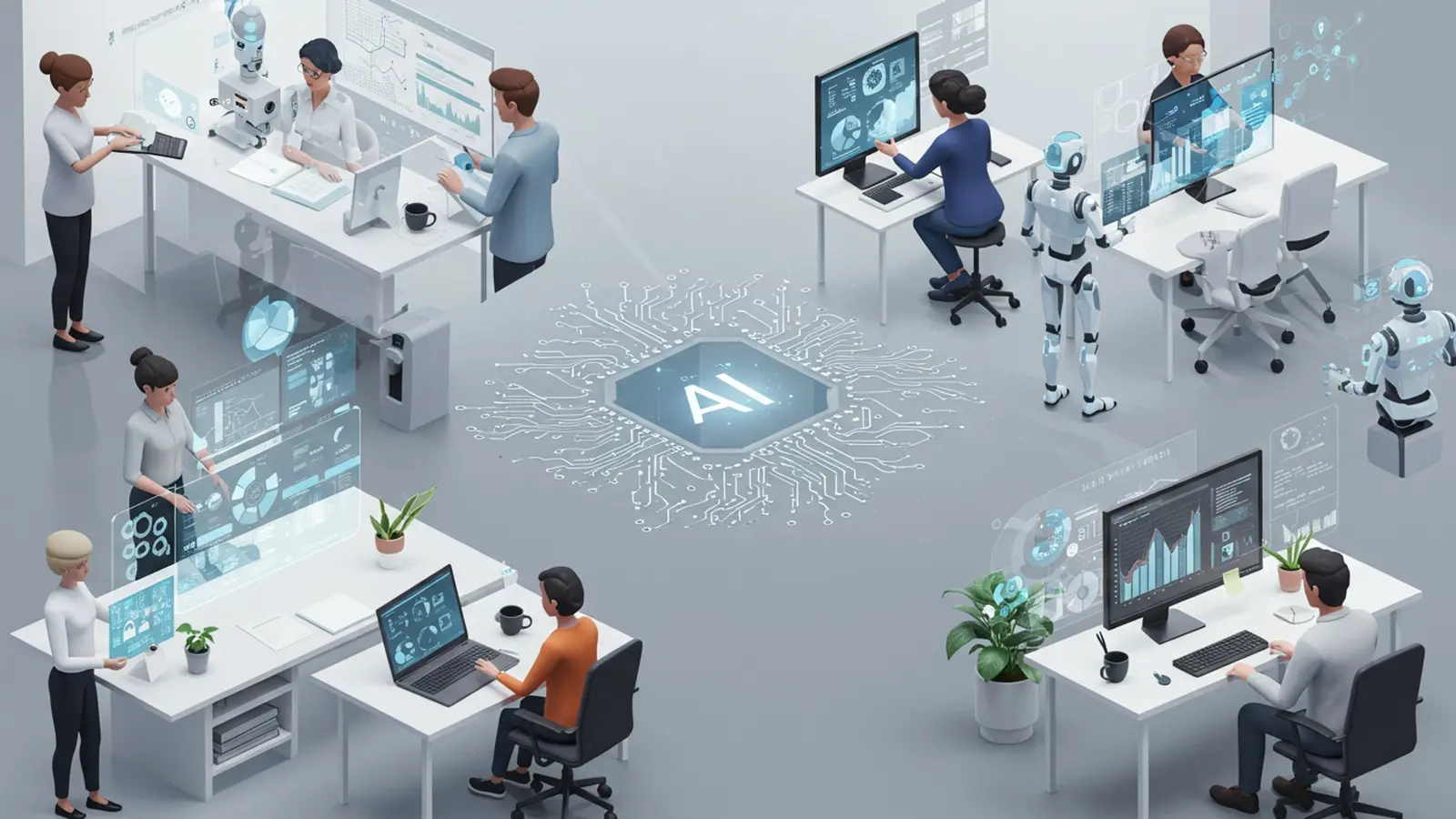
The accelerating evolution of artificial intelligence, exemplified by the rapid advancements in generative models like GPT-4 and multimodal AI, is dramatically redefining the landscape of work. While concerns about job displacement persist, the more profound reality is a burgeoning demand for specialized human expertise that can effectively collaborate with and orchestrate intelligent systems. This paradigm shift creates an entirely new ecosystem of ‘future AI roles,’ moving beyond traditional data science to encompass innovative positions focused on ethical governance, AI-driven product development. human-AI interaction design. Understanding these critical emerging careers is essential for individuals and organizations aiming to thrive in the inevitable convergence of human ingenuity and machine intelligence.

The AI/Machine Learning Engineer: Building the Brains of Tomorrow
Imagine you’re playing a video game. the computer opponents learn from your moves, getting smarter over time. Or perhaps you’ve used a streaming service that recommends exactly the right show for your mood. Who makes that happen? Often, it’s an AI/Machine Learning Engineer. These are the folks who design, build. maintain the actual AI systems and algorithms that allow computers to learn from data and make predictions or decisions.
- Develop and implement machine learning models, which are essentially mathematical programs that find patterns in data.
- Work with large datasets to train these models, helping them improve their accuracy.
- Deploy AI solutions into real-world applications, making sure they work correctly and efficiently.
- Machine Learning (ML)
- Algorithms
- Neural Networks
A subset of AI that allows systems to learn from data without explicit programming. Think of it like teaching a computer to recognize a cat by showing it thousands of cat pictures, rather than writing specific rules for “ears, whiskers, tail.”
A set of rules or instructions that a computer follows to solve a problem or perform a task. In ML, algorithms are used to build and train models.
Inspired by the human brain, these are complex algorithms designed to recognize patterns, often used in deep learning.
Consider self-driving cars. AI/ML Engineers develop the models that allow the car to “see” the road, identify pedestrians, read traffic signs. predict the movements of other vehicles. They might use a technique called ‘reinforcement learning’ where the car learns by trial and error, getting ‘rewards’ for correct actions and ‘penalties’ for incorrect ones, much like how you might learn to ride a bike.
If you love coding and want to build intelligent systems, start by learning programming languages like Python and exploring ML libraries like TensorFlow or PyTorch. Many online courses offer great introductions to this exciting field, laying the groundwork for many Future AI roles.
The Data Scientist: Unlocking Insights from details
Before an AI can learn, it needs data. Lots of it! And that data often looks like a messy pile of numbers, text. images. Enter the Data Scientist. These professionals are like detectives, sifting through vast amounts of insights to find hidden patterns, trends. insights. They use statistics, programming. domain knowledge to tell a story with data, which then fuels the AI models.
- Collect, clean. organize large datasets from various sources.
- examine data to identify trends, correlations. anomalies using statistical methods.
- Build predictive models that can forecast future outcomes or classify insights.
- Communicate their findings to others, often through visualizations and reports.
- Big Data
- Statistical Modeling
- Data Visualization
Extremely large datasets that may be analyzed computationally to reveal patterns, trends. associations, especially relating to human behavior and interactions.
Using mathematical equations to describe relationships between variables in data, often for prediction or inference.
Presenting data in a graphical or pictorial format to make it easier to interpret and identify patterns.
Imagine your favorite music streaming app. A Data Scientist analyzes your listening habits, skips, repeats. even the time of day you listen to certain genres. They then use this data to build models that predict what new songs or artists you might like, creating personalized playlists. This role is crucial for making AI feel personal and relevant.
Comparison: Data Scientist vs. ML Engineer
| Role | Primary Focus | Key Skills |
|---|---|---|
| Data Scientist | Extracting insights and telling stories from data; understanding ‘why’ things happen. | Statistics, domain knowledge, data visualization, SQL, Python (for analysis) |
| ML Engineer | Building and deploying AI models; making the ‘how’ of AI work in practice. | Software engineering, algorithm development, model deployment, Python (for development) |
If you enjoy solving puzzles, love numbers. are curious about what data can reveal, explore statistics, learn Python or R for data analysis. practice cleaning messy datasets. There are tons of free datasets online to play with!
The AI Ethicist: Ensuring Fairness and Responsibility
As AI becomes more powerful, it raises crucial questions: Is it fair? Is it biased? Will it make decisions that harm people? This is where the AI Ethicist comes in. These experts focus on the moral and societal implications of AI, working to ensure that AI systems are developed and used responsibly, fairly. transparently. They are vital for shaping responsible Future AI roles.
- Identify potential biases in AI algorithms and data. propose solutions to mitigate them.
- Develop ethical guidelines and policies for AI development and deployment.
- Advise companies and governments on the responsible use of AI.
- Facilitate discussions about the impact of AI on jobs, privacy. human rights.
- Bias (in AI)
- Transparency
- Accountability
Occurs when an AI system produces unfair or discriminatory outcomes due to biased data or algorithms. For example, if an AI is trained primarily on images of one demographic, it might struggle to recognize others.
The ability to grasp how an AI system makes decisions. It’s about opening up the ‘black box’ of AI.
Ensuring that there are clear responsibilities for the actions and impacts of AI systems.
Imagine an AI system used by banks to approve loan applications. An AI Ethicist would examine the system to ensure it doesn’t unfairly reject applications based on factors like gender, ethnicity, or postal code, even if those factors aren’t explicitly used by the algorithm (they could be hidden correlations in the data). They’d ask: “Is this fair? What are the potential negative consequences?” For example, Google, among other tech giants, has dedicated teams and researchers focusing on AI ethics to guide their product development.
If you’re passionate about social justice, philosophy. how technology impacts society, explore courses in ethics, philosophy, law, or sociology, alongside understanding basic AI concepts. Reading books like Cathy O’Neil’s “Weapons of Math Destruction” can offer great insights.
The Prompt Engineer: Mastering the Art of Conversation with AI
You’ve probably chatted with a chatbot or asked an AI image generator to create something cool. How do you get the AI to comprehend exactly what you want and give you the best possible output? That’s the challenge for a Prompt Engineer. These specialists are skilled at crafting the perfect “prompts” – the instructions or questions given to an AI model – to achieve desired results, especially with large language models (LLMs) and generative AI.
- Experiment with different phrasing, keywords. structures to optimize AI responses.
- Develop best practices and templates for effective prompting.
- Collaborate with designers and developers to integrate AI effectively into products.
- Troubleshoot and refine prompts when AI outputs are not meeting expectations.
- Large Language Model (LLM)
- Generative AI
- Prompt
A type of AI model trained on vast amounts of text data, capable of understanding, generating. translating human-like text (e. g. , ChatGPT, Google Bard).
AI that can create new content, such as images, text, music, or code, rather than just analyzing existing data.
The input text or query given to a generative AI model to guide its output.
Let’s say a marketing team wants an AI to generate social media posts for a new product. A Prompt Engineer wouldn’t just type “Write social media posts.” They would craft a detailed prompt like:
"Generate 5 engaging social media posts for a new eco-friendly sneaker. Focus on sustainability, comfort. style. Include relevant hashtags and a call to action to visit our website. Target audience: Gen Z and young adults."
This specificity leads to much better results, saving time and improving quality. This is definitely one of the emerging Future AI roles.
Start experimenting with public AI tools like ChatGPT or Midjourney. Play around with different prompts, observe the outputs. try to comprehend what makes a good prompt. Learning to communicate effectively with AI is a powerful skill for the future.
The Robotics Engineer: Bringing AI to Life in the Physical World
While many AI roles focus on software, Robotics Engineers are the ones who combine AI with physical machines. They design, build, test. maintain robots that can perform tasks autonomously or semi-autonomously. These robots often incorporate AI for perception (seeing), navigation (moving). decision-making (acting).
- Design mechanical systems, electronics. software for robots.
- Integrate AI algorithms for tasks like object recognition, path planning. motor control.
- Test and debug robotic systems in various environments.
- Work on projects ranging from industrial automation to surgical robots and autonomous drones.
- Computer Vision
- Sensors
- Actuators
An AI field that enables computers to “see” and interpret visual details from the world, like images and videos. Essential for robots to navigate and interact with their surroundings.
Devices that detect and respond to events or changes in the physical environment (e. g. , cameras, lidar, ultrasonic sensors) and provide data to the robot’s AI.
Components of a machine that are responsible for moving or controlling a mechanism or system (e. g. , motors, grippers).
Think about the robots in Amazon warehouses. Robotics Engineers design these machines to navigate complex environments, identify packages. transport them efficiently. The robots use computer vision to “see” where they’re going and AI algorithms to plan the most efficient routes, avoiding collisions and optimizing workflows. Another example is surgical robots like the da Vinci system, where AI assists surgeons with precision and control.
If you love building things, have an interest in mechanics and electronics. are curious about how AI can control physical systems, start with robotics kits (like Arduino or Raspberry Pi-based robots). Learn programming (Python is excellent for robotics) and explore basic engineering principles. Joining a robotics club can be a fantastic way to get hands-on experience.
The NLP (Natural Language Processing) Engineer: Teaching AI to grasp Us
How does your phone comprehend your voice commands? Or how does an email filter out spam? These marvels are largely thanks to Natural Language Processing (NLP). the NLP Engineer is the one making it happen. These experts focus on building AI systems that can interpret, interpret. generate human language in both written and spoken forms.
- Develop algorithms and models for tasks like sentiment analysis, text summarization. machine translation.
- Work with large text datasets to train and refine language models.
- Build conversational AI agents, like chatbots and virtual assistants.
- Improve the accuracy and fluency of language-based AI systems.
- Natural Language Processing (NLP)
- Sentiment Analysis
- Machine Translation
A branch of AI that deals with the interaction between computers and human language.
Using NLP to determine the emotional tone behind words (e. g. , positive, negative, neutral). Useful for understanding customer feedback.
Automatically translating text or speech from one language to another (e. g. , Google Translate).
Ever used a virtual assistant like Siri or Google Assistant? An NLP Engineer designs the core components that allow the AI to comprehend your spoken questions, process them. generate a relevant spoken or written response. They deal with the nuances of human language – slang, accents, different ways of saying the same thing – to make these interactions feel natural and helpful. Think about how much better these assistants have become over the years; that’s constant refinement by NLP Engineers.
If you’re fascinated by language, communication. how computers can interpret human expression, start learning Python and explore NLP libraries like NLTK or SpaCy. Try building a simple chatbot or a text summarizer project. Even just analyzing song lyrics for sentiment can be a fun way to start.
The Computer Vision Engineer: Giving AI the Gift of Sight
From unlocking your phone with your face to self-driving cars avoiding obstacles, AI’s ability to “see” and grasp the world visually is thanks to Computer Vision Engineers. These specialists develop AI systems that can interpret and make decisions based on images and videos, essentially giving machines eyes and the brains to process what they see.
- Develop algorithms for object detection, facial recognition, image classification. video analysis.
- Train deep learning models (especially Convolutional Neural Networks, or CNNs) on vast image datasets.
- Integrate computer vision systems into various applications, from security cameras to medical imaging.
- Improve the accuracy and efficiency of visual AI systems.
- Computer Vision
- Object Detection
- Facial Recognition
- Convolutional Neural Networks (CNNs)
(as mentioned earlier) An AI field that enables computers to derive meaningful details from digital images, videos. other visual inputs.
Identifying and locating specific objects within an image or video (e. g. , finding all cars in a street scene).
Identifying or verifying a person from a digital image or a video frame.
A type of deep learning model particularly effective for image processing tasks.
In healthcare, Computer Vision Engineers are developing AI that can review X-rays, MRIs. CT scans to help doctors detect diseases like cancer or pneumonia earlier and more accurately. For instance, an AI might highlight suspicious areas on a scan that a human eye could miss. In retail, computer vision is used to monitor shelves for restocking or to examine customer traffic patterns. This is one of the most visually impactful Future AI roles.
If you’re intrigued by how computers can comprehend images and videos, dive into Python programming and explore libraries like OpenCV (for image processing) and TensorFlow/PyTorch (for deep learning). Many online tutorials guide you through building simple image recognition projects.
The AI Product Manager: Guiding AI from Idea to Impact
Building an amazing AI technology is one thing; making sure it solves a real-world problem and gets adopted by users is another. That’s the role of the AI Product Manager. They act as the bridge between technical AI teams, business goals. customer needs, ensuring that AI products are valuable, feasible. desirable.
- Define the vision, strategy. roadmap for AI-powered products.
- Conduct market research and gather customer feedback to identify needs.
- Translate complex AI capabilities into user-friendly features.
- Collaborate with engineers, designers. sales teams throughout the product lifecycle.
- Monitor product performance and iterate based on data and feedback.
- Product Roadmap
- User Experience (UX)
- Feasibility
A high-level visual summary that maps out the vision, direction, priorities. progress of a product over time.
How a person feels when interacting with a product or system.
The extent to which a project or plan is practical and can be successfully achieved.
Consider an AI-powered personal finance app. The AI Product Manager would be responsible for understanding what financial challenges users face, how AI could offer solutions (e. g. , budget tracking, investment recommendations, fraud detection). then defining the features that the engineering team needs to build. They ensure that the AI’s intelligence is packaged in a way that is intuitive and genuinely helpful for the user. They might say, “Our users want to grasp their spending better, so let’s build an AI that categorizes transactions and flags unusual spending patterns, rather than just showing raw data.”
If you enjoy leadership, problem-solving. have a knack for understanding both technology and people, start by learning about project management, design thinking. basic business principles. Understanding how AI works at a high level, combined with strong communication skills, is key to these Future AI roles.
The AI UX Designer: Crafting Intuitive AI Experiences
AI can be incredibly powerful. if it’s confusing or frustrating to use, it won’t be successful. The AI UX Designer (User Experience Designer) focuses on making interactions with AI systems seamless, intuitive. enjoyable. They ensure that users interpret what the AI is doing, how to interact with it. trust its recommendations or actions.
- Design user interfaces and interaction flows for AI-powered applications.
- Conduct user research to grasp how people interact with AI and identify pain points.
- Create prototypes and wireframes for AI features, focusing on clarity and ease of use.
- Develop conversational design principles for chatbots and voice assistants.
- Address issues of trust, transparency. control in AI interactions.
- User Interface (UI)
- Usability
- Conversational Design
The visual elements of a product that a user interacts with.
The ease with which users can achieve their goals when interacting with a product.
The art of designing conversations between humans and machines, focusing on natural and effective dialogue.
Think about smart home devices like Alexa or Google Home. An AI UX Designer would be involved in designing how you talk to the device, how it responds. how it gives feedback. They’d consider: How does the AI confirm it understood your command? What if it didn’t comprehend? How does it communicate errors or ask for clarification? They make sure the AI feels like a helpful assistant, not a confusing robot. They also design the accompanying apps and screens to display AI-generated insights in an understandable way.
If you’re creative, empathetic. enjoy making technology user-friendly, explore graphic design, human-computer interaction. user research. Learn design tools like Figma or Adobe XD. practice designing interfaces for AI-driven features. Understanding basic psychology and human behavior is also a huge plus for these Future AI roles.
The AI Trainer/Data Annotator: Teaching AI the Basics
Before an AI model can learn from data, that data often needs to be prepared and labeled. This crucial groundwork is often done by AI Trainers or Data Annotators. They meticulously tag, categorize. annotate vast amounts of data (images, text, audio, video) to create the high-quality training sets that AI models need to learn effectively. This is often an entry point into Future AI roles.
- Label objects in images (e. g. , drawing boxes around cars and pedestrians for self-driving cars).
- Transcribe and tag audio recordings (e. g. , identifying different speakers or emotions).
- Categorize text for sentiment, topic, or intent.
- Provide feedback on AI model outputs to help refine their accuracy.
- Follow strict guidelines to ensure data consistency and quality.
- Data Annotation
- Training Data
- Ground Truth
The process of labeling or tagging data (images, text, audio, video) to make it usable for machine learning.
The dataset used to teach a machine learning model. The quality of this data directly impacts the model’s performance.
The accurate and verified data that an AI model aims to learn from or predict.
Imagine an AI designed to detect defects in manufactured products. Before it can do that, an AI Trainer might spend hours reviewing thousands of product images, painstakingly marking which ones show a defect and which are perfect. This human-labeled data then becomes the “teacher” for the AI, showing it what to look for. Or, for a new voice assistant, annotators might listen to recorded speech and transcribe it, highlighting specific words or phrases that represent commands. This human input is absolutely essential for AI to learn and improve.
If you’re detail-oriented, enjoy meticulous work. want to get your foot in the door of the AI industry, this role can be a great starting point. Many companies hire for these positions. it offers a practical understanding of how AI models are built from the ground up. It requires patience and precision. no advanced programming initially. You’ll learn about data quality and the challenges of real-world data, providing a solid foundation for more advanced Future AI roles.
Conclusion
The dynamic landscape of AI roles, from meticulous Data Ethicists to innovative Generative AI Engineers, clearly signals a profound shift in tomorrow’s workforce. It’s no longer just about technical prowess but also about understanding human-AI collaboration and ethical implications, as highlighted by the recent focus on responsible AI development in large language models. My personal tip for navigating this evolving field is to embrace continuous learning; I’ve seen countless individuals, like a former colleague who pivoted from traditional software development to a successful AI Product Manager by actively engaging with new frameworks and attending workshops on subjects like MLOps. To truly thrive, don’t just passively consume data; actively participate in the community, perhaps by contributing to open-source AI projects or experimenting with tools like Stable Diffusion. This hands-on experience, coupled with a keen eye on emerging trends like multimodal AI, will not only deepen your understanding but also make you indispensable. Remember, your journey into AI is more than just securing a job; it’s about actively shaping a future where technology amplifies human potential. The opportunity to innovate and make a significant impact is immense, so seize it with curiosity and courage.
More Articles
Master AI Learning Your Simple Guide to Getting Started
Master AI Skills Your Essential Learning Roadmap for a Thriving Career
Boost Your AI Career The Surprising Impact of Certifications
Essential Skills for AI Success Your Path to High Paying Tech Jobs
Your Ultimate Guide to the Best AI Learning Platforms Unlock Your Potential 
FAQs
What are we even talking about with ‘essential AI roles’?
These are the key positions emerging and growing rapidly as artificial intelligence becomes central to every industry. They’re the people designing, building, deploying. managing the AI systems that will drive the future of businesses and daily life.
Why are these specific roles so crucial for businesses today?
Businesses need these roles to stay competitive and innovative. They help organizations harness AI to automate processes, gain deep insights from data, improve customer experiences. develop entirely new products and services. Without this talent, companies risk falling behind.
Do you need to be a coding genius to get into these AI jobs?
Not necessarily for all of them! While many roles require strong technical skills, others like AI Ethicists, AI Project Managers, or AI UX Designers need a blend of technical understanding and expertise in areas like ethics, project management, or design thinking. It’s a broad field with diverse needs.
Can you give a couple of examples of these roles and what they do?
Sure! An AI Engineer might build and deploy machine learning models, making sure they work efficiently in real-world applications. A Data Scientist focuses on extracting insights from vast datasets, often using AI/ML techniques to solve complex problems and inform business strategy.
How can someone actually prepare for a career in one of these areas?
There are many paths! Formal education like degrees in computer science or data science is excellent. online courses, bootcamps, certifications. hands-on projects are also super valuable. Building a strong portfolio and networking within the AI community are key steps too.
Will AI automation eventually make these roles obsolete too?
Unlikely in the near future. While AI will automate parts of these jobs, the need for human creativity, critical thinking, ethical oversight. strategic decision-making in designing, managing. evolving AI systems will only grow. These roles are about creating and guiding the AI, not just being replaced by it.
What kinds of companies are looking for people with these skills?
Pretty much all of them! Tech giants are obvious. you’ll find these roles in healthcare, finance, manufacturing, retail, entertainment, government. even non-profits. Any organization looking to leverage data and automation for growth and efficiency needs AI talent.