
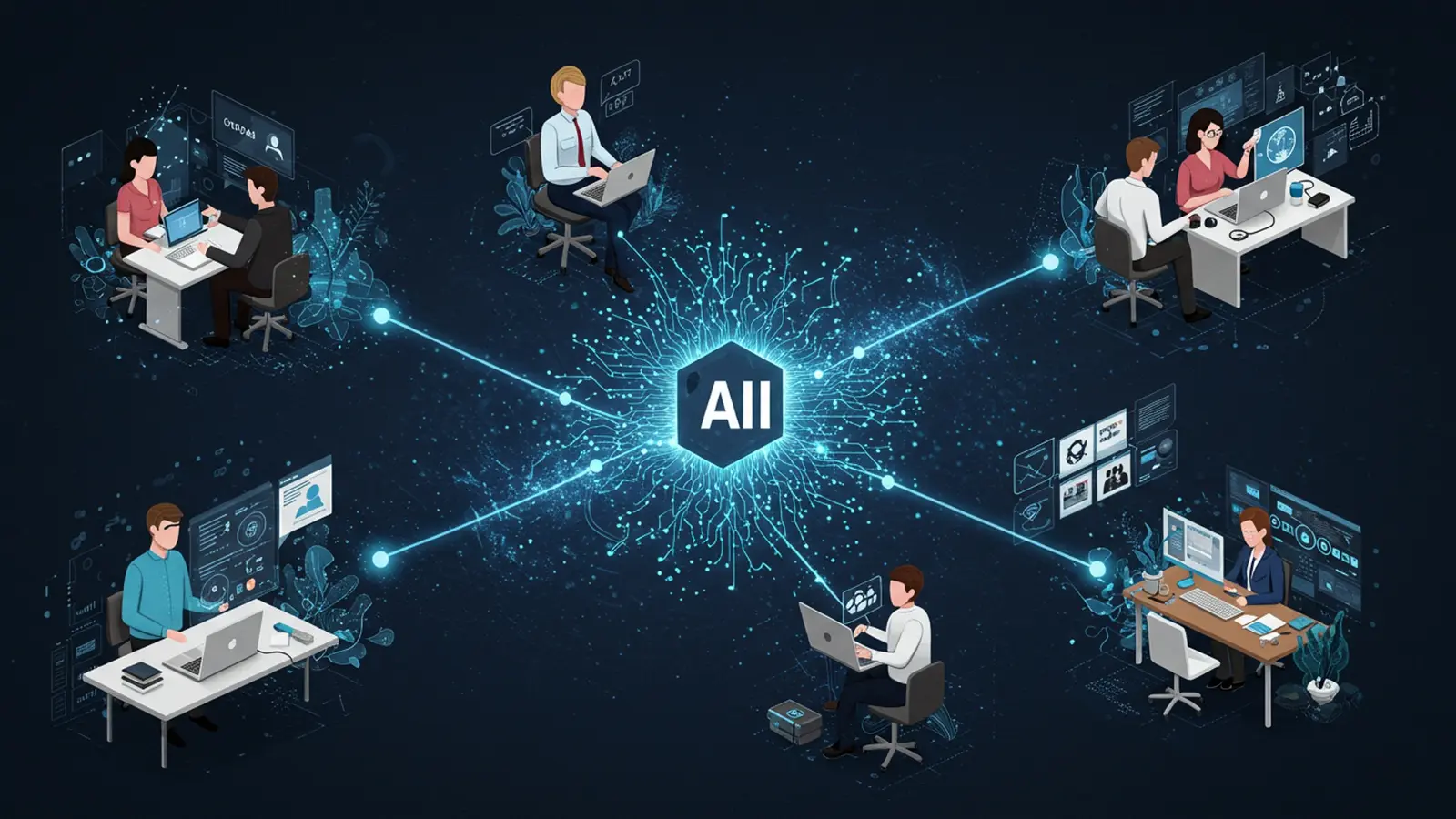
The AI revolution, often narrowly perceived through the lenses of data science and programming, now dramatically reconfigures the professional landscape. While foundational coding remains vital, the sophisticated capabilities of models like multimodal AI and advancements in generative systems are actively birthing unprecedented specialized roles. Consider the critical demand for AI ethicists guiding responsible deployment, or prompt engineers meticulously crafting inputs for optimal LLM performance. Even the burgeoning field of AI-powered robotic process automation generates roles for integration architects who translate complex algorithms into seamless enterprise solutions. Exploring these emerging AI career paths reveals a dynamic frontier where innovation and cross-disciplinary expertise drive the next wave of intelligent system integration across every sector. 
AI Ethics Specialist
As AI systems become more pervasive, their impact on society—from bias in hiring algorithms to privacy concerns in facial recognition—has come under intense scrutiny. This rise in ethical dilemmas has created a critical and burgeoning AI career path: the AI Ethics Specialist. Far from being a niche academic pursuit, this role is now a cornerstone in responsible AI development, ensuring that technology serves humanity fairly and equitably.
An AI Ethics Specialist works at the intersection of technology, philosophy, law. social science. Their primary goal is to identify, examine. mitigate ethical risks associated with AI systems. This includes addressing issues like algorithmic bias, transparency, accountability, data privacy. the societal implications of AI deployment. This role is crucial because even the most technically advanced AI can cause significant harm if not developed and deployed with ethical considerations at its core.
Key Responsibilities:
- Ethical Risk Assessment
- Policy Development
- Stakeholder Engagement
- Education & Training
- Regulatory Compliance
Evaluating AI models and applications for potential biases, unfair outcomes, or privacy violations. This might involve reviewing training data for representational imbalances or assessing the impact of an AI decision on vulnerable groups.
Crafting internal guidelines and best practices for ethical AI development and deployment within an organization. For instance, a specialist might help develop a framework for transparent data collection and usage, a critical component of any ethical AI system.
Collaborating with engineers, data scientists, legal teams. product managers to integrate ethical considerations throughout the AI lifecycle, from conception to deployment and monitoring.
Educating teams on ethical AI principles and responsible innovation, fostering a culture of awareness and accountability within the organization.
Staying abreast of emerging AI regulations and ensuring the organization’s AI initiatives comply with legal and ethical standards, such as those related to data protection (like GDPR) or fairness in automated decision-making.
Skills Beyond Code:
While a basic understanding of how AI works (e. g. , machine learning concepts, data pipelines) is beneficial, the core competencies here are critical thinking, strong communication, empathy, a deep understanding of ethical frameworks (like utilitarianism or deontology). an ability to navigate complex social and legal landscapes. They often possess backgrounds in philosophy, law, sociology, or public policy. Think of it as a bridge-builder between the technical capabilities of AI and its human impact.
Real-World Impact:
Consider the case of a financial institution using an AI algorithm to approve loan applications. An AI Ethics Specialist would scrutinize this system to ensure it doesn’t inadvertently discriminate against certain demographics based on historical data. They might work with the data science team to identify and remove biased features or implement fairness metrics. Major companies like Google and Microsoft have dedicated AI ethics teams, recognizing that public trust is paramount for AI adoption. The Partnership on AI, a non-profit coalition, is another example of how experts in this field collaborate to shape ethical AI guidelines globally. This is a truly impactful AI career path for those passionate about societal good, ensuring technology serves all of us fairly.
AI Product Manager
When we talk about an AI career path, the role of an AI Product Manager often gets overlooked by those focused solely on algorithms. But, these individuals are the visionaries who bridge the gap between complex AI technology and tangible user needs, defining what AI products get built and why. They are crucial for translating raw AI capabilities into successful, market-ready solutions that deliver real value to users and businesses.
An AI Product Manager is responsible for the entire lifecycle of an AI-powered product, from ideation and strategy to development and launch. Unlike traditional product managers, they possess a unique understanding of AI’s capabilities and limitations, discerning what’s technically feasible versus what’s merely aspirational. They ensure that AI is not just a gimmick but a core, value-driving component of the product, solving genuine problems and enhancing user experiences.
Key Responsibilities:
- Strategy & Vision
- Requirement Gathering
- Market Research
- Performance & Metrics
- Cross-Functional Leadership
Defining the product vision, strategy. roadmap, specifically identifying how AI can solve user problems, create new opportunities, or improve existing features. This involves market analysis and understanding customer pain points.
Translating user and business needs into detailed specifications for AI models and features, working closely with data scientists and engineers. For example, for a personalized recommendation engine, they’d define what “personalization” means in terms of user experience and how AI will achieve it.
Understanding the competitive landscape, user pain points. emerging AI trends to identify product opportunities and ensure the product remains competitive and relevant.
Defining and tracking key performance indicators (KPIs) for AI models and features, focusing on both technical accuracy (e. g. , model precision) and business impact (e. g. , user engagement, revenue).
Leading diverse teams (engineering, data science, design, marketing) to ensure alignment and successful product delivery, acting as the central point of contact and decision-maker for the product.
Skills Beyond Code:
This role demands a blend of business acumen, strong communication, strategic thinking. a solid grasp of AI fundamentals (without necessarily being able to code an algorithm from scratch). They need to comprehend machine learning concepts like model training, inference, bias. performance metrics to effectively communicate with technical teams and make informed decisions. Empathy for the user, market knowledge. leadership skills are also critical.
Real-World Impact:
Think about the voice assistants in your home, the recommendation engines on streaming platforms, or the intelligent search functions in your favorite apps. Behind each of these lies an AI Product Manager who envisioned how AI could enhance user experience. A product manager at Spotify, for instance, might have spearheaded the “Discover Weekly” feature, articulating how machine learning could assess listening habits to create personalized playlists. They wouldn’t have coded the algorithm. they defined its purpose, its user interface. its success metrics, making this an exciting AI career path for those with a product-centric mindset who want to shape how AI touches millions of lives.
AI UX/UI Designer
In the realm of AI, raw technological power is only half the battle; the other half is making that power accessible, intuitive. enjoyable for users. This is where the AI UX/UI Designer steps in, carving out a fascinating AI career path that merges human-centered design with cutting-edge artificial intelligence. They are the architects of interaction, ensuring that users can seamlessly and effectively engage with AI systems, building trust and utility.
An AI UX/UI Designer focuses on creating user experiences and interfaces for AI-powered products and services. Their work goes beyond traditional design principles because they must account for the unique characteristics of AI, such as its probabilistic nature, evolving capabilities. the need for clear communication about how AI is functioning. They design for transparency, trust. predictability in systems that can often feel opaque or unpredictable, helping users grasp what the AI is doing and why.
Key Responsibilities:
- Interaction Design for AI
- Transparency & Explainability
- Trust & Control
- User Research
- Prototyping & Testing
Designing how users interact with AI, whether it’s through voice commands, natural language processing interfaces, or predictive suggestions. This involves creating conversational flows for chatbots or intuitive ways to provide feedback to a recommendation engine.
Developing ways to communicate AI’s decisions, confidence levels. limitations to users. This might involve designing visual cues, explanatory text, or interactive elements that clarify why an AI made a particular suggestion or took a specific action.
Building user interfaces that foster trust in AI systems and give users appropriate levels of control over AI’s behavior, allowing them to correct errors or customize preferences.
Conducting specialized user research to grasp how people perceive and interact with AI, identifying pain points, mental models. opportunities for improvement in AI-driven experiences.
Creating prototypes of AI interactions and conducting user testing to refine the design based on real-world feedback, iterating rapidly to improve usability and effectiveness.
Skills Beyond Code:
While a basic understanding of AI concepts (like machine learning, natural language processing. computer vision) is essential, the core skills lie in traditional UX/UI design, data architecture, user research methodologies. a deep sense of empathy. They need to anticipate user behavior and psychological responses to AI, understanding how to manage expectations and build confidence in AI’s capabilities. Creativity, problem-solving. a focus on human-centered design are paramount.
Real-World Impact:
Think of self-driving car interfaces that clearly communicate the vehicle’s perception of its surroundings, or smart home devices that respond naturally to voice commands. A designer working on a generative AI art tool, for instance, wouldn’t just design the buttons; they’d design the prompts, the feedback mechanisms. how the AI presents its creations to the user. They might even design how the user provides iterative feedback to refine the AI’s output, making the creative process intuitive. This is a dynamic AI career path for designers eager to shape the future of human-AI collaboration, ensuring AI is not just smart. also user-friendly and truly helpful.
AI Trainer/Prompt Engineer
While data scientists build the models. engineers deploy them, a critical yet often overlooked AI career path ensures these models perform optimally and align with human intent: the AI Trainer, often evolving into specialized roles like Prompt Engineer. These roles are particularly vital for large language models (LLMs) and generative AI, where nuanced human guidance dramatically improves AI output and makes it truly useful.
An AI Trainer, in a broad sense, works to improve AI model performance through data annotation, feedback. refinement. With the advent of generative AI, this role has specialized into the Prompt Engineer, who crafts precise inputs (prompts) to elicit desired outputs from AI models, effectively “teaching” the AI to perform specific tasks or generate particular styles of content. They are less about coding the AI and more about mastering the art of communicating with it, acting as an interpreter between human intent and machine logic.
Key Responsibilities:
- Data Annotation & Curation
- Feedback Loop Management
- Prompt Engineering
- Model Behavior Analysis
- Ethical Alignment
Labeling, categorizing. validating data used to train AI models, ensuring high quality and relevance. This might involve identifying objects in images for computer vision, or sentiment in text for natural language processing models.
Providing structured feedback to AI models on their outputs, guiding them towards better performance and alignment with human values and intentions, a process often called “human-in-the-loop” learning.
Developing, testing. refining prompts for generative AI models (like ChatGPT or Midjourney) to achieve specific, high-quality. creative results. This involves understanding how different phrasing, context. parameters influence AI output.
Analyzing AI model responses to identify patterns, errors, or biases. communicating these insights to development teams for model improvement.
Working to ensure AI models produce outputs that are fair, unbiased. aligned with ethical guidelines, by carefully crafting prompts and evaluating responses.
Skills Beyond Code:
This role demands exceptional communication skills, logical reasoning, creativity. a meticulous eye for detail. For prompt engineers, a deep understanding of natural language, semantics. even psychology is invaluable. They need to be able to deconstruct complex problems into clear instructions for AI. then critically evaluate the AI’s responses, often thinking like the AI itself. While some basic scripting might be involved for testing, the core isn’t about writing algorithms but about mastering the art of interaction and instruction.
Real-World Impact:
Consider the dramatic improvements in conversational AI over the last few years. Much of this is due to dedicated AI trainers providing millions of feedback loops, refining model responses. A prompt engineer at a marketing agency might develop a suite of prompts to generate highly engaging ad copy in various styles, saving countless hours and ensuring brand consistency. An individual working on a customer service chatbot might refine prompts to ensure empathetic and accurate responses, improving customer satisfaction. This is an emerging and highly influential AI career path that directly shapes the capabilities and usefulness of our most advanced AI systems, making them smarter and more human-aligned.
AI Technical Writer/Content Strategist
As AI systems grow in complexity and ubiquity, the need to clearly explain how they work, how to use them. their implications becomes paramount. This has opened a significant AI career path for individuals with a talent for communication: the AI Technical Writer and Content Strategist. They are the storytellers and educators of the AI world, making intricate technology understandable to diverse audiences, from developers to end-users to the general public.
An AI Technical Writer specializes in creating documentation, guides. educational materials that explain AI products, services. concepts with precision. A Content Strategist, on the other hand, plans and oversees the creation of broader content (blog posts, whitepapers, tutorials, marketing copy) designed to inform, engage. educate users or potential clients about AI technologies and their applications. Both roles require a unique blend of technical understanding and exceptional linguistic clarity, ensuring accuracy and accessibility.
Key Responsibilities:
- Documentation Creation
- Educational Content Development
- Content Strategy & Planning
- Simplifying Complex Concepts
- Collaboration
Writing user manuals, API documentation, SDK guides. internal design documents for AI platforms and applications, ensuring they are accurate, comprehensive. easy to follow.
Crafting tutorials, how-to guides, online courses. explainer videos that demystify AI concepts and demonstrate product usage, catering to different learning styles.
Developing content calendars, identifying key messaging. ensuring consistency across all AI-related communications, aligning content with business goals and audience needs.
Translating highly technical AI terminology (e. g. , “transformer architecture,” “reinforcement learning,” “latent space”) into plain language for non-technical audiences, using analogies and clear examples.
Working closely with engineers, data scientists, product managers. marketing teams to ensure accuracy and relevance of content, acting as a bridge between technical teams and their audience.
Skills Beyond Code:
Exceptional writing and editing skills are non-negotiable. Beyond that, a strong grasp of AI fundamentals (concepts like machine learning types, data privacy, model evaluation) is crucial to accurately convey details. They need to be meticulous researchers, empathetic communicators. adept at understanding different audience needs and technical proficiency levels. SEO knowledge for content strategists is also highly valuable. The ability to structure insights logically and present it accessibly is key, often utilizing visual aids or examples to clarify complex ideas.
Real-World Impact:
Imagine trying to use a sophisticated AI-powered analytics platform without clear instructions, or trying to interpret the implications of a new generative AI model without well-written articles explaining its capabilities and limitations. Companies like NVIDIA, IBM. Google invest heavily in technical writers and content strategists to explain their AI offerings and build user communities. A technical writer for an AI-powered medical diagnostic tool, for instance, would create precise documentation for clinicians, ensuring they comprehend how to interpret AI outputs safely and effectively. This essential AI career path empowers users to harness AI’s full potential by making it comprehensible, fostering adoption and responsible use.
AI Legal & Policy Analyst
The rapid advancement of AI technology has outpaced existing legal and ethical frameworks, creating a complex landscape that demands specialized expertise. This burgeoning challenge has given rise to a critical and fascinating AI career path: the AI Legal & Policy Analyst. These professionals are vital for navigating the intricate legal, regulatory. ethical dimensions of AI development and deployment, ensuring technology’s responsible integration into society.
An AI Legal & Policy Analyst works at the intersection of law, public policy. technology. Their role involves understanding the legal implications of AI systems, advising organizations on compliance. contributing to the development of new policies and regulations that govern AI. This includes grappling with issues like data privacy (e. g. , GDPR, CCPA), intellectual property rights for AI-generated content, liability for autonomous systems. the potential for algorithmic discrimination. They are the guardians of legal and ethical boundaries in the AI era.
Key Responsibilities:
- Regulatory Analysis
- Compliance & Risk Management
- Policy Development
- Legal Counsel
- Ethical Frameworks
Monitoring and interpreting evolving AI-related laws, regulations. industry standards globally. For example, understanding the EU’s AI Act and its implications for product development and data governance.
Advising on legal and ethical risks associated with AI products and services, ensuring compliance with data privacy, consumer protection. anti-discrimination laws, thereby mitigating potential legal challenges.
Contributing to the formulation of internal company policies on responsible AI, as well as engaging with external bodies (governments, NGOs) to shape broader AI policy, advocating for responsible innovation.
Providing legal guidance on AI contracts, intellectual property, data licensing. liability issues related to AI deployment, such as in autonomous vehicle incidents or medical AI decisions.
Working with AI ethics teams to translate abstract ethical principles into actionable legal and policy guidelines, bridging the gap between moral philosophy and practical application.
Skills Beyond Code:
While a deep legal background (often a law degree) is foundational, this role requires a strong understanding of AI fundamentals (e. g. , how AI makes decisions, data requirements, model limitations), critical thinking, analytical prowess. excellent communication skills. They must be able to bridge the gap between complex legal jargon and technical AI concepts, articulating risks and solutions clearly to both lawyers and engineers. An ability to anticipate future legal challenges posed by emerging AI technologies is also highly valued, requiring foresight and adaptability.
Real-World Impact:
Consider the legal battles around generative AI and copyright, or the intricate regulations governing the use of facial recognition technology in public spaces. An AI Legal & Policy Analyst at a self-driving car company, for instance, would be instrumental in navigating liability issues for accidents, data collection policies. ensuring compliance with rapidly changing transportation laws. Governments, tech companies. law firms are increasingly seeking these experts to shape a responsible AI future. This is a crucial AI career path for those passionate about law, policy. the societal impact of technology, ensuring that innovation proceeds responsibly.
AI Solutions Architect
While data scientists build AI models and engineers deploy them, the AI Solutions Architect is the master planner who designs how these components fit into a larger, coherent system that solves real-world business problems. This is a highly strategic and impactful AI career path for individuals who thrive on problem-solving and system integration, often without needing to write the core algorithms themselves. rather orchestrating their effective use.
An AI Solutions Architect is responsible for designing and overseeing the implementation of end-to-end AI solutions. They bridge the gap between business requirements and technical execution, selecting appropriate AI technologies, defining system architectures. ensuring that the solution integrates seamlessly with existing infrastructure. Their focus is on the holistic design and successful delivery of AI-powered systems, from data ingestion and processing to model deployment, monitoring. ongoing maintenance.
Key Responsibilities:
- Solution Design
- Technology Selection
- System Integration
- Technical Leadership
- Stakeholder Communication
Translating complex business problems into actionable AI solution architectures, specifying the necessary components, data flows. integration points, often involving various AI and non-AI technologies.
Evaluating and recommending appropriate AI platforms, tools. algorithms (e. g. , cloud AI services, open-source libraries, specific machine learning models) based on project requirements, performance needs. cost constraints.
Designing how AI models and services integrate with existing enterprise systems, databases. applications, ensuring scalability, security, reliability. performance across the entire ecosystem.
Providing technical guidance and oversight to development teams throughout the implementation lifecycle, ensuring adherence to architectural standards, best practices. project goals.
Communicating complex architectural designs, technical trade-offs. project progress effectively to both technical and non-technical stakeholders, ensuring alignment and understanding.
Skills Beyond Code:
While a strong technical background and understanding of AI/ML concepts (e. g. , model types, training processes, deployment strategies) are essential, the core skills here are architectural design, system thinking, complex problem-solving. communication. They don’t necessarily code the models. they need to grasp their capabilities, limitations. how they interact within a larger ecosystem. Expertise in cloud platforms (AWS, Azure, GCP), data engineering principles, security. scalability are also highly valued. Leadership, strategic planning. the ability to foresee potential bottlenecks are critical for success in this role.
Real-World Impact:
Consider a large retail company wanting to implement an AI-driven personalized shopping experience across its website, mobile app. physical stores. An AI Solutions Architect would design the entire system: how customer data is collected, stored. processed; which machine learning models predict preferences; how those predictions are delivered to different customer touchpoints; and how the system scales during peak seasons. They might choose to leverage specific cloud-based AI services for recommendation engines and integrate them with existing e-commerce platforms. This strategic AI career path is about building the entire framework that makes AI initiatives successful, ensuring they deliver tangible business value and operate efficiently at scale.
Conclusion
The exploration of AI career paths beyond traditional data science and programming reveals a vibrant ecosystem where human creativity, ethical foresight. strategic thinking are paramount. Roles like AI Ethicist, Prompt Engineer, or even AI-powered UX Designer, are no longer niche but mainstream, driven by the rapid adoption of large language models and multimodal AI. These positions demonstrate that understanding AI’s capabilities and limitations, rather than just coding it, is becoming increasingly valuable, especially as we navigate the complexities of bias detection and responsible deployment. To truly capitalize on this shift, my personal tip is to identify your unique human strengths—be it storytelling, critical analysis, or empathy—and then actively seek out how AI can augment, not replace, those abilities. Instead of solely chasing technical certifications, consider how mastering prompt engineering, for example, can elevate your existing communication or content creation skills, making you indispensable. For instance, an aspiring AI content strategist might find immense value in learning advanced AI content optimization techniques, bridging creative strategy with technical execution. The future of AI careers isn’t about becoming a machine. about becoming a more effective human in an AI-powered world. Embrace this transformative era by continually learning, adapting. applying your distinct talents to these burgeoning fields. The opportunities are boundless for those ready to innovate and shape the human-AI frontier.
More Articles
5 Surprising Ways AI Content Writing Transforms Your Career
Master AI Prompt Engineering Your Ultimate Guide
7 Smart Moves to Conquer the AI Job Market and Secure Your Future
Master the Future of AI Content Your Essential Guide to Smart Creation
Create Engaging Videos Fast With Grok Video Generator Secrets 
FAQs
What kind of AI jobs are out there if I’m not a coding whiz or a statistics guru?
There’s a whole world of AI careers beyond traditional programming and data science! You might be surprised to find roles like AI Ethicist, Prompt Engineer, AI UX Designer, AI Trainer. even AI Storyteller or content creator. These roles leverage diverse skills from critical thinking and communication to creativity and user empathy.
I’m good with words and communication. Can AI offer me a career path?
Absolutely! Your communication skills are highly valuable in AI. Consider roles like Prompt Engineer, where you craft precise instructions for AI models; AI Storyteller, using AI tools to generate narratives; or an AI Technical Writer, explaining complex AI concepts to a broader audience. Even AI consulting requires strong communication to bridge technical and business needs.
What exactly is a ‘Prompt Engineer’ and why is it becoming a big deal?
A Prompt Engineer is someone who specializes in designing, refining. optimizing the text inputs (prompts) given to AI models, especially large language models, to achieve specific and desired outputs. It’s a big deal because the quality of the prompt directly impacts the quality of the AI’s response, making it a crucial skill for getting the most out of advanced AI systems.
Do I need a deep tech background to work in AI ethics or policy?
Not necessarily. While understanding how AI works is beneficial, AI ethics and policy roles often value backgrounds in law, philosophy, social sciences, public policy. humanities. These fields provide the critical thinking and societal understanding needed to navigate the complex moral, legal. social implications of AI technology.
How can a designer fit into the AI world, beyond just making pretty interfaces?
Designers, particularly AI UX Designers, are crucial. They don’t just make things look good; they design how humans interact with intelligent systems. This involves ensuring AI-powered products are intuitive, trustworthy, ethical. solve real user problems, often requiring a deep understanding of human-computer interaction and AI capabilities.
What about jobs that help AI learn or stay accurate. don’t involve writing algorithms?
That’s where roles like AI Trainers and Data Annotators come in. These professionals are essential for supervising AI learning. They label data, provide feedback. sometimes even simulate interactions to teach AI models, ensuring they perform correctly, fairly. align with human expectations, without needing to write a single line of code for the AI itself.
Is there a role for business-minded people in AI, not just the super technical folks?
Definitely! The AI landscape is ripe with opportunities for business-savvy individuals. Think AI Consultants who guide companies on AI adoption and strategy, AI Sales Specialists who identify market needs for AI solutions, or AI Product Managers who define and oversee the development of AI-powered products. These roles focus on the strategic and commercial aspects of AI.