
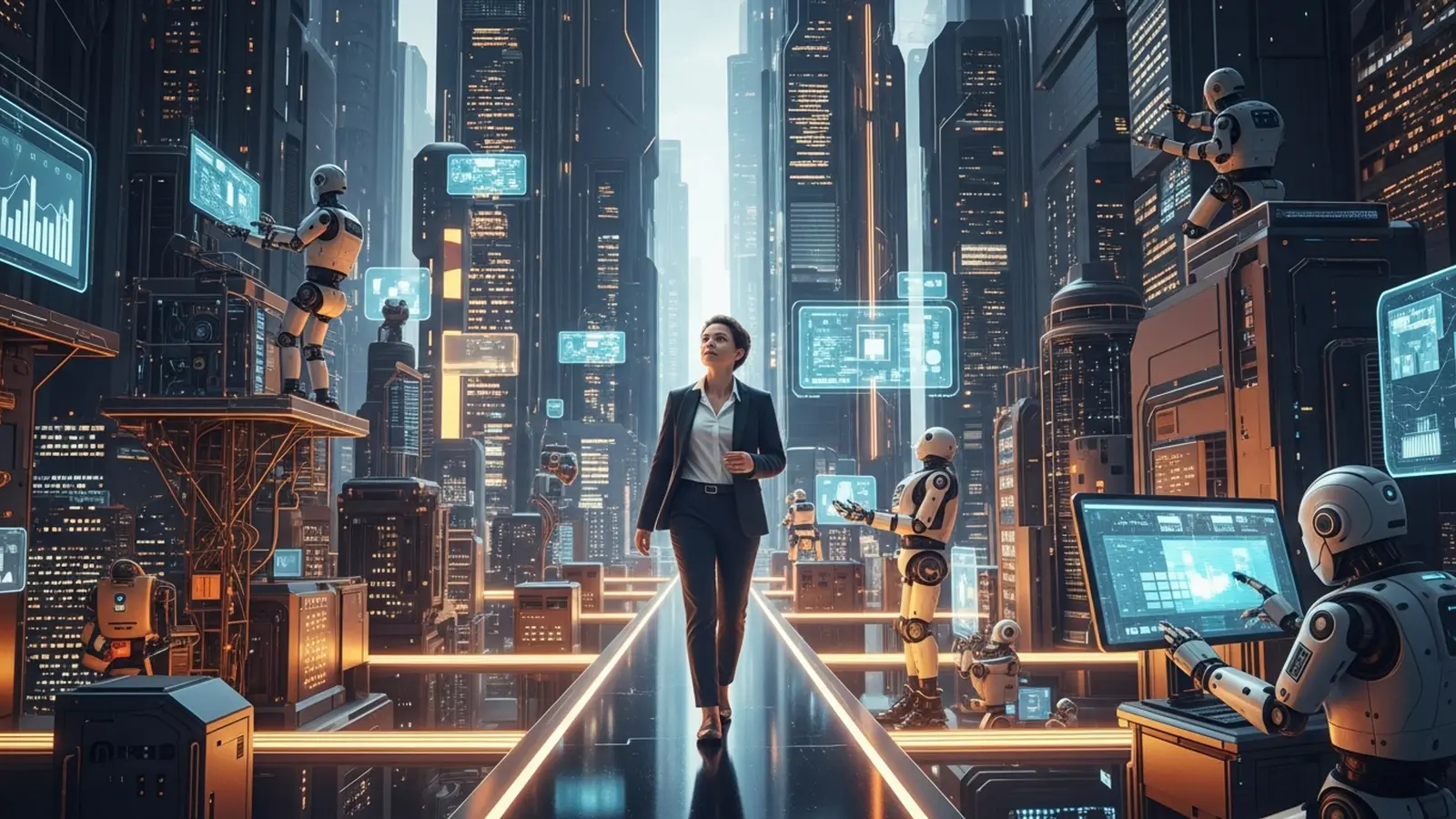
The landscape of the AI job market is undergoing unprecedented transformation, as recent advancements like generative AI models, exemplified by GPT-4 and Midjourney, automate tasks once considered exclusively human domains in fields from content creation to complex data analysis. This rapid acceleration necessitates a proactive approach to career development, moving beyond traditional skill sets. Instead of fearing obsolescence, professionals must strategically cultivate uniquely human aptitudes – critical thinking, emotional intelligence, complex problem-solving. adaptive learning – which remain beyond current algorithmic capabilities. Understanding this evolving dynamic is crucial for navigating the shift from task-based work to value-driven innovation, ensuring long-term professional relevance. 
Understanding the AI Shift: What’s Happening?
You’ve probably heard a lot about Artificial Intelligence (AI) lately – whether it’s through mind-blowing art generators, chatbots that write essays, or even smart assistants in your phone. But what does it really mean for your future job? AI is essentially a branch of computer science that enables machines to perform tasks that typically require human intelligence. Think learning, problem-solving, decision-making. even understanding language.
Automation, on the other hand, is when machines or software perform tasks without human intervention, often using AI. Historically, automation has always changed the job market, from factory robots to self-checkout kiosks. What’s different now is that AI-powered automation can handle more complex, cognitive tasks, not just repetitive physical ones. This shift is creating a dynamic and sometimes unpredictable AI job market.
For example, in customer service, simple queries are increasingly handled by AI chatbots, freeing human agents to focus on complex or emotionally sensitive issues. In content creation, tools like ChatGPT can draft articles or social media posts in seconds. they lack the unique voice, empathy. critical judgment of a human writer. It’s not always about jobs disappearing entirely. rather evolving and requiring new skills. Some roles might be fully automated, while others will be augmented, meaning AI helps humans do their jobs better and faster.
The Skills AI Can’t Easily Replicate (Yet!)
While AI is incredibly powerful, there are certain uniquely human skills that it struggles to master. These are your superpowers in the evolving AI job market:
- Creativity and Innovation: AI can generate variations of existing ideas or combine concepts it has learned from vast datasets. it doesn’t truly “imagine” or conceive a radically new idea from scratch with genuine insight. It can’t feel the spark of inspiration. Think about a groundbreaking new product design or a genre-defying piece of music; these often come from human intuition and emotion.
Example: While AI can create art in the style of Van Gogh, it doesn't decide to invent a new art movement or express complex human emotions through a unique visual language. - Critical Thinking and Complex Problem-Solving: AI is excellent at processing data and finding patterns. when faced with ambiguous situations, ethical dilemmas, or problems with no clear-cut data-driven solution, human judgment reigns supreme. We can connect disparate pieces of data, comprehend context. make decisions based on values, not just algorithms.
Example: An AI might diagnose a medical condition based on symptoms. a human doctor considers the patient's individual history, lifestyle. emotional state to recommend a holistic treatment plan. - Emotional Intelligence and Empathy: This is perhaps AI’s biggest hurdle. AI can detect emotions based on facial expressions or tone of voice. it doesn’t genuinely feel them. Empathy – the ability to grasp and share the feelings of another – is fundamental to fields like therapy, nursing, teaching. leadership. Building genuine trust and rapport requires a human touch.
Example: A therapist needs to comprehend a client's unspoken anxieties and provide comfort, something an AI chatbot, no matter how advanced, cannot truly do. - Complex Communication and Persuasion: While AI can write coherent text, it often lacks the nuance, wit. persuasive power of human communication. Negotiation, storytelling that captivates an audience, inspiring a team, or delivering a difficult message with sensitivity – these all rely on understanding human psychology and context that AI struggles with.
Example: A lawyer presenting a case to a jury needs to read the room, adapt their tone. appeal to human emotions and logic simultaneously. - Adaptability and Lifelong Learning: Humans are incredibly adaptable. We can learn completely new skills, unlearn outdated ones. thrive in rapidly changing environments. While AI can learn from new data, it’s typically within its programmed parameters. Our ability to pivot careers, embrace new technologies. continuously reinvent ourselves is a profound human trait.
Example: A graphic designer might learn new AI tools to enhance their work. also pivot to UX design when they see a market shift, combining their existing skills with new ones. - Ethical Reasoning and Moral Judgment: AI operates based on the data it’s trained on and the rules it’s given. It doesn’t inherently comprehend right from wrong, fairness, or justice. Decisions involving ethics, societal impact. moral considerations will always require human oversight and judgment.
Example: Designing AI systems that are fair and unbiased requires human experts to identify and mitigate potential biases in the data and algorithms.
Becoming “AI-Literate”: Your New Superpower
Just as computer literacy became essential in the late 20th century, AI literacy is becoming your new superpower in the AI job market. What does it mean? It’s not about becoming an AI engineer. understanding how AI works, its capabilities. its limitations. Think of it like knowing how to drive a car without needing to be a mechanic.
Why is this crucial? Because AI tools are becoming commonplace in almost every industry. If you know how to leverage them effectively, you become more productive, innovative. valuable. Here’s what AI literacy entails:
- Understanding AI Basics: Grasping concepts like machine learning, neural networks. how AI learns from data. You don’t need to code it. knowing the principles helps you interpret what AI can and cannot do. For instance, understanding that AI’s output is only as good as its input data (GIGO – Garbage In, Garbage Out) is vital.
- Using AI Tools Effectively: This is about practical application. Can you use a tool like ChatGPT to brainstorm ideas, summarize complex texts, or draft emails? Can you use an AI image generator to quickly create visual concepts for a project? Learning “prompt engineering” – how to give clear, effective instructions to AI – is a rapidly growing skill.
Example Prompt: "Generate five creative marketing slogans for a new eco-friendly sneaker brand targeting Gen Z, focusing on sustainability and urban style." - Identifying AI’s Role in Your Field: Every industry is being touched by AI. Research how AI is being used in your areas of interest. Are there AI tools specific to healthcare, finance, design, or education? Understanding these can help you position yourself as a forward-thinking professional.
- Ethical Considerations of AI: Being AI-literate also means understanding the ethical implications. How can AI perpetuate bias? What are the privacy concerns? Who is responsible when AI makes a mistake? Asking these questions and understanding the societal impact of AI is a critical human skill that AI itself cannot possess.
A recent study by PwC suggested that up to 30% of jobs could be automated by the mid-2030s. it also highlighted the creation of new jobs requiring AI skills. Becoming AI-literate isn’t just about protecting your current role; it’s about opening doors to these new opportunities.
The Power of Hybrid Skills: Marrying Human & Machine
The future of work isn’t about humans vs. AI; it’s about humans with AI. The most resilient careers will be those that combine uniquely human capabilities with the efficiency and power of AI tools. We call these “hybrid skills” or “AI-powered human skills.”
Imagine a chef who uses AI to examine customer preferences and ingredient availability to suggest innovative menu items. then uses their creativity and culinary expertise to perfect the recipe and presentation. The AI makes them more efficient and informed. the human provides the artistry and taste.
Here are some examples of how traditional roles can be enhanced by AI:
| Traditional Skill | AI-Enhanced Skill | Why it’s Future-Proof |
|---|---|---|
| Basic Data Entry | Data Analysis with AI Tools | AI automates repetitive entry, allowing humans to focus on interpreting complex data, identifying trends. making strategic decisions. |
| Content Writing | AI-Assisted Content Creation | AI generates drafts, research. outlines, freeing human writers to infuse content with unique voice, emotional depth, complex storytelling. critical accuracy. |
| Customer Service Representative | AI-Empowered Customer Experience Specialist | AI handles routine inquiries and provides quick data, enabling humans to manage complex problems, build customer relationships. offer empathetic support. |
| Graphic Designer | AI-Augmented Visual Creator | AI generates initial concepts, variations. image edits rapidly, allowing designers to spend more time on creative direction, brand strategy. refining unique artistic visions. |
Take the story of Sarah, a young marketing professional. When AI tools started generating ad copy, she didn’t fear job loss. Instead, she took online courses in prompt engineering and data analytics. Now, she uses AI to assess vast amounts of customer data to identify niche markets and automatically generate initial ad variations. But then, she applies her deep understanding of human psychology and brand voice to refine those variations, ensuring they resonate emotionally and strategically. She’s not just a marketer; she’s an AI-powered marketer, making her invaluable in the modern AI job market.
Actionable Strategies for Your Career Path
Navigating the changing landscape of the AI job market requires proactive steps. Here’s what you can start doing today:
-
1. Embrace Continuous Learning: The world is changing rapidly. your skills need to evolve with it. Lifelong learning isn’t just a buzzword; it’s a necessity.
- Online Courses & Certifications: Platforms like Coursera, edX, Udemy. LinkedIn Learning offer courses on everything from “Introduction to AI” to “Prompt Engineering” or specific technical skills like Python for data analysis. Many universities also offer free introductory courses.
- Bootcamps & Workshops: For more intensive learning, consider coding bootcamps or workshops focused on specific AI tools or applications relevant to your field.
- Read & Follow Experts: Stay informed by reading industry blogs, tech news. following thought leaders in AI and your chosen profession on social media.
- Example: If you’re interested in creative writing, don’t just learn AI writing tools. Take a course on advanced storytelling techniques or human psychology to make your AI-assisted content truly stand out.
-
2. Build a Diverse Skill Portfolio: Don’t put all your eggs in one basket. Aim for a “T-shaped” or “M-shaped” skill profile – deep expertise in one or two areas (the vertical bar of the ‘T’) combined with a broad understanding and foundational skills across many others (the horizontal bar).
- Mix Soft and Hard Skills: Pair your technical abilities (like coding or data analysis) with uniquely human soft skills (like communication, empathy. creativity).
- Cross-Disciplinary Knowledge: grasp how different fields connect. A designer who understands basic marketing principles, or a coder who grasps user experience (UX) design, is far more valuable.
-
3. Network, Collaborate. Mentor: Human connection remains vital. AI can’t build authentic relationships.
- Connect with Peers & Professionals: Attend industry events (online or in-person), join professional groups. use platforms like LinkedIn to connect with people in your desired field.
- Seek Mentorship: Find experienced individuals who can offer guidance, share insights. help you navigate career decisions in an evolving world.
- Collaborate on Projects: Work with others on projects. This builds your teamwork skills and exposes you to different perspectives and ways of thinking.
-
4. Develop an Entrepreneurial Mindset: Think like a problem-solver and value-creator.
- Identify Opportunities: Look for problems that AI can solve, or new needs that arise because of AI. Can you offer a service that helps businesses integrate AI, or creates content that AI can’t?
- Side Projects & Freelancing: Use side projects or freelance gigs to experiment with new technologies, build your portfolio. test out innovative ideas.
-
5. Focus on Ethical AI: Understanding and advocating for the responsible use of AI is a critical human role.
- Learn About AI Ethics: Explore topics like algorithmic bias, data privacy. the societal impact of AI.
- Become a Voice for Responsible AI: As AI becomes more prevalent, there will be a growing need for professionals who can guide its ethical development and deployment, ensuring it benefits humanity.
By actively pursuing these strategies, you’re not just reacting to change; you’re shaping your future and positioning yourself to thrive in the dynamic AI job market.
The Future is Human-AI Collaboration
The narrative often painted about AI is one of replacement. a more accurate picture is one of augmentation and collaboration. AI is a powerful tool, much like the internet or personal computers were before it. Those who learned to wield these tools became more effective and valuable. The same applies to AI.
Your unique human capabilities – your creativity, empathy, critical thinking. ethical judgment – are not being replaced. Instead, they are being elevated and amplified by AI. By embracing AI literacy, developing hybrid skills. committing to lifelong learning, you can position yourself at the forefront of this exciting new era. The future of the AI job market isn’t about machines taking over; it’s about smart humans working smarter with intelligent machines to achieve incredible things.
Conclusion
Future-proofing your career isn’t about resisting AI. intelligently integrating it. The true competitive edge now lies in uniquely human capabilities: critical thinking, emotional intelligence. creativity. Instead of fearing automation, cultivate skills that complement it. For instance, a content strategist who masters generative AI tools like crafting powerful AI prompts becomes an indispensable asset, elevating output quality and speed rather than being replaced. My personal tip? Dedicate weekly time to hands-on experimentation. I’ve found that actively engaging with new AI models, even something as cutting-edge as OpenAI Sora, demystifies the technology and sparks innovative applications for my own work. This proactive learning transforms you from a spectator to a strategic user, ensuring you’re not just keeping pace. leading the charge. Embrace this era of transformation as an unparalleled opportunity. Your career’s future isn’t predetermined by AI. shaped by your willingness to adapt, learn. collaborate with these powerful tools. Go forth, experiment. redefine what’s possible in your professional journey.
More Articles
How to Build a Powerful AI Career Path Step by Step
Navigate the AI Job Market Your Guide to Future-Proofing Your Career
Supercharge Your Productivity How Human AI Teamwork Delivers Results
Master Your Day 7 Essential Time Saving AI Tools for Busy Professionals
The Ultimate Guide to Crafting Powerful AI Prompts for Amazing Results 
FAQs
What’s the biggest threat AI poses to my job, really?
The biggest threat isn’t usually complete job replacement. rather the automation of specific tasks within your role. AI excels at repetitive, data-driven, or predictable tasks. This means your job might evolve significantly, requiring you to adapt and focus on the parts that demand human creativity, critical thinking, emotional intelligence, or complex problem-solving.
How can I make myself indispensable in an AI-driven world?
Focus on developing uniquely human skills that AI struggles with. Think creativity, strategic thinking, emotional intelligence, complex communication, ethical reasoning. leadership. Also, learn to work with AI as a tool, using it to enhance your productivity and insights, rather than trying to compete directly against it.
Are there specific skills I should be learning right now to stay relevant?
Absolutely! Beyond those ‘human’ skills, consider data literacy, basic AI understanding (what it can and can’t do), prompt engineering (how to effectively communicate with AI tools), critical thinking. adaptability. Tech skills like coding or data analysis are great. equally essential is the ability to learn new technologies quickly and apply them.
What if my job seems fully automatable? Should I panic?
Don’t panic! Instead, see it as an opportunity to pivot. Identify which parts of your current role are most at risk and start exploring related fields that require more human interaction, creativity, or strategic oversight. Look into upskilling or reskilling programs that can help you transition into roles where AI acts as a co-pilot, not a replacement.
Is it better to work with AI or try to compete against it in my career?
Definitely work with AI. Trying to compete against its speed and processing power for repetitive tasks is a losing battle. Instead, embrace AI as a powerful assistant. Learn how to leverage AI tools to automate mundane tasks, examine data faster, generate ideas, or even draft content, freeing you up to focus on higher-value, more strategic contributions.
How do I stay updated with AI changes without being totally overwhelmed by all the new tech?
Start small. Pick one or two reputable sources (a tech news site, a specific industry newsletter, or a podcast) and commit to checking them regularly. Don’t try to learn everything at once. Focus on understanding the implications of new AI advancements for your industry and role, rather than getting bogged down in the technical details of every new model. Experiment with relevant AI tools yourself to get hands-on experience.
What kind of jobs are relatively safe from AI automation in the long run?
Jobs requiring high levels of human empathy, creativity, ethical judgment, complex negotiation, or hands-on dexterity are generally safer. Think therapists, artists, strategic consultants, skilled tradespeople, educators (especially those fostering critical thinking and social skills). roles focused on innovation or leadership. Any role where the human element is central and irreplaceable will have more longevity.