
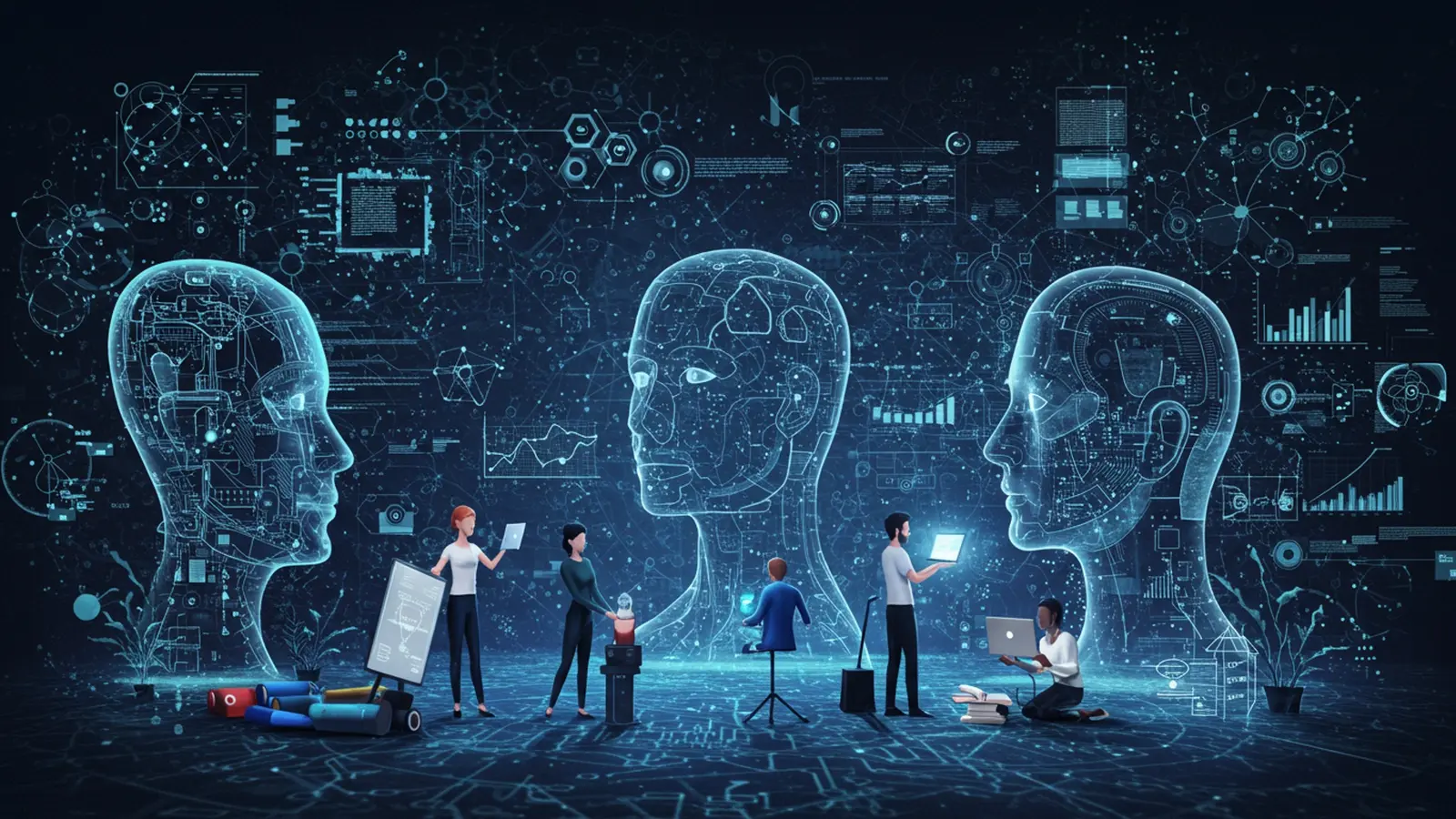
The advent of generative AI, profoundly demonstrated by tools like ChatGPT and Gemini, fundamentally redefines professional value, shifting the focus from rote task execution to uniquely human cognitive strengths. As AI increasingly automates data synthesis and accelerates routine operations, the critical imperative is not to compete with machines but to elevate our own capabilities. Mastering advanced problem-solving, ethical reasoning, creative ideation. strategic oversight are the indispensable skills for AI collaboration, allowing professionals to synergize with artificial intelligence rather than be supplanted by it. Those who cultivate these higher-order functions will navigate and lead the evolving landscape, transforming AI’s disruptive potential into unparalleled opportunities for innovation and growth.

Understanding the AI Landscape: Your Future Co-Pilot
Artificial Intelligence (AI) isn’t some far-off science fiction concept anymore; it’s already woven into the fabric of our daily lives. From the personalized recommendations you get on streaming services and social media, to the voice assistants in your phone. even the sophisticated algorithms behind online games, AI is everywhere. Think about it: when you search for something online, AI helps deliver the most relevant results. When your smartphone auto-corrects a typo, that’s AI at work. This technology is rapidly evolving. it’s set to transform industries and careers in ways we’re only just beginning to imagine.
For young people like you, understanding AI isn’t just about being tech-savvy; it’s about preparing for a future where AI will be a constant presence, whether as a tool, a colleague, or even a competitor. This isn’t about fear; it’s about empowerment. The goal isn’t to compete with AI. to collaborate with it, leveraging its strengths while amplifying our unique human abilities. That’s where mastering key Skills for AI becomes absolutely crucial. These aren’t just technical abilities; they’re a blend of human-centric strengths and new digital literacies that will help you navigate, innovate. thrive in an AI-powered world.
Beyond the Bots: Cultivating Essential Human-Centric Skills for AI Collaboration
While AI excels at processing data and automating tasks, there are certain areas where human intelligence remains unparalleled. These are the “soft skills” that will become your superpowers alongside AI. Developing these Skills for AI interaction ensures you’re always adding unique value.
Critical Thinking and Problem Solving
Critical thinking is the ability to assess data objectively, identify biases, evaluate arguments. form reasoned judgments. Problem-solving, on the other hand, is about finding effective solutions to complex issues. Why are these vital with AI?
- AI generates vast amounts of data. it doesn’t always discern truth from falsehood, or bias from objectivity. Your critical thinking skills allow you to question AI’s output, verify its accuracy. identify potential “hallucinations” (when AI invents data).
- Imagine you’re using an AI tool for a school project. It might generate a persuasive essay. is the details accurate? Does it truly reflect your unique perspective? A good critical thinker will cross-reference facts, challenge assumptions. refine the AI’s output to ensure quality and originality.
Practice questioning everything. When you read an article or see a social media post, ask yourself: “Is this true? What’s the source? Are there other perspectives?” Engage in debates, solve puzzles. always seek to interpret the ‘why’ behind details.
Creativity and Innovation
Many people worry AI will replace creative jobs. But, AI is more likely to become a powerful tool for creativity and innovation, not a replacement for the human spark. Creativity is about generating new ideas, connecting disparate concepts. imagining novel solutions. Innovation is the process of putting those new ideas into practice.
- AI can generate millions of images, melodies, or text variations. it needs human direction, inspiration. taste to create something truly meaningful or groundbreaking. An AI can paint a picture. it can’t feel the emotion, interpret the cultural context, or convey a unique human message like an artist can.
- Consider a young graphic designer using AI art generators like Midjourney or DALL-E. Instead of simply generating images, they use AI to quickly prototype ideas, explore different styles, or create unique textures. Their creativity comes in their ability to prompt the AI effectively, curate its outputs. combine AI-generated elements with their own artistic vision to create something entirely new.
Don’t be afraid to experiment! Try new hobbies, combine different interests (e. g. , coding and music, art and storytelling). Use AI as a brainstorming partner. always bring your unique perspective to the table.
Emotional Intelligence and Collaboration
Emotional intelligence (EQ) is the ability to interpret and manage your own emotions. to recognize and influence the emotions of others. Collaboration is working effectively with others towards a shared goal. AI can process data on human emotions (like sentiment analysis). it doesn’t feel or truly comprehend them.
- In any team setting, whether it’s a school group project or a future workplace, human connection, empathy. effective communication are paramount. AI can’t build trust, mediate conflict, or inspire a team in the way a human leader can.
- Imagine an AI-powered customer service chatbot. It can answer questions efficiently. if a customer is frustrated or upset, it takes a human with high emotional intelligence to truly empathize, de-escalate the situation. provide a solution that builds loyalty. This skill is a core component of future Skills for AI environments where human-to-human interaction will be highly valued.
Engage in group activities, volunteer. practice active listening. Pay attention to body language and tone of voice. Seek to comprehend others’ perspectives, even when you disagree.
Adaptability and Lifelong Learning
The pace of technological change, especially with AI, is incredibly fast. What’s cutting-edge today might be obsolete tomorrow. Adaptability is the ability to adjust to new conditions. lifelong learning is the commitment to continuously acquire new knowledge and skills throughout your life.
- Jobs will evolve, new tools will emerge. entire industries might transform. Those who are rigid in their thinking or resistant to learning new things will struggle. The most successful individuals will be those who embrace change and see it as an opportunity.
- My friend Sarah, for example, started her career in traditional marketing. When AI tools for content creation and data analytics emerged, she didn’t resist. Instead, she took online courses, experimented with new platforms. adapted her entire workflow. Now, she’s a highly sought-after “AI-augmented marketer,” showcasing prime Skills for AI integration.
Cultivate a growth mindset. See challenges as opportunities to learn. Explore online courses (Coursera, Khan Academy, edX), read tech blogs. stay curious about emerging technologies. Don’t be afraid to try new software or learn a new skill.
The Technical Edge: Essential Skills for AI Interaction
While human-centric skills are vital, a certain level of technical proficiency with AI tools is also indispensable. These aren’t about becoming an AI developer (though that’s an option!). about being an effective user and collaborator with AI.
Prompt Engineering
This is arguably one of the most essential new Skills for AI for anyone interacting with large language models (LLMs) like ChatGPT or image generators like Midjourney. Prompt engineering is the art and science of crafting effective inputs (prompts) to get the desired output from an AI model.
- Think of it like giving instructions to a super-smart but very literal assistant. If your instructions are vague, you’ll get vague results. If they’re clear, detailed. structured, the AI can perform wonders.
- A good prompt can save you hours of revision and lead to high-quality output, whether it’s an essay outline, a marketing slogan, or a unique image.
Experiment with different phrasing and details. Learn to specify format, tone, audience. constraints. Practice makes perfect!
Here’s a comparison of how different prompts can lead to vastly different outcomes:
| Prompt Quality | Example Prompt | Likely AI Output (Example) | Why it’s Different |
|---|---|---|---|
| Vague/Poor | "Write about space." |
|
Too general, no specific direction, resulting in generic and unhelpful output. |
| Better/Specific | "Write a 200-word blog post for teenagers about the James Webb Space Telescope's recent discoveries, focusing on how they change our understanding of early galaxies. Use an engaging and enthusiastic tone." |
|
Specifies length, target audience, topic, focus. tone, leading to a much more usable and tailored response. |
Data Literacy
AI models learn from data. Understanding data literacy means being able to read, work with, assess. argue with data. It involves recognizing where data comes from, how it’s collected, its potential biases. how it’s used to make decisions.
- When AI recommends a product, suggests a friend, or filters your news feed, it’s doing so based on patterns it found in massive datasets. Being data literate helps you interpret why AI is making certain suggestions and allows you to question its assumptions.
- For instance, if an AI recruiting tool consistently favors certain demographics, a data-literate individual could investigate the underlying training data for biases, rather than just accepting the AI’s recommendations at face value. This is a critical one among the new Skills for AI.
Be curious about data. When you see statistics or charts, ask: “Who collected this data? What was their methodology? Could there be any biases?” Try to comprehend how your favorite apps use your data.
Basic AI Tool Proficiency
You don’t need to be a programmer to use AI effectively. Many powerful AI tools are user-friendly and designed for everyday use. Proficiency means knowing what tools exist, how to access them. how to use their basic functions.
- Familiarize yourself with tools like ChatGPT for text generation, Midjourney or DALL-E for image creation, Grammarly for writing assistance. AI-powered search engines. These tools can boost your productivity for school, creative projects. future jobs.
- For example, a student using ChatGPT to brainstorm essay topics or summarize complex articles is leveraging AI proficiency to enhance their learning, while still doing the critical thinking and writing themselves.
Pick an AI tool you’re interested in and just start playing with it. Watch tutorials, read guides. try to complete small projects using AI. The best way to learn is by doing.
Integrating Skills: A Holistic Approach for an AI-Powered Future
The real magic happens when you combine these human-centric and technical Skills for AI. They don’t exist in silos; they amplify each other. Imagine a future entrepreneur:
- They use AI tools (
Basic AI Tool Proficiency) to research market trends and identify a gap (
Data Literacy). - They then use AI to brainstorm innovative product ideas (
Creativity) by crafting specific prompts (
Prompt Engineering). - They critically evaluate the AI’s suggestions, refining them with their unique insights and understanding of human needs (
Critical Thinking and
Emotional Intelligence). - As the market evolves and new AI tools emerge, they continuously learn and adapt their business strategy (Adaptability and Lifelong Learning).
This integrated approach is what will set you apart. It’s not about choosing between being “human” or “technical”; it’s about being both. knowing how to seamlessly blend them.
Your Next Steps: Building Your AI-Ready Skillset Now
The future isn’t something that happens to you; it’s something you build. Here’s how you can start mastering these Skills for AI today:
- Embrace Curiosity
- Practice Prompting
- Sharpen Your Mind
- Collaborate Actively
- Learn Continuously
Always ask “how” and “why.” Explore new technologies, read up on AI news. don’t shy away from complex topics.
Spend time with generative AI tools. Try to get them to produce exactly what you want by refining your prompts. Challenge yourself to get creative outputs.
Engage in activities that boost critical thinking – debates, puzzles, reading diverse perspectives. questioning details.
Join school clubs, participate in group projects, or volunteer. These are prime opportunities to hone your emotional intelligence and teamwork skills.
The world is your classroom. Take advantage of free online resources, tutorials. courses to learn about AI, data. any other skill that sparks your interest.
Conclusion
Thriving alongside AI isn’t about competing with machines. rather augmenting our inherent human capabilities. As large language models like GPT-4 continue to evolve, our critical thinking, ethical reasoning. creative problem-solving become indispensable differentiators. My personal tip is to actively engage with AI tools, not just as users. as collaborators; interpret their limitations and leverage their strengths to amplify your own, much like learning a new instrument enhances a musician’s repertoire. This continuous learning, coupled with an adaptable mindset, ensures you remain not just relevant. an invaluable asset in the AI-powered future. Embrace this evolving landscape; it’s an exhilarating opportunity to redefine your potential and become an architect of tomorrow.
More Articles
Discover Your Dream Career 10 Exciting Generative AI Job Roles
Unlock Your Future 7 Steps to a Thriving AI Career Path
How to Master AI Collaboration Unleash Your Creative Superpowers
Your Practical Guide to Building a Successful AI Career Path 
FAQs
What does ‘thriving alongside AI’ actually mean?
It means developing uniquely human skills that complement artificial intelligence, rather than competing with it. It’s about leveraging AI as a powerful tool while focusing on your strengths in areas like creativity, critical thinking. emotional intelligence, making you more valuable and effective in an evolving world.
Why do I need to learn new skills specifically because of AI?
AI is rapidly automating many routine tasks, shifting the demand towards skills that require human judgment, empathy. complex problem-solving. To stay relevant and excel, you need to master these ‘human-centric’ skills that AI can’t replicate, turning AI into an accelerator for your career, not a threat.
What kind of critical skills are we talking about here?
We’re focusing on capabilities like advanced critical thinking, creative problem-solving, ethical reasoning, collaborative intelligence (especially with AI tools), adaptability. sophisticated communication. These are the core competencies that will empower you to innovate and lead in an AI-driven environment.
Is this only for people in tech roles?
Not at all! These critical skills are universal. Whether you’re in marketing, healthcare, finance, education, or any other field, AI will impact your work. Mastering these skills will benefit anyone looking to enhance their career and navigate future challenges, regardless of their industry or current role.
How will mastering these skills improve my career prospects?
By developing these essential human capabilities, you become an indispensable asset. You’ll be better equipped to make strategic decisions, lead teams, innovate new solutions. adapt to rapid changes. This positions you for growth, leadership. long-term career resilience in an increasingly automated world.
Do I need to be tech-savvy to benefit from this?
Absolutely not. While an understanding of AI’s general capabilities is helpful, the primary focus is on enhancing your human intelligence and interpersonal skills. It’s about understanding how to work with AI effectively, rather than needing to be an AI developer or programmer.
How quickly will these skills become vital for my job?
They are already crucial! AI is being integrated into workplaces at an accelerated pace. Proactively developing these skills now will give you a significant competitive advantage, preparing you for the immediate future and ensuring your continued success as AI evolves.