
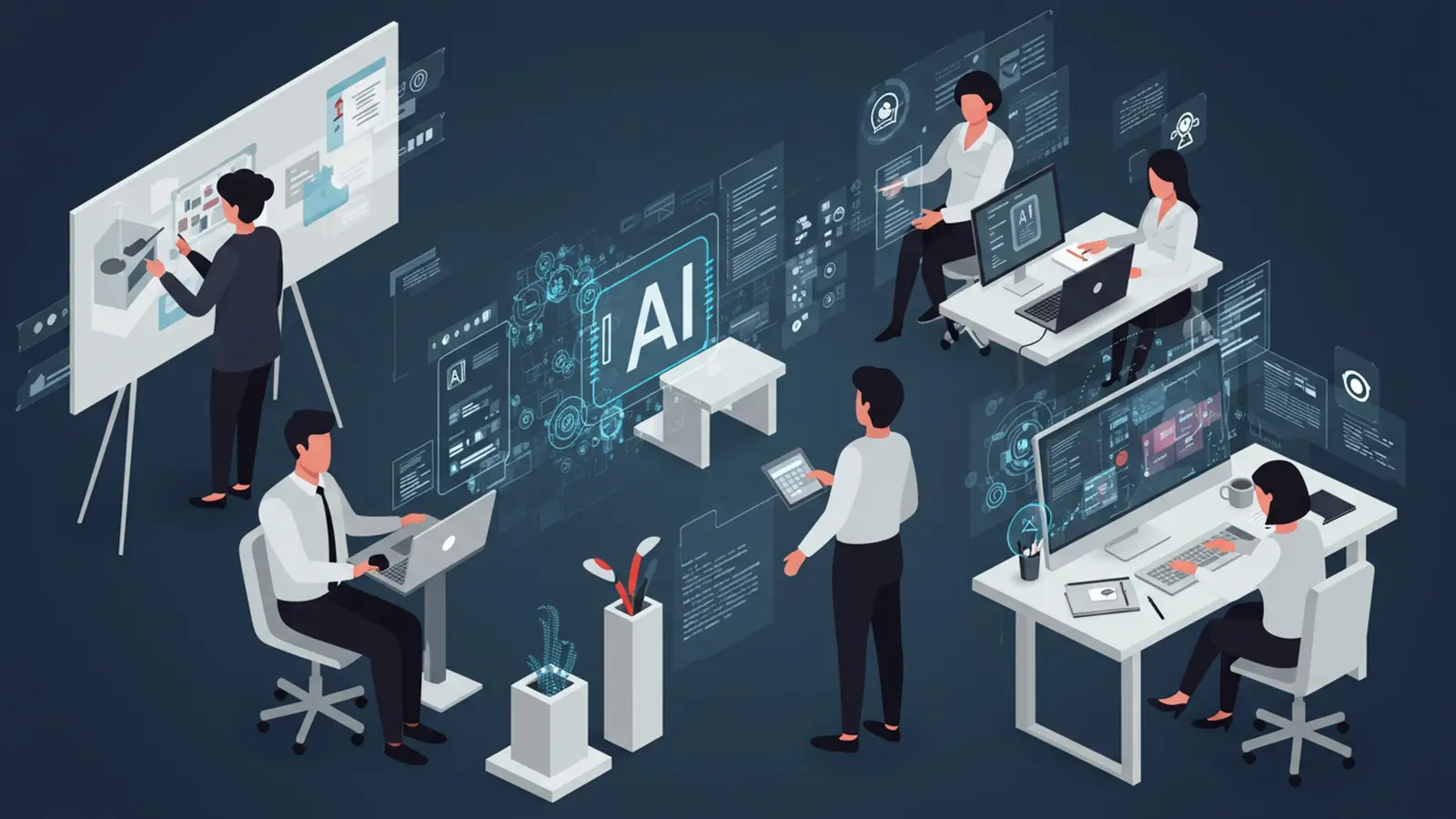
The prevalent narrative of AI displacing jobs often overshadows the profound creation of sophisticated new future AI roles emerging from rapid technological advancements. As large language models like GPT-4o demonstrate increasingly complex reasoning and multimodal capabilities, entirely new career landscapes are materializing, demanding unique blends of human oversight and AI fluency. Consider the rise of AI Ethicists, crafting essential governance frameworks for autonomous systems, or expert Prompt Engineers, whose precision in guiding generative AI transforms raw ideas into actionable insights. Even fields like scientific research are seeing AI-driven discovery specialists, leveraging algorithms to accelerate breakthroughs. These aren’t merely tech positions; they represent a fundamental shift in how we work, requiring critical thinking, creativity. a deep understanding of AI’s burgeoning potential and inherent limitations.

The Rise of AI Prompt Engineering: Talking to Machines
Ever wondered what it’s like to “talk” to an Artificial Intelligence? That’s essentially what an AI Prompt Engineer does! This is one of the most exciting and unexpected Future AI roles emerging right now. A “prompt” is simply the instruction or query you give to an AI model, especially generative AIs like large language models (LLMs) that create text, or image generators like DALL-E and Midjourney. Your job as a prompt engineer is to craft these instructions so precisely and creatively that the AI produces exactly what you want.
Think of it like being a director for a very talented. sometimes literal, actor. You need to give clear, detailed. nuanced directions to get the best performance. For example, instead of just typing “write a story about a dog,” a prompt engineer might write something like: “Generate a heartwarming, 500-word short story from the perspective of a loyal golden retriever, set in a cozy, snow-covered cabin during Christmas, focusing on its bond with a lonely elderly woman. The tone should be nostalgic and comforting.”
The magic here is understanding how different words, structures. even negative constraints (e. g. , “but do not include any dialogue”) influence the AI’s output. This role is crucial because the quality of AI’s output is often directly proportional to the quality of the input prompt. Without skilled prompt engineers, even the most advanced AI might struggle to deliver useful or creative results.
Real-world application? Imagine a marketing agency using an AI to generate ad copy. A prompt engineer can fine-tune the AI to produce copy that resonates with specific demographics, adheres to brand guidelines. even includes calls to action, all with a single, well-crafted prompt. Or a game developer using AI to generate unique textures or character designs, requiring precise prompts to match their artistic vision.
- Skills Needed
Strong communication (both written and verbal), creativity, critical thinking, problem-solving, an understanding of AI’s capabilities and limitations. a willingness to experiment. You’ll be constantly testing and refining your prompts.
AI Ethicist and Auditor: Ensuring Fairness and Trust
As AI becomes more integrated into our daily lives, from recommending what you watch to making decisions in healthcare or finance, ensuring it acts fairly and responsibly is paramount. This is where an AI Ethicist and Auditor steps in, another vital role among Future AI roles. An AI Ethicist focuses on the moral principles and values that should guide AI development and deployment. They ask tough questions: Is this AI fair? Does it discriminate against certain groups? What are the societal impacts of this technology?
An AI Auditor, on the other hand, puts these ethical principles into practice. They examine AI systems, their data. their algorithms to identify biases, ensure transparency. verify compliance with regulations. For example, if an AI is used to screen job applications, an auditor would investigate if the AI is inadvertently favoring one gender or ethnicity over another based on historical data. They might look for hidden patterns in the data that could lead to unfair outcomes.
- Bias
- Transparency
- Accountability
In AI, bias refers to systematic errors in a computer system’s output that occur due to flawed assumptions in the machine learning process. This often stems from biased data used to train the AI.
The ability to interpret how an AI system makes its decisions, rather than it being a “black box.”
The ability to hold individuals or organizations responsible for the actions and impacts of AI systems.
Consider a real-world scenario: An AI system developed to help doctors diagnose skin conditions might be trained predominantly on images of lighter skin tones. An AI Ethicist and Auditor would identify this potential bias, advocating for more diverse training data to ensure the AI performs equally well for all patients, regardless of their skin tone. Their work helps build trust in AI technologies and prevents harm.
- Skills Needed
A strong foundation in ethics, philosophy, sociology, or law, combined with a basic understanding of AI and data science. Critical thinking, strong analytical skills. excellent communication are essential to advocate for responsible AI.
AI-Powered Creative Content Specialist: Artistic Collaboration with Machines
Forget the idea that AI will replace human creativity; in many cases, it’s becoming an incredible partner! The AI-Powered Creative Content Specialist is an exciting new career among Future AI roles, combining artistic flair with AI tools. These specialists use generative AI to enhance their work in fields like art, music, storytelling, graphic design. video production.
Instead of AI creating art for them, they use AI as a sophisticated brush, a powerful synthesizer, or an infinite brainstorming partner. For example, a digital artist might use AI image generators (like Midjourney or Stable Diffusion) to rapidly prototype ideas, explore different styles, or generate intricate background details that would take hours to draw manually. They direct the AI, providing prompts and refining outputs. then use their own artistic skills to perfect the piece.
A musician might use AI music composition tools (like Amper Music or AIVA) to generate melodies, harmonies, or even entire background scores based on specific moods or genres, which they then adapt, arrange. produce. A writer could use AI to brainstorm plot points, develop character backstories, or even generate different versions of a scene, then weave these elements into their original narrative. The human touch remains crucial for originality, emotional depth. narrative coherence.
Here’s a simplified example of how an artist might use an AI tool:
// Prompt for an AI image generator
"A majestic fantasy castle perched on a floating island, surrounded by a swirling nebula,
in the style of a classical oil painting, volumetric lighting, epic scale, 8K resolution."
The specialist then takes the AI-generated image, perhaps touches it up in Photoshop, adds their own unique elements. integrates it into a larger project.
- Skills Needed
Strong artistic or creative talent (e. g. , in writing, visual arts, music), proficiency with creative software (e. g. , Adobe Creative Suite, DAWs), an experimental mindset. familiarity with various AI creative tools and prompt engineering techniques.
AI Trainer & Data Curator: Teaching the Machines
Behind every smart AI is a team of humans who helped it learn. The role of an AI Trainer & Data Curator is becoming increasingly essential for Future AI roles. AI models, especially those using machine learning, learn from vast amounts of data. But this data isn’t always clean, organized, or correctly labeled. That’s where you come in.
Data Curation involves collecting, organizing. maintaining high-quality datasets that AI models can learn from. This might mean identifying relevant images, texts, or audio clips, removing duplicates. ensuring the data is accurate and free from bias. For example, if you’re training an AI to recognize different types of animals, you’d need to gather thousands of images of various animals and ensure they are correctly labeled (“cat,” “dog,” “bird,” etc.) .
AI Training goes a step further. It often involves “annotating” or “labeling” data to teach the AI what to look for. For instance, in autonomous driving, human AI trainers might spend hours drawing bounding boxes around cars, pedestrians. traffic signs in video footage, effectively showing the AI what each object is. Or, for a chatbot, they might provide examples of different user questions and the correct answers, helping the AI interpret context and intent.
Consider the real-world impact: A company developing an AI for customer service needs a large dataset of customer queries and appropriate responses. An AI Trainer would go through these interactions, marking the intent of the customer’s question and the helpfulness of the AI’s response, guiding the AI to improve over time. This human feedback loop is crucial for the AI’s continuous learning and refinement.
- Skills Needed
Meticulous attention to detail, patience, a good understanding of the domain the AI is being trained for (e. g. , healthcare, finance), basic computer literacy. an ability to follow specific guidelines for data annotation.
AI-Assisted Healthcare Navigator: Guiding Patients with Intelligent Support
Healthcare can be complex and overwhelming, especially for patients navigating diagnoses, treatment options. insurance. An AI-Assisted Healthcare Navigator is a compassionate and technologically savvy professional who uses AI tools to help patients make informed decisions and manage their health journey. This is a crucial area among Future AI roles, blending human empathy with AI’s analytical power.
Imagine an AI that can process a patient’s medical history, current symptoms. genetic details, then cross-reference it with millions of research papers, clinical trials. treatment guidelines. The AI-Assisted Healthcare Navigator would interpret these AI-generated insights, explain them to the patient in understandable terms. help them discuss options with their doctors. They don’t replace doctors. augment the patient’s ability to comprehend and participate in their care.
- Personalized Treatment Plans
- Appointment Scheduling & Reminders
- data Synthesis
AI can examine vast datasets to suggest treatments tailored to an individual’s unique biological makeup and medical history.
AI-powered tools can optimize schedules, send reminders. even help patients find specialists more efficiently.
AI can quickly summarize complex medical documents or research findings, making them accessible to navigators and patients.
A real-world example might involve a patient recently diagnosed with a rare condition. The AI-Assisted Navigator could use AI to quickly identify leading experts, relevant clinical trials. support groups worldwide, presenting these options to the patient and their family. They also help patients interpret potential drug interactions or the pros and cons of different treatment pathways, all informed by AI’s rapid data processing. delivered with a human touch.
- Skills Needed
Strong interpersonal and communication skills, empathy, medical literacy (or a willingness to learn), organizational skills. proficiency with healthcare management software and AI-powered health platforms.
AI System Integrator: The Architect of AI Solutions
With so many specialized AI tools and platforms emerging, businesses often struggle to make them all work together seamlessly. That’s where the AI System Integrator comes in – a vital architect among Future AI roles. This professional is responsible for designing, building. maintaining the bridges between different AI components and existing IT infrastructure. They ensure that various AI models, data sources. software applications can communicate and collaborate effectively to solve real-world problems.
Think about a company that wants to use an AI chatbot for customer service, an AI analytics tool to interpret customer behavior. an AI-powered recommendation engine for products. These are often separate systems. An AI System Integrator would figure out how to connect the chatbot to the analytics tool so it can pull up customer history. then feed that details to the recommendation engine to suggest relevant products. They might use Application Programming Interfaces (APIs) to allow these systems to “talk” to each other.
Here’s a simplified look at how an integration might work:
// Pseudocode for an AI System Integrator's logic
FUNCTION integrateCustomerServiceAI(): chat_bot_api = connect_to_chatbot_platform() crm_api = connect_to_customer_database() product_recommender_api = connect_to_recommendation_engine() IF chat_bot_api. new_customer_query(): customer_info = crm_api. get_customer_data(chat_bot_api. customer_id) recommended_products = product_recommender_api. suggest_products(customer_info) chat_bot_api. send_response(recommended_products)
This role is critical for businesses to fully leverage the power of AI, transforming individual AI tools into comprehensive, integrated solutions that drive efficiency and innovation. Without integrators, companies would have isolated AI “islands” that can’t communicate.
- Skills Needed
Strong problem-solving abilities, knowledge of software development (especially APIs and cloud platforms), understanding of various AI technologies and their applications, excellent communication to translate technical concepts to business needs. system design expertise.
AI-Enhanced Environmental Scientist: Protecting Our Planet with Data
The fight against climate change and environmental degradation requires powerful tools. AI is proving to be one of the most impactful. The AI-Enhanced Environmental Scientist is a crucial player among Future AI roles, using advanced AI and machine learning techniques to review vast environmental datasets, predict ecological changes. develop solutions for a sustainable future.
Traditional environmental science involves collecting data through field observations, sensors. satellite imagery. Now, imagine enhancing that with AI’s ability to process and interpret this data at an unprecedented scale and speed. For instance:
- Deforestation Monitoring
- Wildlife Conservation
- Pollution Tracking
- Climate Modeling
AI can review satellite images to detect illegal logging in remote areas almost in real-time, far more efficiently than human teams alone.
AI-powered cameras and audio sensors can identify and track endangered species, monitor their behavior. even detect poaching activity.
AI models can predict air and water quality based on sensor data, weather patterns. industrial emissions, helping authorities issue warnings and implement preventative measures.
AI refines complex climate models, improving the accuracy of long-term weather predictions and understanding the impacts of climate change.
Consider a real-world use case: Researchers are using AI to assess millions of images from camera traps in national parks. The AI can automatically identify different animal species, count their numbers. even flag unusual behaviors, providing invaluable data for conservation efforts that would be impossible to process manually. Another example is using AI to optimize renewable energy grids, predicting energy demand and supply fluctuations to make solar and wind power more reliable.
- Skills Needed
A strong background in environmental science, ecology, or related fields, coupled with data science skills, an understanding of GIS (Geographic insights Systems). proficiency with AI tools for data analysis, image recognition. predictive modeling.
Conclusion
The unexpected career paths we’ve explored underscore a crucial truth: AI innovation isn’t solely about automation; it’s actively sculpting entirely new professional landscapes. To thrive in this evolving environment, my personal tip is to shift your mindset from merely ‘using AI’ to ‘collaborating with AI.’ Consider the burgeoning need for roles like AI Prompt Engineers, who craft precise instructions for generative models, or AI Ethicists, ensuring responsible deployment—positions that demand creative problem-solving and a deep understanding of human intent, not just technical prowess. The recent advancements in multimodal AI, for instance, have only amplified the demand for professionals who can bridge diverse data types and human understanding. Don’t passively wait for these roles to be fully defined; start experimenting. Take a free online course, build a small project with a tool like DALL-E, or network with others embracing AI. Your proactive engagement now, much like an early adopter diving into the nascent internet, will define your trajectory. The future isn’t about being replaced by AI. about becoming an indispensable partner in its evolution. Embrace this era with curiosity. you’ll not only uncover your next career path but help shape the future of work itself.
More Articles
Switching to AI Your Step-by-Step Guide for a Seamless Career Move
Unlock Your Future 7 High-Paying Generative AI Jobs Explained
Beyond Automation Discover the Unexpected AI Roles Shaping Tomorrow’s Workforce
Unlock Your Future Seven Essential Steps to an AI Career Path 
FAQs
What kind of career paths are we actually talking about here?
We’re diving into roles that aren’t the typical AI engineer or data scientist. These are positions created or heavily influenced by AI innovation, often blending human creativity, ethics. strategic thinking with AI capabilities in unexpected ways.
Can you give me a sneak peek at one of these ‘unexpected’ jobs?
Absolutely! Think along the lines of an AI Ethicist, a Prompt Engineer, or even an AI-Assisted Creative Director. These roles use AI as a partner for design, strategy. ensuring responsible development, rather than just coding.
What skills do I need to thrive in these new AI-driven jobs?
While some tech familiarity helps, critical thinking, problem-solving, creativity, strong communication. adaptability are super essential. Many roles prioritize understanding human-AI interaction and ethical implications over deep technical coding.
Do I need a computer science degree to get into these fields?
Not necessarily for all of them! Many emerging AI roles value interdisciplinary skills. Someone with a background in humanities, design, law, or even the arts can find a strong footing, especially in areas like AI ethics, content creation, or user experience design.
Are these career paths just a fleeting trend, or are they here to stay?
AI’s impact is a long-term game. These career paths represent a fundamental shift in how we work, emphasizing human-AI collaboration and leveraging our unique human strengths. They’re likely to evolve but remain significant for the foreseeable future.
How can I start exploring these new career opportunities?
A great first step is to take online courses on AI fundamentals, ethics, or prompt engineering. Experiment with various AI tools, stay updated on emerging trends. network with professionals who are working in AI-adjacent fields. Hands-on experience is invaluable!
Are these paths only for super tech-savvy people?
Definitely not! Many of these roles are less about deep technical expertise and more about understanding human needs, communication, creativity. ethical considerations within the context of AI. They often bridge the gap between technology and human experience, making them accessible to a wide range of backgrounds.