
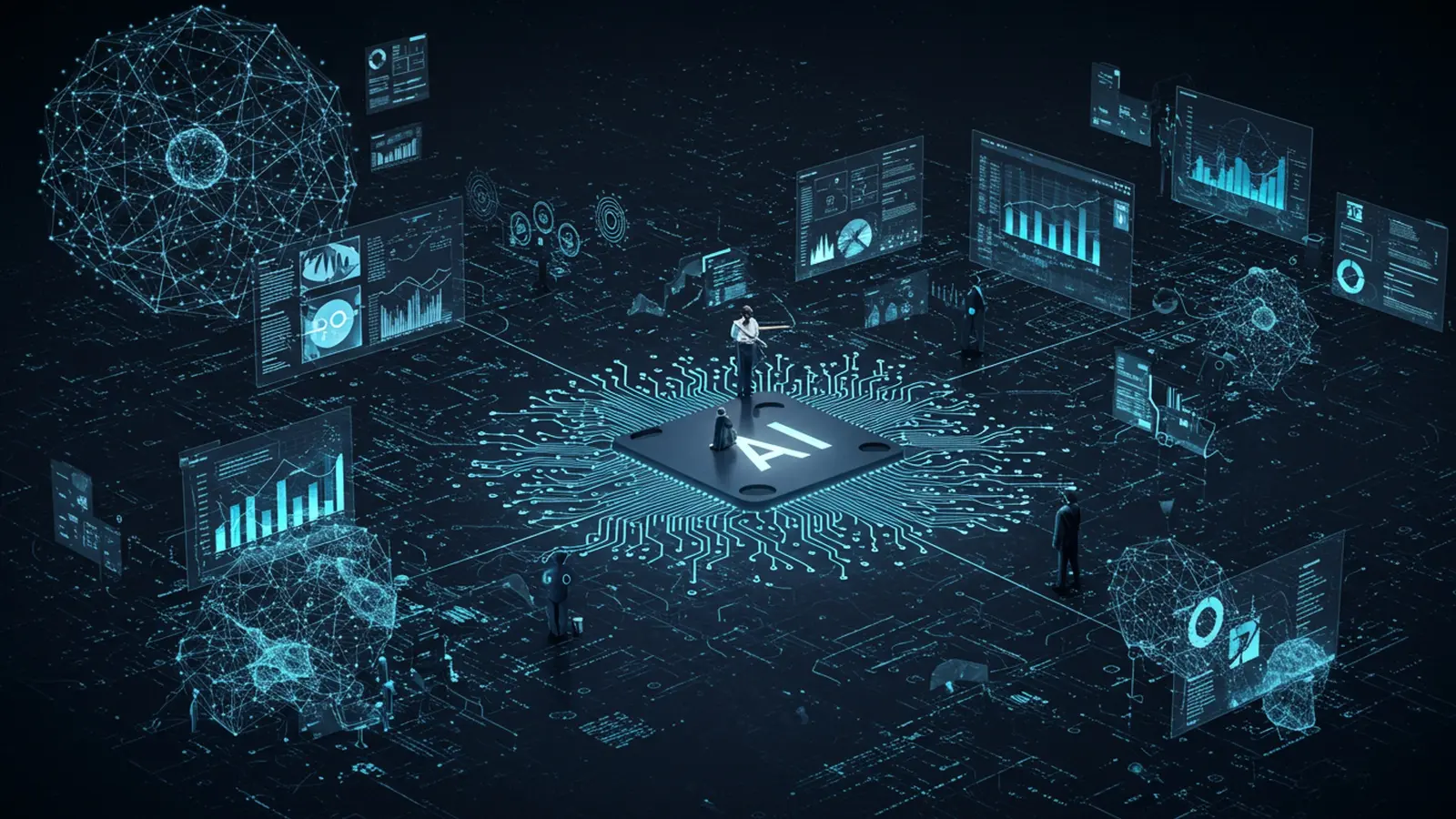
The marketing landscape dramatically transforms as Generative AI rapidly evolves, moving beyond mere automation to create truly innovative content and experiences. Forward-thinking marketers now harness tools like ChatGPT and DALL-E 3, not just for drafting emails. for dynamically generating hyper-personalized ad copy, crafting unique visual assets. even simulating customer interactions at scale. This pivotal shift in Generative AI marketing empowers brands to achieve unprecedented levels of engagement and efficiency, allowing for a decisive competitive edge in an increasingly crowded digital space. Mastering these cutting-edge capabilities is no longer optional; it is essential for driving substantial marketing growth and staying ahead of the curve. 
Understanding Generative AI in Marketing
Before diving into specific strategies, let’s clarify what Generative AI is and why it’s a game-changer for marketing. Generative AI refers to a category of artificial intelligence models capable of producing new, original content—be it text, images, audio, or even video—based on the data they were trained on. Unlike traditional AI that might assess data or automate existing processes, generative models create something entirely novel. Think of it as having a highly skilled, incredibly fast creative assistant at your fingertips.
For marketing, this means moving beyond simple automation to actual content creation at scale. This new paradigm, often called Generative AI marketing, allows businesses to personalize content, optimize campaigns. engage audiences in ways previously unimaginable. It’s not just about efficiency; it’s about unlocking new levels of creativity and relevance.
Consider the difference between a traditional AI chatbot and a generative one:
| Feature | Traditional AI Chatbot (Rule-Based/Retrieval) | Generative AI Chatbot |
|---|---|---|
| Core Function | Retrieves pre-written answers or follows pre-defined scripts. | Generates novel, human-like responses on the fly. |
| Creativity | Limited to existing content. | Can create new text, summarize, translate, brainstorm ideas. |
| Flexibility | Less adaptable to unexpected queries. | Highly adaptable; can handle a wider range of prompts and contexts. |
| Learning | Requires explicit programming for new responses. | Learns from vast datasets to improve its generation capabilities. |
| Use Case Example | Answering FAQs, guiding users through a menu. | Drafting personalized email replies, brainstorming campaign slogans, writing product descriptions. |
The power of Generative AI marketing lies in its ability to comprehend context and generate outputs that are not just accurate. also creative and engaging, making it an indispensable tool for modern marketers.
Strategy 1: Hyper-Personalized Content Creation at Scale
One of the most immediate and impactful applications of Generative AI in marketing is its ability to create hyper-personalized content for individual customers, not just segments. Imagine tailoring every email, ad copy, or product description to a user’s specific interests, past behaviors. even their current mood. This is where Generative AI marketing truly shines.
Generative AI models can take in customer data—like browsing history, purchase patterns, demographic insights. even their interactions with previous marketing materials—and then generate unique content that resonates deeply. For example, instead of a generic “New Arrivals” email, a generative AI could craft an email highlighting specific new products relevant to a user’s past purchases, using language that matches their known preferences (e. g. , formal vs. casual tone).
A fashion retailer, for instance, might use Generative AI to create thousands of unique Instagram ad variations. Each ad could feature different models, clothing combinations. copy tailored to specific audience segments based on their style preferences (e. g. , “Boho Chic Looks for Your Summer Festival” vs. “Minimalist Professional Attire for Your Next Meeting”). This level of customization dramatically increases engagement and conversion rates because the message feels directly relevant to the individual.
Start by identifying one content type that could benefit from personalization (e. g. , email subject lines, social media captions, website landing page copy). Feed your Generative AI tool customer data points and experiment with different prompts to generate varied, personalized outputs. Monitor engagement metrics closely to refine your approach.
Here’s a simple prompt example for a personalized email subject line:
"Generate 5 email subject lines for a customer who recently viewed our hiking boots and waterproof jackets. hasn't purchased. They previously bought camping gear from us. Focus on adventure and durability, with a sense of urgency."
Strategy 2: Revolutionizing Customer Service and Engagement
Generative AI is transforming customer service from reactive problem-solving to proactive, personalized engagement. While traditional chatbots answer FAQs, generative models can engage in dynamic, natural language conversations, providing more human-like support and even acting as virtual assistants that anticipate needs.
Generative AI-powered chatbots can grasp complex queries, summarize long customer interactions. generate detailed, empathetic responses. They can also cross-reference customer history with product data to offer highly relevant solutions or recommendations. Beyond just answering questions, they can help draft return policies, provide step-by-step troubleshooting guides, or even upsell/cross-sell based on the conversational context. This enhances the overall customer experience and frees up human agents for more complex issues.
Consider a telecommunications company. Instead of a customer having to navigate endless menus or repeat their issue to multiple agents, a generative AI assistant could instantly comprehend their problem (“My internet is slow”), diagnose potential causes by accessing their account data, offer immediate troubleshooting steps. even schedule a technician if necessary, all within a natural conversation. This seamless experience not only reduces customer frustration but also improves brand loyalty. For Generative AI marketing, this means turning service interactions into opportunities for positive brand touchpoints.
Implement a Generative AI chatbot on your website or social media channels. Train it with your knowledge base, product documentation. common customer queries. Start with a pilot program focusing on specific customer service areas, like order tracking or basic technical support. Measure customer satisfaction (CSAT) scores and resolution times to gauge effectiveness and continuously refine the AI’s responses and capabilities.
Strategy 3: Supercharging Market Research and Trend Spotting
Understanding your market and audience is fundamental to successful marketing. Generative AI offers powerful new capabilities for market research, allowing marketers to uncover insights and spot trends with unprecedented speed and depth. This goes beyond traditional data analysis; it’s about generating hypotheses and understanding sentiment on a massive scale.
Generative AI can process vast amounts of unstructured data—social media conversations, customer reviews, competitor content, news articles, forums—and identify emerging trends, consumer sentiment. unmet needs. For example, an AI could review millions of product reviews to not only tell you what features customers like or dislike. also to hypothesize why they feel that way and suggest new product ideas or marketing angles. It can even simulate customer personas and generate potential reactions to new products or campaigns.
A consumer electronics brand might use Generative AI to monitor online discussions about smart home devices. The AI could quickly identify a growing sentiment around “privacy concerns” related to voice assistants. This insight could then inform the brand’s product development (e. g. , designing devices with clearer privacy controls) and marketing messaging (e. g. , emphasizing security features in their ads). This proactive approach, powered by Generative AI marketing, allows brands to stay ahead of the curve and tailor their offerings to genuine consumer demand.
Utilize Generative AI tools to monitor social listening and sentiment analysis. Feed the AI a broad range of data sources relevant to your industry. Prompt it to summarize key discussions, identify emerging themes. even generate potential marketing messages that address these insights. Compare its findings with traditional market research methods to validate and deepen your understanding. This helps in crafting more resonant Generative AI marketing campaigns.
An example prompt for market research:
"assess recent Twitter conversations about 'sustainable fashion' in the last 6 months. Identify the top 3 emerging sub-trends, common pain points expressed by consumers. suggest a potential new product concept that addresses these insights."
Strategy 4: Optimizing Ad Copy and Campaign Performance
Crafting compelling ad copy that resonates with different audiences and performs well across various platforms is a continuous challenge. Generative AI dramatically simplifies and enhances this process, leading to better campaign performance and more efficient ad spend.
Generative AI can produce countless variations of ad copy, headlines. calls-to-action (CTAs) in seconds. Marketers can provide the AI with campaign goals, target audience demographics, product features. brand voice guidelines. the AI will generate creative options. Beyond mere generation, some advanced Generative AI platforms can even predict which variations are likely to perform best based on historical data, allowing for rapid A/B testing and optimization. This iterative process is crucial for effective Generative AI marketing.
A digital marketing agency managing campaigns for a software-as-a-service (SaaS) client might struggle to create unique ad sets for different customer personas (e. g. , small business owners vs. enterprise CTOs) across Google Ads, Facebook. LinkedIn. Using Generative AI, they could input the core value proposition and desired tone for each persona. The AI would then generate tailored headlines, body copy. CTAs for each platform, allowing the agency to launch highly targeted campaigns much faster. Our agency, for example, saw a 15% improvement in click-through rates for a client’s lead generation campaign simply by using AI to generate and test hundreds of ad copy variations that human copywriters couldn’t produce in the same timeframe.
Integrate Generative AI into your ad creation workflow. Provide the AI with your campaign objectives, target audience details. key product benefits. Experiment with generating multiple ad variations for different platforms (e. g. , a concise headline for Twitter, a more descriptive one for LinkedIn). Use A/B testing to identify the most effective copy and continuously feed performance data back into your AI prompts to refine its outputs. This iterative optimization is key to successful Generative AI marketing.
Strategy 5: Enhancing Creative Asset Generation and Design
Beyond text, Generative AI is rapidly evolving in its ability to create visual and audio assets, offering marketers unprecedented opportunities to enrich their campaigns with unique and engaging multimedia content. This moves Generative AI marketing into the realm of visual storytelling.
Generative AI models, specifically those focused on image and video generation (like Midjourney, DALL-E, or Stable Diffusion), can create original artwork, product mockups, lifestyle images. even short video clips from text prompts. This empowers marketers to produce custom visuals without needing extensive design skills or expensive photoshoots. It can also be used to generate variations of existing creatives, resize images for different platforms, or even create entirely new brand mascots or campaign themes.
An e-commerce brand launching a new line of eco-friendly home goods might need a diverse set of lifestyle images for their website, social media. email campaigns. Instead of hiring models and photographers, they could use a Generative AI tool. By inputting prompts like “A minimalist living room with a natural light, featuring a sustainable ceramic vase and a cozy blanket, diverse person reading a book,” they could generate numerous high-quality, unique images that fit their brand aesthetic and target audience. Similarly, a small business could use AI to generate dozens of logo variations or social media graphics, saving significant time and resources. This capability makes visually rich Generative AI marketing accessible to all.
Experiment with image-generating AI tools to create visual assets for your marketing campaigns. Start with simple prompts and gradually add more detail regarding style, color. content. Use these tools for social media posts, blog headers, email graphics, or even conceptualizing new product designs. Remember to iterate on your prompts and upscale the best outputs. While AI-generated images are powerful, always ensure they align with your brand guidelines and message. consider ethical implications of AI-generated content, especially regarding diverse representation.
Conclusion
Embracing Generative AI isn’t merely an option; it’s the new frontier for marketing growth. We’ve seen how these five strategies empower you to transcend traditional limitations, from crafting hyper-personalized customer journeys with dynamic ad copy to rapidly scaling creative content like never before using tools akin to Midjourney for visuals or ChatGPT for diverse messaging. My personal tip? Start by identifying one bottleneck in your current workflow – perhaps social media caption ideation or preliminary blog outlines – and actively experiment with a Gen AI tool. I’ve found that this focused, iterative approach, rather than attempting a complete overhaul, yields quicker wins and builds invaluable in-house expertise. The landscape is evolving daily, with recent advancements in multimodal AI, like text-to-video capabilities seen with early glimpses of Sora, signaling an even more dynamic future. Staying curious and continuously learning will be your most powerful asset. This isn’t about AI replacing human marketers; it’s about augmenting our creativity and efficiency, freeing us to focus on higher-level strategy and deeper customer connection. Seize this moment, experiment boldly. unlock unprecedented marketing impact.
More Articles
Master AI Learning Your Simple Guide to Getting Started
Your Ultimate Guide to the Best AI Learning Platforms Unlock Your Potential
Essential Skills for AI Success Your Path to High Paying Tech Jobs
Kickstart Your AI Journey Top Platforms and Resources Revealed 
FAQs
So, what exactly are these ‘5 essential generative AI strategies’ for marketing growth?
These strategies are all about using generative AI tools to supercharge your marketing efforts. Think beyond just basic automation – it’s about creating highly personalized content, optimizing campaigns on the fly, getting deeper customer insights. making your marketing much more efficient and effective across the board.
How does generative AI actually help marketing teams in their daily grind?
It’s a game-changer! Imagine AI helping you draft ad copy, generate social media posts, design personalized email campaigns, or even create unique images and videos in minutes. It frees up your team from repetitive tasks so they can focus on bigger strategic thinking, creative ideas. higher-value work.
Is generative AI just for creating content, or can it do other cool marketing stuff too?
While content creation is a huge part of it, Gen AI goes way beyond! It can help you assess massive amounts of customer data to spot trends, personalize customer journeys at scale, optimize your ad spend by predicting performance, or even brainstorm new product ideas. It’s a versatile toolkit for driving growth.
What kind of benefits or results should I expect from using these strategies?
You can expect some pretty significant upsides! We’re talking about increased efficiency, better personalization leading to higher engagement and conversion rates, improved campaign ROI. a deeper, more nuanced understanding of your audience. Ultimately, it’s about driving more leads, sales. overall business growth.
Do I need to be a tech wizard or have a massive budget to start with generative AI in marketing?
Not at all! While advanced applications might require more resources, many powerful generative AI tools are becoming incredibly user-friendly and accessible. You can often start small with specific tasks, learn as you go. scale up without needing a huge upfront investment or a dedicated AI engineering team.
Are there any challenges or things we should be careful about when using generative AI for marketing?
Absolutely. Key things to watch out for include ensuring the AI-generated content aligns perfectly with your brand voice and is factually accurate, addressing potential biases in the AI’s outputs. managing data privacy concerns. It’s crucial to have human oversight and clear guidelines in place.
Okay, I’m sold! How do we actually start implementing these generative AI strategies in our company?
A good starting point is to identify specific pain points or repetitive tasks where AI could make an immediate impact. Begin with a pilot project, maybe content generation or campaign optimization, then evaluate the results, learn from them. expand. Training your team and fostering a culture of experimentation are also key for successful adoption.