
Despite the revolutionary capabilities of large language models like GPT-4 and Llama 3, many organizations discover their AI-generated content often falls frustratingly flat. This isn’t merely a minor inconvenience; the pervasive AI content challenges—manifesting as generic prose, factual inaccuracies. a distinct lack of original insight—actively hinder audience engagement and SEO performance. We commonly see outputs that lack the nuanced understanding or emotional resonance crucial for human connection, often due to superficial prompting that fails to leverage AI’s true potential. Elevating AI-driven narratives beyond mere informational regurgitation requires a deeper, more strategic approach to prompt engineering and iterative refinement.
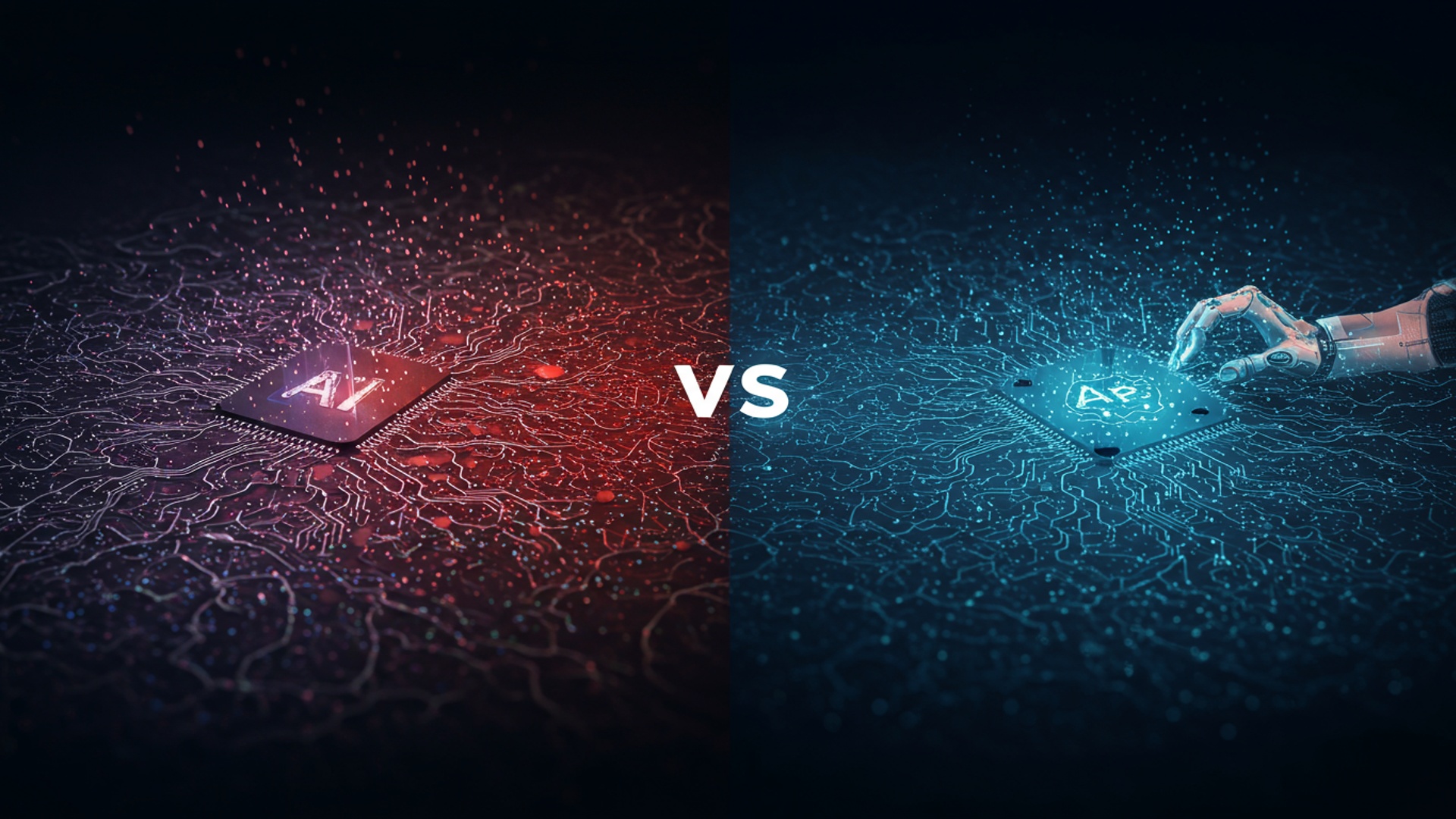
Understanding the “Flatness” of AI Content
In today’s fast-paced digital world, Artificial Intelligence (AI) has emerged as a powerful tool for content creation, promising to revolutionize how we generate everything from blog posts to marketing copy. Tools like OpenAI’s ChatGPT, Google’s Gemini (formerly Bard). other Large Language Models (LLMs) can produce text at an astonishing speed. But, if you’ve ever read AI-generated content and felt something was missing, you’re not alone. Many users report that AI-produced text often feels “flat,” generic, or lacking that special spark that truly engages a human reader.
So, what exactly makes AI content feel flat? It often boils down to a few key characteristics:
- Lack of Genuine Emotion
- Generic Phrasing
- Absence of Unique Perspective
- Inconsistent Tone and Style
AI can mimic emotional language. it doesn’t truly interpret or feel emotions. This often results in text that sounds detached or overly formal, even when trying to be empathetic.
Because AI models are trained on vast datasets of existing text, they tend to favor common phrases and established patterns. This can lead to repetitive content that lacks originality and a distinct voice.
AI doesn’t have personal experiences, beliefs, or a unique worldview. It can synthesize data. it can’t offer an authentic, individual perspective, which is often what makes human content compelling.
Without careful prompting and human oversight, AI can struggle to maintain a consistent tone or style throughout a longer piece, making the content feel disjointed.
These are fundamental AI content challenges that content creators face when relying solely on automated tools. Understanding these limitations is the first step toward making your AI-assisted content truly shine.
The Core AI Content Challenges: Why AI Struggles (and How Humans Excel)
To truly interpret why AI content often falls short, we need to delve into the inherent differences between how AI processes data and how human beings create. It’s not about AI being “bad,” but about recognizing its fundamental operational mechanisms.
- Lack of Emotional Intelligence and Empathy
- Inability to Grasp Nuance and Context
- Generic Outputs and Repetition
- Absence of Original Thought and Creativity
- Factual Inaccuracies and Hallucinations
- Voice and Tone Inconsistency
AI models operate on algorithms and statistical probabilities, not genuine understanding or feeling. They can identify patterns in text associated with emotions (e. g. , “sad” words following a “loss”). they don’t experience sadness. This means AI struggles to infuse content with authentic empathy, humor, or deep emotional resonance – elements crucial for connecting with a human audience.
Example: An AI might write, “We comprehend this is a difficult time for you,” but a human might add a personal anecdote or a nuanced phrase that truly conveys shared understanding.
Human communication is rich with subtext, sarcasm, cultural references. implied meanings. AI, while improving, often struggles with these subtleties. It processes words based on their statistical relationships, not their underlying, complex human context. This can lead to awkward phrasing, misinterpretations, or missing the point entirely when the topic requires a deep understanding of human culture or social dynamics.
Large Language Models are trained on massive datasets scraped from the internet. When asked to generate content, they essentially predict the most probable next word or phrase based on this training. This often results in outputs that echo common patterns and ideas, leading to generic, “boilerplate” text. This is one of the most common AI content challenges to overcome.
Case Study: A startup used AI to generate 50 product descriptions. While functional, many descriptions used identical adjectives and sentence structures, failing to differentiate their unique selling points. A human editor later rewrote them, focusing on brand voice and specific product benefits.
AI is excellent at synthesizing existing insights and generating variations. it doesn’t “think” in the human sense. It cannot generate truly novel concepts, groundbreaking research, or innovative solutions that aren’t already represented in its training data. Creativity, in its purest form, often involves connecting disparate ideas in unforeseen ways or challenging existing paradigms – a capability still largely beyond AI.
One of the most significant AI content challenges is its propensity to “hallucinate” details. This means AI can confidently present false insights as fact, invent sources, or misinterpret data. It generates text that sounds plausible but lacks factual basis, making rigorous human fact-checking absolutely essential.
A strong brand or personal voice is crucial for connecting with an audience. AI can be prompted to adopt a certain tone. maintaining that tone consistently across multiple pieces or even within a long article can be difficult without human guidance. It may inadvertently shift from formal to informal, or from authoritative to casual, undermining the desired brand identity.
Key Technologies Behind AI Content Generation
Understanding the basic technology powering AI content generation helps illuminate its strengths and weaknesses. At the heart of most modern AI writing tools are Large Language Models (LLMs).
- Large Language Models (LLMs)
- Neural Networks
- Deep Learning
- Training Data
These are sophisticated AI models designed to comprehend and generate human-like text. Popular examples include OpenAI’s GPT series (like GPT-3, GPT-4), Google’s Gemini, Anthropic’s Claude. Meta’s Llama. LLMs are built on a type of neural network architecture called “Transformers.”
Inspired by the human brain, neural networks are computing systems that learn from data. They consist of interconnected “nodes” or “neurons” arranged in layers. insights passes through these layers. the connections between nodes are adjusted during training to recognize patterns.
This is a subfield of machine learning that uses neural networks with many layers (hence “deep”). Deep learning models can learn very complex patterns from vast amounts of data.
LLMs are trained on colossal datasets comprising billions of words and sentences from the internet (books, articles, websites, conversations, etc.). During this training, the model learns the statistical relationships between words – which words tend to appear together, in what order. in what context. It doesn’t “interpret” language in a human sense. rather learns to predict the most probable next word in a sequence based on the patterns it has observed.
This reliance on training data is a double-edged sword: it allows AI to generate coherent and grammatically correct text. it also means AI is limited by the scope and biases present in its training data, contributing to many of the AI content challenges we discuss.
Comparing AI-Generated vs. Human-Generated Content
To truly appreciate how to make AI content shine, it’s useful to compare its inherent characteristics with those of human-generated content. This isn’t about declaring one superior. understanding their complementary strengths.
| Feature | AI-Generated Content | Human-Generated Content |
|---|---|---|
| Speed of Generation | Extremely fast (seconds to minutes) | Slower (hours to days, depending on length/complexity) |
| Originality / Novelty | Synthesizes existing insights; can rephrase but rarely creates truly novel ideas or insights. Prone to generic outputs. | Capable of true originality, innovative thought, unique perspectives. breaking new ground. |
| Emotional Depth / Empathy | Mimics emotional language based on patterns; lacks genuine understanding or feeling. Can sound robotic or detached. | Infused with authentic emotion, empathy, personal experience. nuanced understanding of the human condition. |
| Factual Accuracy | Can generate plausible but false data (“hallucinations”). Requires rigorous fact-checking. | Generally aims for accuracy; prone to human error but can cross-reference and apply critical thinking. |
| Contextual Understanding | Good at statistical context; struggles with deep cultural, social, or historical nuances and implied meanings. | Excels at understanding complex, multi-layered context, subtext. cultural references. |
| Voice & Tone Consistency | Can be prompted for tone. may struggle with consistency over long pieces without careful human input. | Naturally maintains a consistent, authentic voice and tone, reflecting the writer’s personality or brand. |
| Cost | Potentially lower cost per word/article for basic drafting. | Higher cost per word/article due to time, skill. unique value. |
| Scalability | Highly scalable for bulk content generation. | Limited by individual human capacity and time. |
Strategies to Elevate Your AI-Generated Content (Making it Shine)
Overcoming AI content challenges isn’t about abandoning AI. about integrating it intelligently. Think of AI as a powerful assistant, not a replacement for human ingenuity. Here’s how to make your AI-generated content truly shine:
Mastering the Art of Prompt Engineering
The quality of AI output is directly proportional to the quality of your input. “Prompt engineering” is the skill of crafting effective instructions for AI. It’s like giving precise directions to a very fast. literal, intern.
- Be Specific and Detailed
- Provide Context
- Give Examples
- Specify Tone and Voice
- Define Format and Structure
- Iterate and Refine
Don’t just say “write about dogs.” Say, “Write a 500-word blog post for a pet owner audience (age 25-45) about the benefits of adopting a senior dog. Include a personal anecdote from a senior dog owner and use an encouraging, empathetic tone. Focus on actionable tips for care.”
Tell the AI who the audience is, what the goal of the content is. where it will be published. “This article is for my blog, which focuses on sustainable living for millennials. The goal is to inspire them to reduce food waste, not just inform.”
If you have a specific style or tone in mind, show the AI. “Write in the style of [famous author] or [existing blog post example].”
Use clear adjectives: “Write with an authoritative yet friendly tone,” “Use a humorous and light-hearted voice,” “Maintain a professional and academic style.”
“Include an introduction, three main sections with subheadings, a bulleted list. a concluding call to action.”
Don’t expect perfection on the first try. If the AI’s output isn’t quite right, tell it what you want changed: “Make the introduction more engaging,” “Elaborate on point number two,” “Rewrite this paragraph to be more concise.”
Example of a good prompt:
"Act as a professional health blogger. Write a 700-word article for young adults (18-30) on '5 Easy Ways to Boost Your Mood Naturally.' The tone should be uplifting, encouraging. slightly informal. Include a real-world example for each tip. emphasize scientific backing where possible (without being overly academic). Structure it with an engaging intro, numbered tips with bolded subheadings. a concluding call to action encouraging readers to try one tip this week. Ensure accessibility and body positivity are subtly integrated. Avoid jargon."
The Human Touch: Editing, Refining. Adding Value
This is where humans truly overcome the inherent AI content challenges. AI provides a draft; you provide the soul.
- Fact-Checking and Verification
- Injecting Personal Anecdotes and Unique Insights
- Refining Tone, Voice. Flow
- Adding Calls to Action (CTAs) and Human-Centric Elements
- Enhancing Readability
Never publish AI-generated content without meticulously fact-checking every claim. AI can “hallucinate” data, cite non-existent sources, or present outdated data. Use credible sources, cross-reference. ensure accuracy.
This is your superpower. Add a story from your own life, a unique observation, or a fresh perspective that only a human can offer. This makes the content relatable and memorable. For instance, if writing about productivity, share your personal struggle with procrastination and how you overcame it.
Read the content aloud. Does it sound like you? Does it flow naturally? Adjust awkward phrasing, enhance transitions. ensure the tone is consistent with your brand or personal style. Look for repetitive sentence structures or vocabulary and vary them.
While AI can generate CTAs, a human can make them more persuasive and aligned with your specific goals. Add questions that spark reader engagement, encourage comments, or prompt interaction that AI can’t genuinely initiate.
Break up long paragraphs, use strong topic sentences. ensure clear logical progression. While AI can do this to some extent, a human eye is better at ensuring the content is truly digestible and engaging for other humans.
Leveraging AI as a Co-Pilot, Not an Auto-Pilot
The most effective use of AI is when it augments human capability, rather than replacing it. Think of AI as your intelligent co-pilot, handling routine tasks while you navigate the complex, creative aspects.
- Brainstorming Ideas
- Outlining
- Drafting Initial Sections
- Rewriting/Summarizing
- Keyword Research Assistance
Stuck for a topic? Ask AI for 20 blog post ideas about [topic].
Provide AI with a topic and ask it to generate a detailed outline with subheadings. This saves significant time.
Use AI to write an initial draft of less critical sections, such as background insights or common definitions, which you then refine.
Need to condense a long article or rephrase a complex paragraph? AI is excellent for this.
While dedicated SEO tools are best, AI can suggest related keywords or generate content ideas around specific keywords.
For example, a marketing manager might use an AI to generate five different headlines for an ad campaign. The human manager then reviews these, perhaps combining elements from a few. adds a unique, brand-specific twist to create the final, impactful headline.
Integrating SEO Best Practices
AI can assist with SEO. human oversight ensures genuine value and avoids pitfalls.
- Keyword Integration
- Focus on User Intent
- Structure for Readability
AI can identify keywords. humans are better at naturally weaving them into content without keyword stuffing. Ensure the keyword AI content challenges is used organically, not forced.
AI might generate content based on keywords. a human understands the deeper “why” behind a user’s search query. Tailor content to genuinely answer questions and solve problems. Google’s algorithms increasingly reward content that provides true value and answers user intent comprehensively.
While AI can create headings, a human ensures they are compelling and logical, guiding the reader through the content effortlessly. Use short paragraphs, bullet points. clear headings for easy scanning – a crucial aspect of good SEO and user experience.
Real-World Applications and Success Stories
Many individuals and organizations are already mastering the art of blending AI efficiency with human brilliance.
- Content Marketing Agencies
- Journalism and Reporting
- Students and Researchers
- Small Business Owners
A common use case involves agencies using AI to generate first drafts of social media posts, email newsletters, or even entire blog articles. For example, ‘ContentSpark Agency’ leverages an LLM to produce five variations of a client’s weekly blog post outline. Their human writers then select the best outline, enrich it with client-specific case studies. inject the brand’s unique voice and tone. This dramatically cuts down research and drafting time, allowing their human creatives to focus on the storytelling and strategic elements that truly resonate.
While not for investigative pieces, some news outlets use AI to generate routine reports like financial summaries, sports recaps, or weather updates based on structured data. The Associated Press, for instance, uses AI to automate quarterly earnings reports. Human editors then review these for accuracy, clarity. to add deeper analysis or human interest angles, ensuring the content is factual and engaging.
Many students use AI tools to summarize lengthy research papers, brainstorm essay topics, or even help structure arguments. For instance, a university student might use an AI to quickly synthesize key arguments from ten different academic articles on climate change. But, they then critically review these summaries, fact-check. integrate their own original thesis and analytical perspective into their final paper, citing all sources correctly. Over-reliance here can lead to plagiarism or superficial understanding, highlighting the need for human validation to overcome AI content challenges in academic settings.
For entrepreneurs with limited time and budget, AI can be a lifesaver for generating initial website copy, product descriptions, or even basic FAQ sections. ‘Bloom & Grow,’ a small online plant shop, used AI to draft descriptions for 100 new plant varieties. The owner then personalized each description with care tips based on her personal experience, added unique names. infused her passion for plants, transforming generic text into compelling, informative product pages.
These examples illustrate that AI is most effective when used as a powerful accelerator, enabling humans to focus their energy on creativity, critical thinking. the nuanced elements that make content truly exceptional.
Ethical Considerations and Future Outlook
As AI continues to evolve, so do the ethical considerations surrounding its use in content creation. Transparency is paramount: readers deserve to know when content has been AI-generated or heavily assisted. Plagiarism, even when AI produces “original” text, remains a concern if the ideas are merely rehashed from its training data without proper attribution or human transformation. Content creators must take full responsibility for the accuracy and originality of anything they publish, regardless of AI’s involvement.
The future of AI in content creation is not about humans being replaced. about a symbiotic relationship. AI will become even more sophisticated, capable of mimicking various styles, tones. even integrating some level of contextual understanding. But, the unique human capacity for genuine creativity, critical thinking, emotional intelligence. ethical judgment will remain indispensable. Content creators who embrace AI as a tool, master prompt engineering. commit to infusing their work with a distinct human touch will be the ones who truly make their content shine, effectively navigating the ever-present AI content challenges.
Conclusion
Ultimately, making your AI content shine isn’t about ditching AI. elevating it with an indispensable human touch. I’ve found that treating AI as a brilliant, albeit sometimes literal, intern is key; it provides a fantastic foundation. the true brilliance emerges when you inject your unique perspective and specific examples. Don’t just accept the first draft; instead, refine your prompts like a sculptor, adding layers of nuance until it reflects your authentic voice, perhaps by detailing a recent development like the rise of custom GPTs, which demand a more tailored, insightful approach. Remember, the goal is to create content that resonates deeply, not just fills a word count. My personal tip is to always ask: “Does this sound like me?” If it doesn’t, iterate, add an anecdote about a personal content creation challenge, or weave in a current trend beyond what the AI initially suggested. This iterative process, where you blend artificial intelligence with genuine human ingenuity, is where compelling content truly lives. Embrace this powerful synergy; the future of engaging content lies not in replacing creativity. in augmenting it. Go forth and infuse your AI-generated drafts with your distinct sparkle; your readers will undoubtedly thank you for it.
More Articles
Transform Your AI Outputs with These Prompt Techniques
Master AI Prompts Unlock Better Results
Master AI Blog Writing 5 Steps to Publish Amazing Content
Unlock Top Search Rankings with AI Content Optimization Secrets
5 Secret Gemini Prompt Formulas for Breathtaking AI Images 
FAQs
Why does my AI-generated content often sound so… generic?
AI models are trained on vast datasets, which often leads them to generate common, safe. therefore generic responses. They lack the lived experience, unique perspectives. emotional intelligence that make human writing truly engaging and distinct. To make it shine, you need to infuse it with your unique brand voice, specific examples. tailored insights.
Is it true AI content can struggle with sounding natural?
Absolutely. While AI has come a long way, it still often produces repetitive phrasing, awkward sentence structures, or lacks the natural flow and rhythm of human conversation. It might not grasp subtle nuances, humor, or sarcasm. Human editing is crucial to smooth out these rough edges and ensure the content reads authentically.
My AI-written articles sometimes get facts wrong. What’s up with that?
AI models are predictive, not inherently truthful. They generate text based on patterns learned from data, which can include outdated or incorrect insights. They don’t ‘interpret’ facts in the way a human does. Always, always fact-check any AI-generated content before publishing to maintain credibility and accuracy.
How can I make AI content less boring and more engaging for readers?
The key is to treat AI as a powerful assistant, not a replacement. Start with detailed, specific prompts that guide the AI towards the tone, style. unique angles you want. Then, significantly edit and humanize the output. Add personal anecdotes, strong opinions (if appropriate), compelling storytelling. a distinct brand voice. Think about what only you can bring to the content.
What’s the biggest mistake people make when using AI for content creation?
Relying solely on the first AI draft without significant human input or editing. Many treat AI as a ‘set it and forget it’ tool, expecting it to deliver publish-ready content. This often leads to bland, inaccurate, or unoriginal pieces. The biggest mistake is skipping the crucial human touch that transforms raw AI output into valuable, high-quality content.
Does AI-generated text hurt my SEO?
Not directly. indirectly it can. If your AI content is generic, repetitive, lacks depth, or is factually incorrect, users will likely bounce quickly, signaling low quality to search engines. Google prioritizes helpful, reliable, people-first content. If AI helps you create that, great. If it leads to low-effort, unoriginal content, it absolutely can harm your SEO long-term. Focus on user value first.
So, how do I actually ‘shine’ up my AI-generated drafts?
Think of yourself as the editor-in-chief. Start by refining the core message and ensuring accuracy. Then, inject your brand’s unique voice and personality. Add specific examples, case studies, or original insights that only a human can provide. Structure it for readability with clear headings and bullet points. Polish the language for natural flow, compelling storytelling. emotional resonance. Ultimately, make it unmistakably yours.