
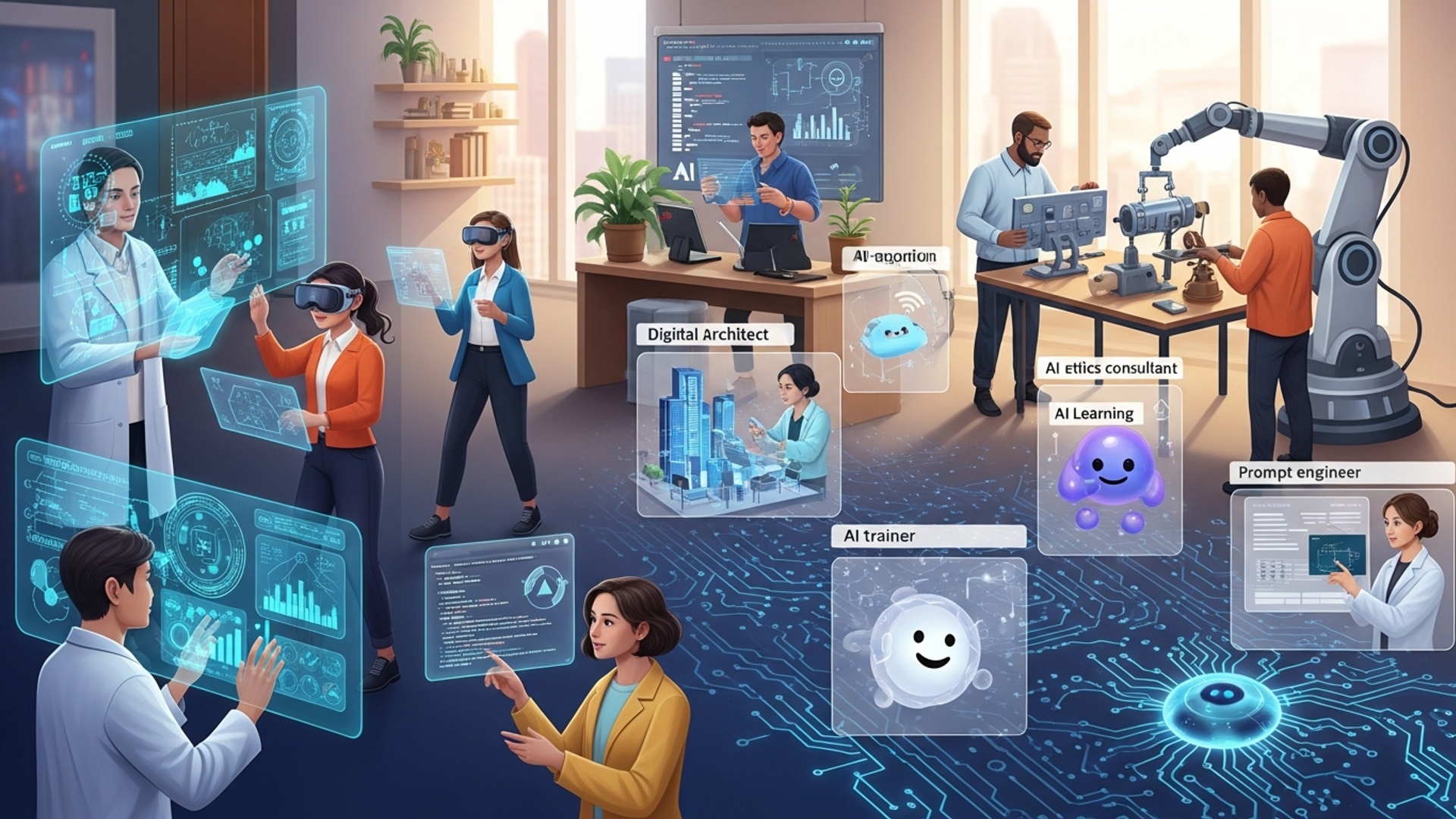
The rapid proliferation of artificial intelligence, particularly generative models like GPT-4, is not merely automating tasks but fundamentally reshaping the global AI job market. Far from solely displacing existing positions, AI actively catalyzes the emergence of entirely new, high-value career paths. We now see a surge in demand for specialized roles such as AI prompt engineers, who craft precise inputs for large language models. AI ethics and governance specialists, who ensure responsible development and deployment. This evolution underscores a critical shift where human ingenuity, augmented by AI, drives innovation, creating exciting opportunities in areas like AI system integration, data curation for machine learning. human-AI interaction design, demanding unique skill sets to navigate this transformative technological landscape.
Understanding Artificial Intelligence: More Than Just Robots
Artificial Intelligence, or AI, might sound like something out of a science fiction movie, full of talking robots and super-intelligent computers taking over the world. But in reality, AI is already a huge part of your everyday life, often without you even realizing it! Think about when YouTube recommends your next video, when Spotify creates a personalized playlist, or even when your phone suggests the next word you type in a message. That’s AI at work.
At its core, AI refers to computer systems designed to perform tasks that typically require human intelligence. This includes things like learning from data, recognizing patterns, understanding natural language, solving problems. making decisions. It’s not about machines having feelings or consciousness. about them being incredibly good at specific, intelligent tasks. Leading tech companies like Google and Microsoft are constantly pushing the boundaries of what AI can do, from powering search engines to enabling self-driving cars.
The AI Revolution: Creating, Not Just Replacing, Opportunities
One of the biggest worries people have about AI is that it will take away jobs. While it’s true that some repetitive tasks might be automated, the reality is far more exciting: AI is a powerful engine for creating entirely new career paths and transforming existing ones. The AI job market isn’t shrinking; it’s evolving and expanding, opening up opportunities that didn’t even exist a decade ago.
Think of it like the internet’s arrival. Before the internet, jobs like ‘web developer,’ ‘social media manager,’ or ‘app designer’ weren’t a thing. The internet didn’t just automate paper mail; it created a whole new digital economy. AI is doing something similar. on an even grander scale. It’s creating a demand for new skills and roles that interact with, build. manage these intelligent systems.
Direct AI Career Paths: Building the Future
For those fascinated by the inner workings of technology, the AI job market offers a wealth of direct career opportunities where you’re actively building and shaping AI systems. Here are some key roles:
- AI Engineer / Machine Learning Engineer: These are the architects and builders of AI. They design, develop. implement AI models and algorithms. Imagine you’re teaching a computer how to recognize different types of animals in pictures – an AI engineer builds the ‘brain’ that learns to do that. They often work with programming languages like Python and frameworks such as TensorFlow or PyTorch.
- Data Scientist: AI thrives on data. Data scientists are like detectives who collect, clean. review vast amounts of data to find patterns and insights. They help businesses comprehend customer behavior, predict trends, or even discover new medical treatments. A data scientist might use tools like R or Python and statistical analysis to make sense of complex datasets.
- Prompt Engineer: This is a relatively new and incredibly exciting role, especially with the rise of large language models (like ChatGPT). A prompt engineer specializes in crafting the perfect “prompts” or instructions to get AI models to produce the desired output. It’s like learning how to ‘speak’ to AI in a way that unlocks its full potential, whether it’s writing a story, generating code, or answering complex questions. This role requires creativity, critical thinking. a deep understanding of how AI language models work.
- AI Ethicist / AI Governance Specialist: As AI becomes more powerful, ensuring it’s used responsibly and fairly is crucial. AI ethicists examine the moral implications of AI, working to prevent bias, protect privacy. ensure transparency. They help create guidelines and policies to ensure AI benefits everyone and doesn’t cause harm. This role often involves a blend of technical understanding, philosophy. law.
- AI Trainer / Data Annotator: Before AI can learn, it needs to be “fed” vast amounts of labeled data. Data annotators are the unsung heroes who tag, categorize. label data (images, text, audio) so that AI models can learn from it. For example, they might draw boxes around cars in thousands of images to help a self-driving car AI learn what a car looks like. This is a foundational role often providing an entry point into the AI industry.
AI-Enhanced Career Paths: Supercharging Existing Roles
Beyond creating entirely new jobs, AI is also transforming and empowering existing professions. It’s not about AI replacing humans. about humans using AI as a powerful tool to be more efficient, creative. effective. Here’s how AI is supercharging various fields:
- Healthcare: Doctors and researchers are using AI to review medical images (like X-rays and MRIs) for early disease detection, personalize treatment plans. accelerate drug discovery. AI doesn’t replace doctors. helps them make more accurate diagnoses faster, freeing them up to focus on patient care.
- Creative Arts & Design: Artists, musicians. designers are leveraging AI tools to generate new ideas, automate repetitive tasks, or even create entirely new forms of art. Imagine an AI helping a graphic designer quickly generate multiple logo variations, or a musician using AI to compose backup melodies. This enhances human creativity rather than diminishing it.
- Education: AI-powered platforms can personalize learning experiences, adapt to individual student needs. provide instant feedback. Teachers can use AI to automate grading mundane assignments, allowing them more time for one-on-one student interaction and curriculum development.
- Digital Marketing & Content Creation: Marketers use AI to review customer data, predict trends. even generate marketing copy or social media posts. Content creators can use AI to brainstorm ideas, transcribe audio, or optimize their content for search engines. This makes marketing campaigns more targeted and efficient.
- Environmental Conservation: AI is being deployed to monitor wildlife populations, track deforestation, predict natural disasters. optimize energy consumption. Environmental scientists can use AI to process satellite imagery and sensor data to make more informed decisions about protecting our planet.
Essential Skills for the Future AI Job Market
So, you’re excited about the possibilities in the AI job market? Awesome! While specific technical skills are valuable, the good news is that many fundamental skills are transferable and can be learned. Here’s a breakdown of what you should focus on:
Technical Skills:
- Programming Languages: Python is by far the most popular language in AI and machine learning due to its simplicity and vast libraries. Learning JavaScript, R, or Java can also be beneficial depending on the specific AI application.
- Mathematics & Statistics: A solid understanding of algebra, calculus. especially statistics is crucial for understanding how AI algorithms work and interpreting data. Don’t worry, you don’t need to be a math genius. a foundational grasp helps immensely.
- Data Literacy: Knowing how to collect, clean, assess. visualize data is fundamental. This includes understanding databases (like SQL) and data manipulation tools.
- Machine Learning Basics: Understanding core concepts like supervised learning, unsupervised learning, neural networks. deep learning will give you a significant advantage.
Soft Skills (The Human Touch):
- Critical Thinking & Problem Solving: AI provides answers. humans need to ask the right questions and interpret those answers. The ability to break down complex problems and think logically is invaluable.
- Creativity & Innovation: AI can automate tasks. it can’t (yet) come up with truly novel ideas or artistic visions. Your unique human creativity will always be in demand to guide AI.
- Communication & Collaboration: Being able to explain complex technical concepts to non-technical people. work effectively in teams, is vital in any modern workplace, especially when dealing with interdisciplinary AI projects.
- Adaptability & Continuous Learning: The AI field is constantly evolving. A willingness to learn new tools, techniques. adapt to change is perhaps the most crucial skill of all.
- Ethical Reasoning: As mentioned, understanding the ethical implications of AI and advocating for responsible use is a critical human skill that AI cannot replicate.
Getting Started: Actionable Steps for Aspiring AI Innovators
The future is yours to shape. the AI job market is waiting for your creativity and talent. Here are some concrete steps you can take right now:
- Explore Online Resources: Platforms like Coursera, edX, Udacity. freeCodeCamp offer excellent courses in AI, machine learning. programming. Khan Academy is fantastic for building foundational math skills.
- Start Coding (Even Small Projects): Begin with Python. There are countless free tutorials on YouTube and websites that can teach you the basics. Try building a simple text-based game or a calculator to get comfortable.
- Participate in Hackathons & Online Communities: Join online coding challenges or local hackathons. This is a great way to learn from others, build projects for your portfolio. network. Websites like Kaggle offer data science competitions.
- Read & Stay Curious: Follow tech news, read articles (like this one!). explore blogs from leading AI researchers and companies. Listen to podcasts about AI. The more you interpret the landscape, the better prepared you’ll be.
- Focus on Problem Solving: Look around you. What problems do you see that AI could help solve? Thinking this way trains your mind to see AI as a tool for positive impact.
- Don’t Be Afraid to Experiment: Download free AI tools or experiment with public APIs (Application Programming Interfaces) to see what they can do. Try using a large language model to write a short story or generate ideas for a school project.
Remember, you don’t need to be a genius to get started in AI. What you need is curiosity, a willingness to learn. a passion for building the future. The AI revolution isn’t just for a select few; it’s an invitation for everyone to innovate and create new possibilities.
Conclusion
Artificial intelligence isn’t merely automating tasks; it’s a powerful catalyst forging entirely new career landscapes, transforming how we work and innovate. Consider the rise of specialized roles like AI prompt engineers, crucial for guiding models like Sora or Gemini to create stunning visuals and videos, or AI ethics consultants, essential for ensuring responsible development across industries. My own experience has shown me that embracing continuous learning, perhaps by dedicating an hour daily to understanding new AI applications, profoundly redefines perceived limitations into exciting possibilities. The key is to cultivate unique human skills – critical thinking, creativity. empathy – which become even more valuable as AI handles the routine. Don’t wait for change to happen to you; actively shape your future by learning to collaborate with AI. The opportunities are boundless for those willing to adapt and innovate.
More Articles
How to Future Proof Your Career Against AI Automation
Unlock Your Potential 6 Must Have Skills for Working With AI
How to Build a Powerful AI Career Path Step by Step
The Ultimate Guide to Crafting Powerful AI Prompts for Amazing Results
Master Generative AI Marketing 5 Game Changing Strategies for Business Growth 
FAQs
Is AI going to take all our jobs?
Not at all! While AI will certainly automate some repetitive tasks, it’s more accurate to say it’s transforming job roles and creating entirely new ones. Many existing jobs will evolve to work alongside AI, rather than being replaced outright.
What kind of new career paths are emerging because of AI?
We’re seeing a boom in roles like AI trainers, prompt engineers, machine learning engineers, data scientists, AI ethicists. AI-powered content creators. There’s also a growing need for specialists in AI user experience (UX), project management. policy.
Do I need a deep tech background to get into these AI opportunities?
Not necessarily for every role! While technical skills are crucial for many, there’s also a huge demand for people with strong communication, creativity, critical thinking. ethical reasoning skills to guide and apply AI effectively. Think about AI strategists or AI-assisted designers.
How can I prepare myself for the future workforce shaped by AI?
Focus on continuous learning! Upskill in areas like data analysis, programming basics, or specific AI tools. Also, hone your uniquely human skills such as problem-solving, emotional intelligence, adaptability. creativity, as these are increasingly valuable.
Beyond new job titles, what exciting opportunities does AI open up?
AI empowers individuals and small businesses to innovate faster, personalize services. reach global audiences more easily. It’s fostering entrepreneurship by giving access to powerful tools previously only available to large corporations, leading to solutions for complex problems across various sectors.
Will working with AI make my job more interesting or just more complex?
For many, it will make work much more interesting! By automating mundane or repetitive tasks, AI frees up humans to focus on more creative, strategic. fulfilling aspects of their jobs. This can lead to greater job satisfaction and innovation, allowing people to tackle higher-level challenges.
Are there roles in AI for people who aren’t developers or engineers?
Absolutely! There’s a strong need for AI project managers, user experience designers who focus on AI interfaces, AI policy analysts, ethicists, legal experts for AI regulations. even creative professionals who use AI as a powerful tool for art, music. writing. AI needs diverse perspectives to be successful and responsible.